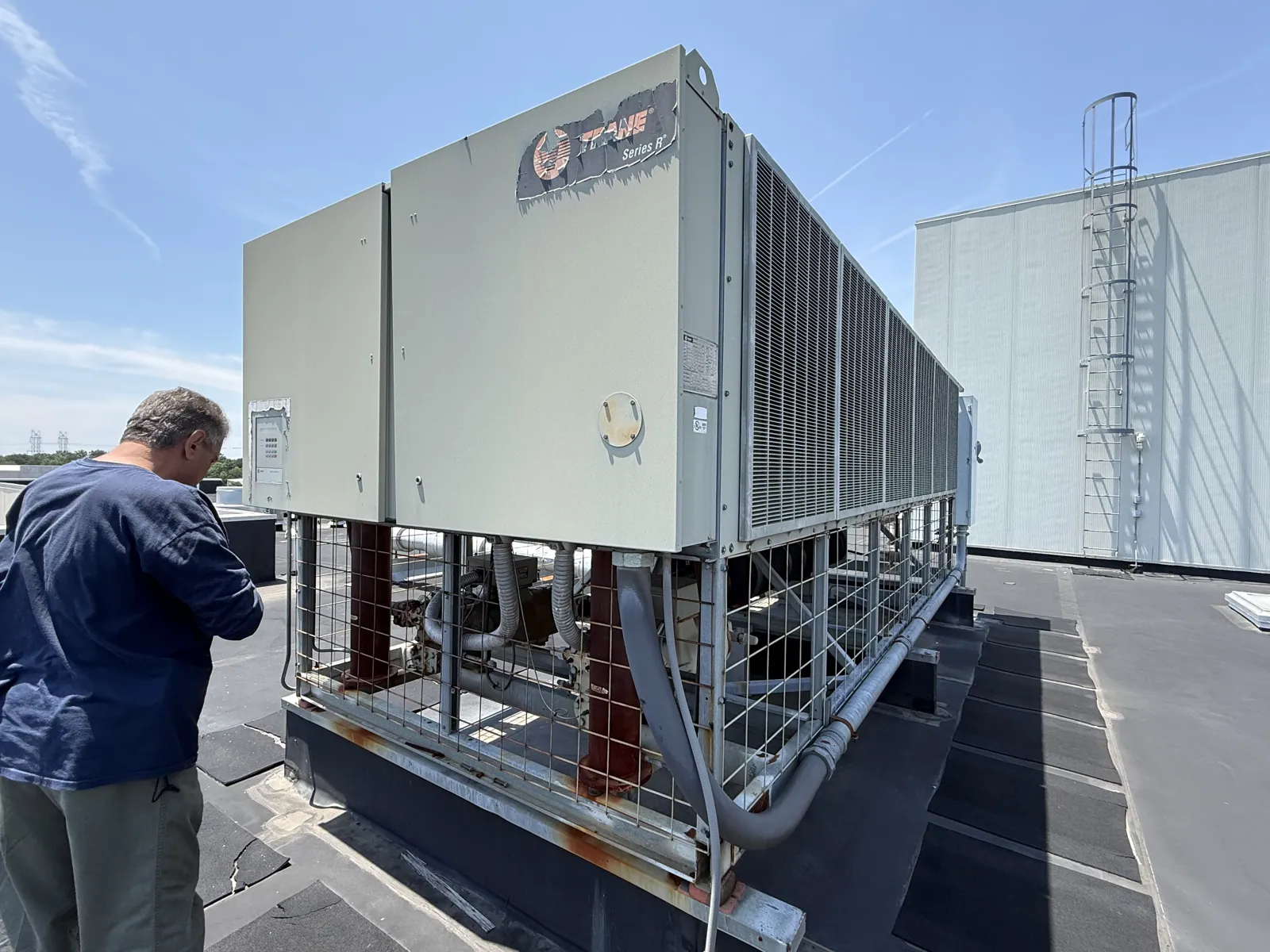
Sell a 1,500–1,999 Ton Chiller
We consider chillers rated 1,500 to 1,999 tons and handle the agreed removal and freight throughout South Carolina.
We buy chillers. We don’t sell them.
Your chiller.
Our logistics.
Have a surplus or decommissioned chiller? We’re the buyer—here to make moving it straightforward.
From a single unit to equipment from a larger facility, tell us what you have. We buy industrial and commercial chillers across South Carolina and coordinate the work to get them moved.
See how it works
All types & sizes
Air-cooled or water-cooled, centrifugal, screw or scroll. Tell us what you have.
We handle the logistics
We coordinate rigging, refrigerant recovery, loading and freight for the equipment we buy.
Made for sellers
Send the details and nameplate photos to start a conversation about your chiller.
Three steps.
One less chiller.
- 01
Send the details
Share what you know, along with photos of the unit and nameplate.
- 02
Get a quote
We’ll review your equipment and discuss an offer with you.
- 03
Leave the logistics to us
We coordinate removal and freight for the chillers we purchase.
Sell a 1,500–1,999 Ton Chiller in South Carolina
South Carolina Chiller Buyers purchases used chillers; we do not sell replacement equipment. We consider all tonnages, including units below 20 tons, and 20 to 2,000-plus tons is a common range. This page is for owners considering a 1,500–1,999 ton chiller. Brand and refrigerant do not rule a unit out. An offer depends on the equipment details and the purchase agreement, so start by sharing evidence that helps identify the machine and plan a possible removal.
Start with the nameplate and capacity evidence
If the nameplate lists a rating from 1,500 to 1,999 tons, send a clear photograph of the entire label. Include the manufacturer and, if known, the compressor and condenser type. Explain whether the capacity comes from the actual unit’s nameplate, a drawing, or an estimate. That distinction matters: a building’s cooling load or a system-wide rating may not describe the capacity of the individual chiller being offered.
If the label is hard to read or unavailable, say so rather than guessing. A drawing, equipment schedule, or other existing record may help establish the model and arrangement. Do not open or dismantle the chiller to look for a label. Provide only information and images that can be collected safely without disturbing the equipment.
Describe condition without testing the machine
Give a straightforward account of what is known: whether the chiller is operating, shut down, incomplete, or of uncertain condition; when it was last known to run, if that information is available; and any known damage or missing components. Separate firsthand observations from older records or estimates. A unit that cannot be started can still be considered.
You do not need to energize, start, test, repair, drain, or prepare your 1,500–1,999 ton chiller to request an offer. Do not vent refrigerant or open the equipment for inspection. If its operating history or internal condition is unknown, state that plainly. Clear limits on what is known are more useful than an unsupported claim that the machine is fully functional.
Clarify what is included in the sale
List the major items that would transfer with the chiller and identify anything separate or excluded. At this capacity, the operating arrangement may differ from the transport configuration: electrical equipment, controls, or other components that serve the chiller may be separate, connected, or located elsewhere. Note what appears to belong to the unit, but do not disconnect anything to confirm it.
Capacity is a cooling rating, not a shipping weight. A 1,500–1,999 ton chiller’s actual transport weight and dimensions depend on its construction and the components included. Existing equipment schedules or site drawings can help explain the arrangement and potential lifting obstructions. If relevant drawings are available, mention them and share them through the agreed process; do not assume a capacity figure establishes the lift plan.
Give a practical picture of site access
Describe where the chiller sits and what a removal crew would need to understand before planning access: available routes, overhead or nearby obstructions, doorways or other restrictions, and whether lifting access appears constrained. For a unit inside a plant room, for example, a narrow route or equipment above the chiller could affect the removal approach. That is a planning consideration, not a conclusion about what equipment will be needed.
Share only details you can verify, and flag anything uncertain. Site drawings may help show the operating arrangement, access path, or nearby obstructions, but a drawing does not replace coordination with the authorized owner or site representative. That representative must permit the work and coordinate access.
Agree on removal responsibilities and terms
Once a purchase is agreed, South Carolina Chiller Buyers handles the removal logistics: disconnects, necessary refrigerant recovery through appropriately qualified personnel, crane and rigging, loading, hauling, and freight. Freight is covered. Sellers do not need to hire a carrier or ship the chiller. Do not cut, dismantle, disconnect, or otherwise prepare the unit for transport.
Payment is upfront. The purchase terms and removal schedule depend on the equipment and the agreement; neither a particular price nor a specific removal date can be promised before those details are settled.
Send a useful first description
A concise, evidence-based inquiry can include the following:
- A whole-label photo, stated tonnage, manufacturer, and known compressor or condenser type.
- Whether capacity comes from the unit, a drawing, or an estimate.
- Known condition, included components, and any exclusions or uncertainty.
- Separate electrical equipment, possible lifting obstructions, and available site drawings.
- The authorized representative’s contact and any known access constraints.
With that information, South Carolina Chiller Buyers can review the used chiller and discuss an offer and removal terms. If some details are missing, provide what is available and identify the gaps; no testing or site preparation is required just to begin.
Ready to move
your chiller?
Tell us what you know. If you’re unsure of a detail, leave it blank. Nameplate photos are a great place to start.

Request a quote.
Fill out what you can and we’ll be in touch.