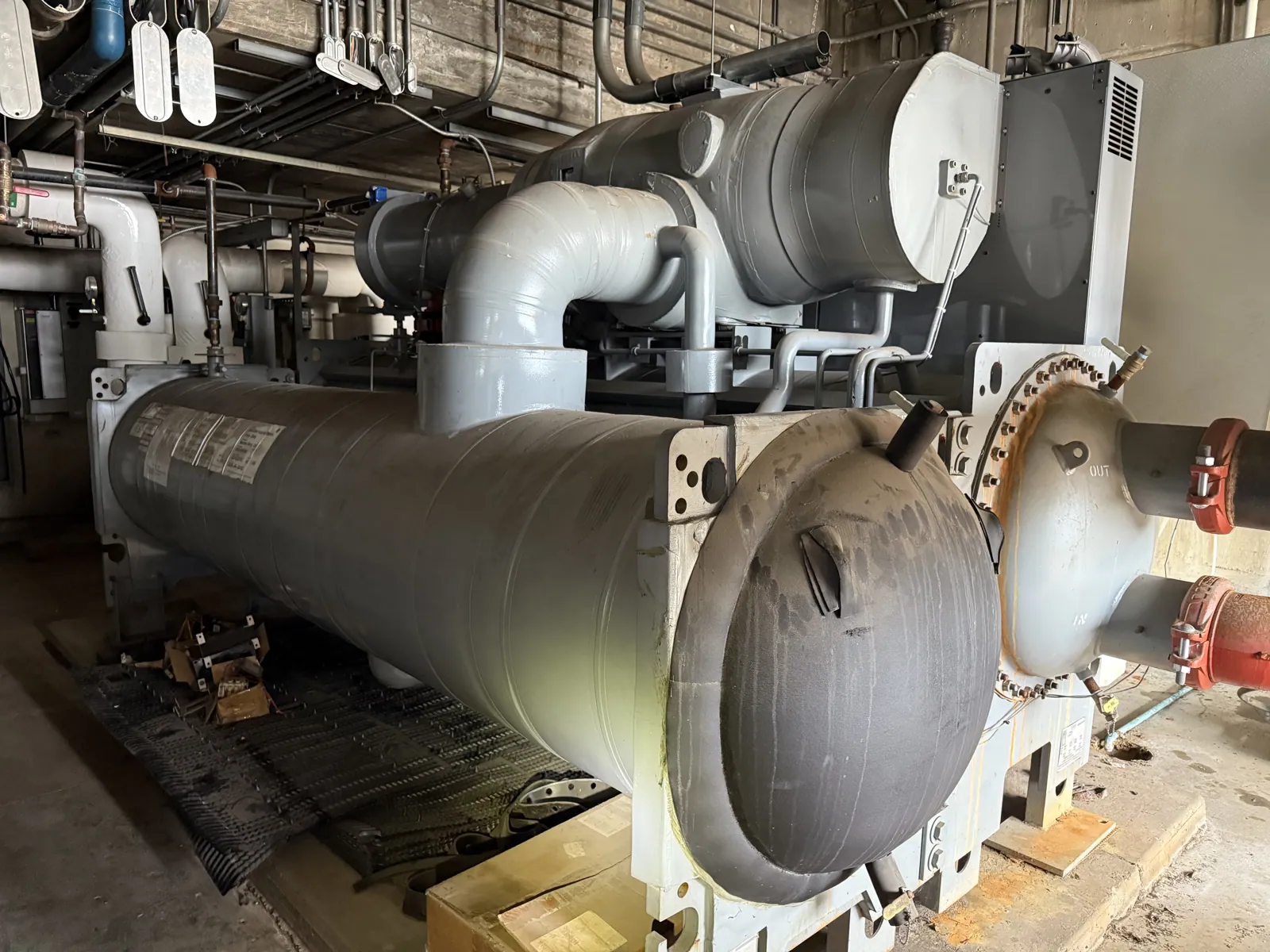
Sell a 50–99 Ton Chiller
We consider chillers rated 50 to 99 tons and handle the agreed removal and freight throughout South Carolina.
We buy chillers. We don’t sell them.
Your chiller.
Our logistics.
Have a surplus or decommissioned chiller? We’re the buyer—here to make moving it straightforward.
From a single unit to equipment from a larger facility, tell us what you have. We buy industrial and commercial chillers across South Carolina and coordinate the work to get them moved.
See how it works
All types & sizes
Air-cooled or water-cooled, centrifugal, screw or scroll. Tell us what you have.
We handle the logistics
We coordinate rigging, refrigerant recovery, loading and freight for the equipment we buy.
Made for sellers
Send the details and nameplate photos to start a conversation about your chiller.
Three steps.
One less chiller.
- 01
Send the details
Share what you know, along with photos of the unit and nameplate.
- 02
Get a quote
We’ll review your equipment and discuss an offer with you.
- 03
Leave the logistics to us
We coordinate removal and freight for the chillers we purchase.
Sell a 50–99 Ton Chiller in South Carolina
South Carolina Chiller Buyers purchases used chillers directly from owners in South Carolina. This page is for a 50–99 ton chiller, whether it is operating, idle, obsolete, or awaiting a facility decision. We buy equipment; we do not sell replacement chillers. Payment is upfront after the purchase terms are agreed, and you do not need to test, start, repair, or prepare the unit to request an offer.
Capacity helps identify a chiller, but it does not tell the whole story. A label, equipment record, photographs, and a clear description of what is included let us assess the actual unit rather than rely on a guessed rating or an assumed configuration.
Read the rating carefully, especially on older labels
If the nameplate lists a capacity from 50 to 99 tons, send a clear photograph of the entire label. Older labels can be faded, damaged, or difficult to read, and a number copied from a nearby document may refer to a different piece of equipment. If the rating is not legible, say so instead of filling in missing digits.
Tell us whether the stated capacity comes from the chiller’s nameplate, a drawing, an equipment schedule, or an estimate. Those sources are not interchangeable. A drawing may describe a design condition, while an estimate may be based on how the machine was used. If you are uncertain, identify the source and leave the uncertainty visible.
Describe what is part of the chiller
Packaged and multi-circuit chillers in this range can look similar from the outside while having different internal arrangements. Provide the manufacturer and, if known, the compressor type and condenser type. Add available dimensions and photographs that show the whole unit, its label, and its visible connections. A view of the surrounding area can also help distinguish the chiller from adjacent equipment.
Be specific about boundaries: a nearby pump, separate electrical cabinet, cooling tower, or other plant component may not be part of the chiller being offered. Do not assume that equipment is included simply because it is connected to or positioned beside the unit. If ownership or inclusion is unclear, flag that before an offer is prepared.
Use retrofit records without treating them as proof of everything
Past retrofit or service records can help explain a mismatch between an old label and the equipment’s present configuration. If available, share relevant documents or summarize what they say, such as a recorded component change or refrigerant conversion. Do not infer that a retrofit occurred just because the present details differ from an old document.
Records may describe a proposed change rather than completed work, or may refer to a component rather than the entire chiller. Where the paperwork is incomplete, give the date or source if known and distinguish documented information from recollection. There is no need to open the machine or inspect internal components to answer these questions.
Keep capacity, weight, and fluids distinct
Tonnage is a cooling-capacity rating, not the chiller’s transport weight. The weight shown in a drawing or equipment record may differ from the load that must be handled, especially if accessories or separate components are included. If you have dimensions or a listed weight, provide them as reference information; do not estimate a lifting load from tonnage alone.
Refrigerant and process fluid are different. Refrigerant belongs to the chiller’s refrigeration circuit, while process fluid—often water or a water-based mixture—circulates through the system being cooled. Do not drain, vent, cut, or dismantle anything to identify either fluid. If records list a refrigerant, share the recorded description; if the information is unknown, say so.
Details that make an offer more useful
- Clear photographs of the full unit and readable nameplate, including manufacturer, model, and capacity where visible.
- Known compressor or condenser type, available dimensions, and a clear note about which adjacent items are excluded or included.
- The source of the tonnage figure and any relevant retrofit records, with uncertain or conflicting details identified rather than guessed.
- Known access constraints, the unit’s current status, and whether you are the authorized owner or site representative.
Removal follows an agreed purchase
After an agreed purchase, South Carolina Chiller Buyers handles disconnects, necessary refrigerant recovery through appropriately qualified personnel, crane and rigging, loading, hauling, and freight. Freight is covered. The seller does not need to arrange shipment or hire a removal crew, but an authorized owner or site representative must give permission and coordinate access to the equipment.
Removal timing and the offer depend on the chiller, the information available, access conditions, and the terms agreed with the seller. For example, if a label is unreadable but drawings and photographs identify the unit, those materials may help clarify the assessment; if records conflict, additional clarification may be needed before terms are settled. No particular price or removal date can be assumed in advance. Share what you can verify, identify what you cannot, and request an offer for your 50–99 ton chiller.
Ready to move
your chiller?
Tell us what you know. If you’re unsure of a detail, leave it blank. Nameplate photos are a great place to start.

Request a quote.
Fill out what you can and we’ll be in touch.