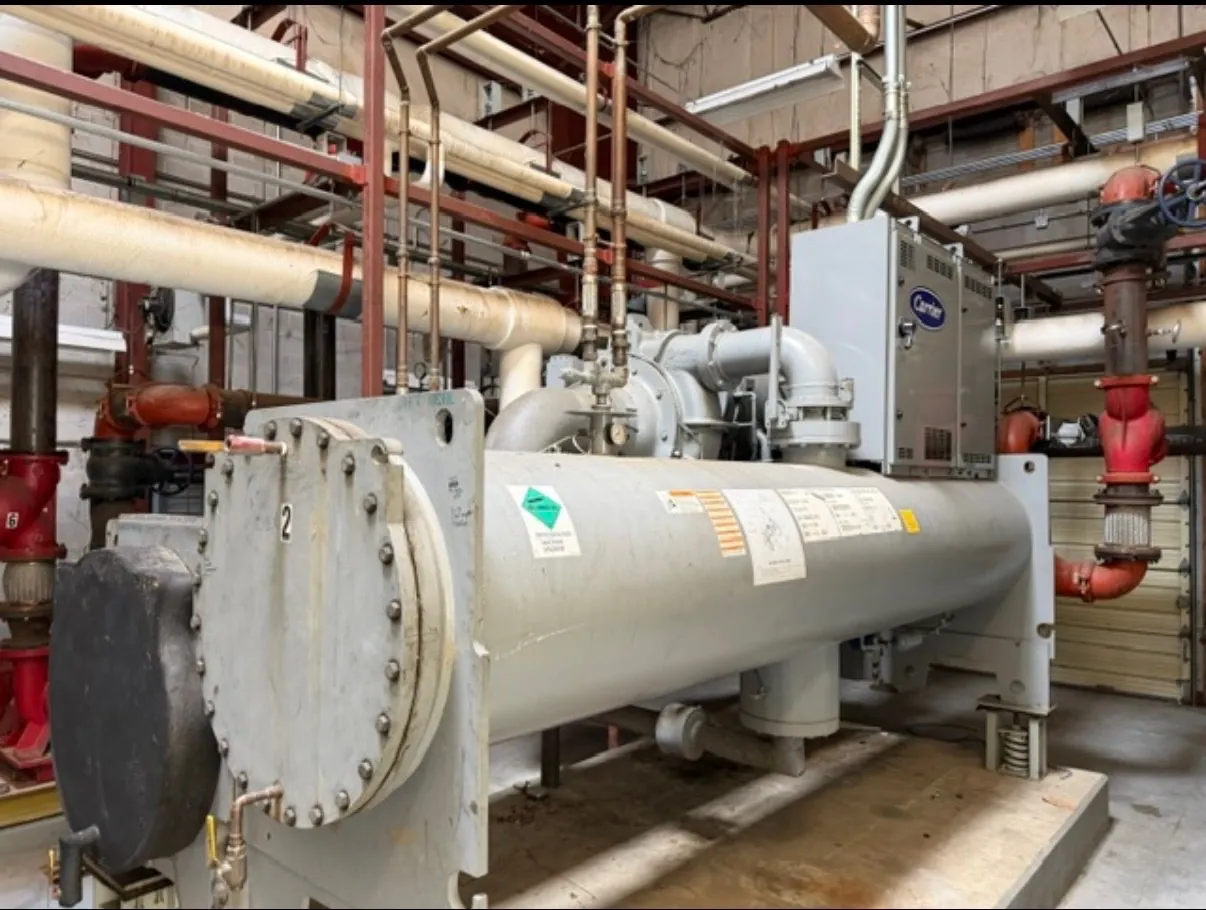
Sell a 1,000–1,499 Ton Chiller
We consider chillers rated 1,000 to 1,499 tons and handle the agreed removal and freight throughout South Carolina.
We buy chillers. We don’t sell them.
Your chiller.
Our logistics.
Have a surplus or decommissioned chiller? We’re the buyer—here to make moving it straightforward.
From a single unit to equipment from a larger facility, tell us what you have. We buy industrial and commercial chillers across South Carolina and coordinate the work to get them moved.
See how it works
All types & sizes
Air-cooled or water-cooled, centrifugal, screw or scroll. Tell us what you have.
We handle the logistics
We coordinate rigging, refrigerant recovery, loading and freight for the equipment we buy.
Made for sellers
Send the details and nameplate photos to start a conversation about your chiller.
Three steps.
One less chiller.
- 01
Send the details
Share what you know, along with photos of the unit and nameplate.
- 02
Get a quote
We’ll review your equipment and discuss an offer with you.
- 03
Leave the logistics to us
We coordinate removal and freight for the chillers we purchase.
Sell a 1,000–1,499 Ton Chiller in South Carolina
South Carolina Chiller Buyers purchases used chillers directly from owners. If you are considering selling your 1,000–1,499 ton chiller, compare the full purchase scope, not just the offered amount. At this size, access, lifting requirements, refrigerant handling, loading, and freight can affect what the buyer can agree to do and how removal is scheduled.
We buy chillers; we do not sell replacement equipment. We consider all tonnages, including units below 20 tons, with 20 to 2,000+ tons being a common range. We also consider all brands and refrigerants. An offer depends on the specific equipment and the agreed scope, so a stated capacity alone cannot establish a price or removal date.
Confirm what the tonnage refers to
If the nameplate lists a capacity from 1,000 to 1,499 tons, send a clear photo of the entire label. Include the manufacturer and, if known, the compressor or condenser type. Explain whether the tonnage comes from the unit’s nameplate, a drawing, or an estimate. That distinction helps the buyer assess the information consistently rather than treating a planning figure as a verified rating.
Capacity is not transport weight. A chiller’s tonnage describes its cooling capacity, not how much it weighs or what lifting equipment removal may require. Dimensions, configuration, connected components, and the route out of the building all matter when assessing handling. If you have manufacturer dimensions or equipment records, share them; avoid estimating weight from capacity alone.
Compare the scope behind each offer
When reviewing a purchase proposal, ask what work the buyer is taking responsibility for after an agreement. South Carolina Chiller Buyers handles disconnects, necessary refrigerant recovery through appropriately qualified personnel, crane and rigging, loading, hauling, and freight. Freight is covered. Sellers do not need to test, start, repair, or prepare the chiller to request an offer.
These scope details make comparisons more meaningful. For example, if one proposal leaves you responsible for arranging lifting or transport while another includes those items, the headline amounts do not describe the same transaction. Confirm what is included before deciding; the final scope and schedule depend on the equipment and the agreement.
Share access information without testing the unit
Large central-plant machines can involve tight clearances and heavy lifts. A nameplate photo, any manufacturer’s dimensions, and a simple sketch showing the route to the exterior can help the buyer assess access without requiring a seller-run test. Useful details may include doorway or corridor constraints, changes in level, overhead obstructions, and where a crane or rigging crew might need to work, if known.
Do not energize, open, drain, vent, cut, or dismantle equipment to prepare for an offer. If the chiller is already out of service, simply state that. The buyer can consider the information available and discuss any remaining questions as part of the purchase review.
Separate refrigerant from process fluid
Refrigerant is part of the chiller’s refrigeration circuit; process fluid, such as water or another circulating medium, belongs to the system the chiller serves. They are not interchangeable terms, and a note that a machine is “empty” may not make clear which fluid you mean. If you know the equipment’s status, describe it plainly without opening or draining anything.
After an agreed purchase, the buyer coordinates necessary refrigerant recovery through appropriately qualified personnel. Sellers should not vent refrigerant or attempt recovery themselves as a condition of requesting an offer. If you are uncertain about the unit’s contents or status, say so rather than trying to verify it through hands-on work.
Plan around authorization and site access
The authorized owner or site representative must give permission for the sale and coordinate access for removal. This remains important even when the buyer handles disconnects, rigging, loading, and freight. If the chiller is at a site managed by someone else, confirm who can authorize the transaction and arrange access before relying on a removal plan.
For instance, if a unit is in an interior plant room with a restricted route, a sketch and known dimensions may help identify questions to resolve before scheduling. That is an illustrative situation, not an assumption about any particular South Carolina property. The actual removal approach and timing depend on the equipment, site conditions, and agreed terms.
What to send when requesting an offer
- A clear photo of the full nameplate and any available manufacturer dimensions.
- The known or estimated capacity, with its source identified.
- Manufacturer, compressor or condenser type if known, and refrigerant information if available.
- A brief description or sketch of the route from the chiller to the exterior, including apparent clearance constraints.
These details help South Carolina Chiller Buyers evaluate your 1,000–1,499 ton chiller and discuss a practical purchase scope. Payment is upfront after an agreed purchase. The offer and removal schedule are specific to the equipment and agreement; no particular price or date can be promised before those factors are reviewed.
Ready to move
your chiller?
Tell us what you know. If you’re unsure of a detail, leave it blank. Nameplate photos are a great place to start.

Request a quote.
Fill out what you can and we’ll be in touch.