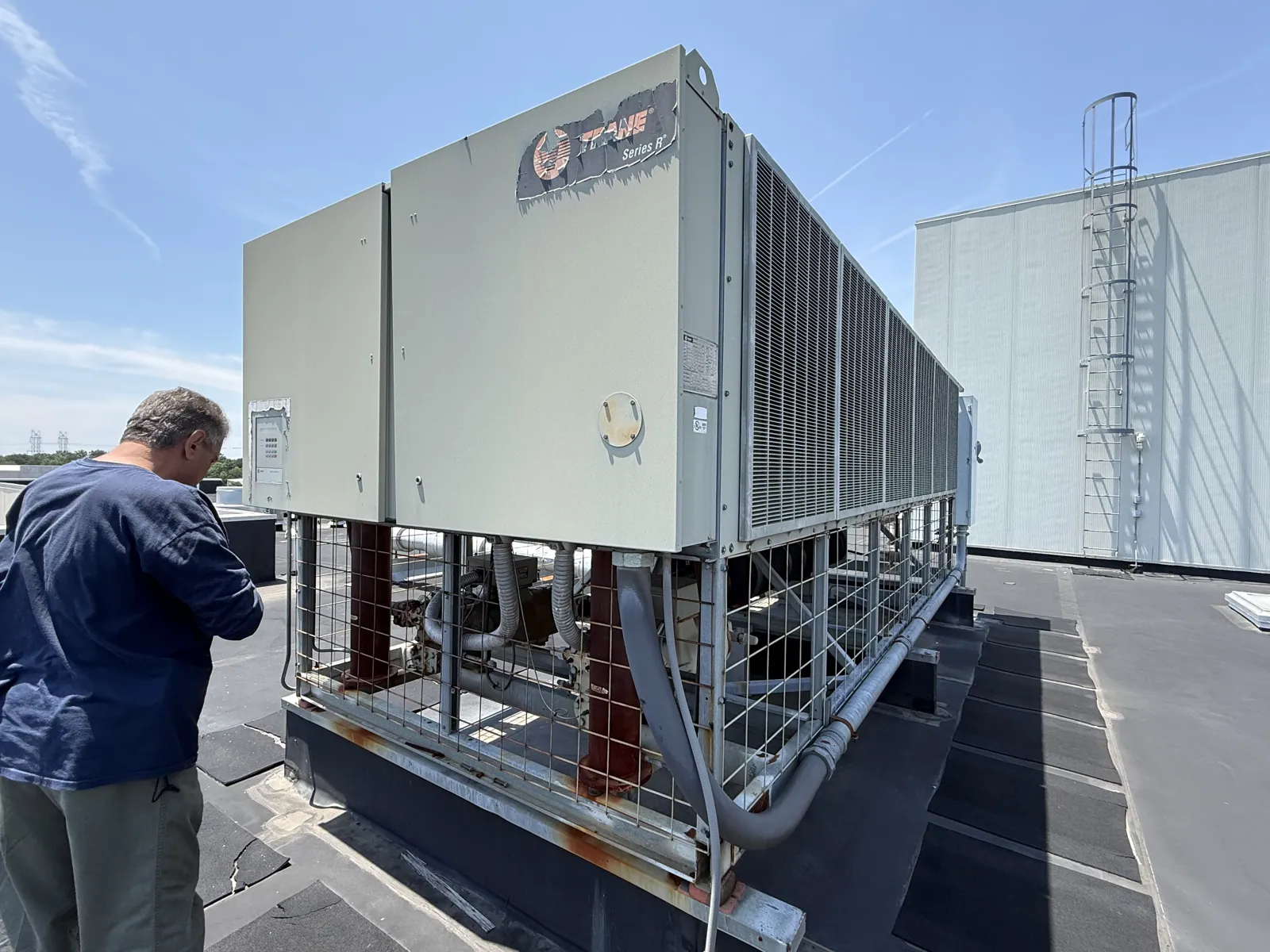
Sell a 150–199 Ton Chiller
We consider chillers rated 150 to 199 tons and handle the agreed removal and freight throughout South Carolina.
We buy chillers. We don’t sell them.
Your chiller.
Our logistics.
Have a surplus or decommissioned chiller? We’re the buyer—here to make moving it straightforward.
From a single unit to equipment from a larger facility, tell us what you have. We buy industrial and commercial chillers across South Carolina and coordinate the work to get them moved.
See how it works
All types & sizes
Air-cooled or water-cooled, centrifugal, screw or scroll. Tell us what you have.
We handle the logistics
We coordinate rigging, refrigerant recovery, loading and freight for the equipment we buy.
Made for sellers
Send the details and nameplate photos to start a conversation about your chiller.
Three steps.
One less chiller.
- 01
Send the details
Share what you know, along with photos of the unit and nameplate.
- 02
Get a quote
We’ll review your equipment and discuss an offer with you.
- 03
Leave the logistics to us
We coordinate removal and freight for the chillers we purchase.
Sell a 150–199 Ton Chiller in South Carolina
South Carolina Chiller Buyers purchases used chillers directly from owners in South Carolina. If your equipment is rated between 150 and 199 tons, send the available details for a purchase review. We buy equipment; we do not sell replacement chillers. We consider all brands and refrigerants, and can review units across a wide range of capacities, including those below 20 tons.
The first step is sharing what you know—not testing or preparing the machine. You do not need to start, repair, or make the chiller ready for shipment to request an offer. The owner supplies equipment information, while the person responsible for site access helps clarify location, restrictions, and removal coordination. Those roles may be handled by the same person or by different people.
Separate the cooling rating from shipping weight
A stated tonnage is a cooling-capacity rating, not the machine’s transport weight. For a 150–199 ton chiller, give any available weight and dimensions as separate information. These details help the buyer assess the handling and lift plan; they should not be inferred from tonnage alone. If the weight is unknown, say so rather than estimating it as a confirmed figure.
Send a clear photograph of the complete nameplate if one is available. Include the manufacturer and compressor or condenser type when known. Explain whether the stated capacity comes from the actual unit’s label, a drawing, or an estimate. That distinction helps the buyer understand how firm the capacity information is without requiring anyone to access or operate the equipment.
What to include in the first message
Useful information can be gathered in stages. Start with the chiller’s general identity and condition, then add site and access details if someone else manages them. Photos of the whole machine, nameplate, and visible connections can help identify the unit and plan a possible removal. Do not open, energize, drain, vent, cut, or dismantle equipment to obtain pictures or measurements.
- Capacity source, manufacturer, and any known model or equipment type
- Available weight and dimensions, kept separate from the tonnage rating
- Overall photographs, nameplate image, and visible connection photographs
- Known condition, whether the unit is in place, and any relevant removal constraints
- Name and contact information for the authorized owner or site representative coordinating access
If a detail is not available, identify it as unknown. A complete, accurate account is more useful than a precise-sounding guess.
Keep equipment facts and access facts connected
The owner or authorized seller should provide the purchase information and confirm that they have authority to sell the chiller. The site access contact may be a facilities representative, property manager, or another person designated by the owner. That contact can explain where the unit is located, how a crew may reach it, and what coordination is needed. These are examples of possible roles, not assumptions about any particular South Carolina site.
For example, if the owner has the nameplate and operating history but does not manage the property, they can send those equipment details first and identify the access contact. The contact can then address entry arrangements, equipment location, and known restrictions. If one person handles both responsibilities, they can provide both sets of information together. In either case, the authorized owner or site representative must grant permission and coordinate access.
Explain condition without attempting a startup
Describe the condition as it is known: for instance, whether the chiller was reported to be operating before shutdown, has a known issue, or has an uncertain history. These are conditional examples, not claims about any specific unit. Do not restart the machine to verify a description, and do not arrange repairs just to request an offer. The buyer can consider the available facts and ask follow-up questions where needed.
Also distinguish the chiller’s refrigerant from any process fluid associated with the equipment or connected system. They are not interchangeable descriptions. If you know the refrigerant, report it; if you do not, say so. Do not vent, drain, or open the equipment to identify either substance. Any necessary refrigerant recovery after purchase is handled by appropriately qualified personnel.
Offer, payment, and removal planning
After reviewing the equipment information and access conditions, South Carolina Chiller Buyers can discuss an offer. The amount and removal schedule depend on the specific chiller, the information available, site conditions, and the terms agreed between the parties. No particular price or removal date can be promised before those details are reviewed. Payment is upfront under the agreed purchase.
Once a purchase is agreed, the buyer handles disconnects, necessary refrigerant recovery through appropriately qualified personnel, crane and rigging, loading, hauling, and freight. Freight is covered. The seller does not need to hire a carrier or ship the chiller. The site representative still needs to authorize access and coordinate the work at the property.
Make the next step straightforward
Send the capacity evidence, available equipment details, and photographs, then identify who can approve and coordinate access in South Carolina. If the 150–199 ton figure is based on an estimate or drawing rather than the nameplate, state that plainly. Clear separation of verified equipment facts, unknowns, and site-access information gives the buyer a practical basis for evaluating your chiller and discussing the next step.
Ready to move
your chiller?
Tell us what you know. If you’re unsure of a detail, leave it blank. Nameplate photos are a great place to start.

Request a quote.
Fill out what you can and we’ll be in touch.