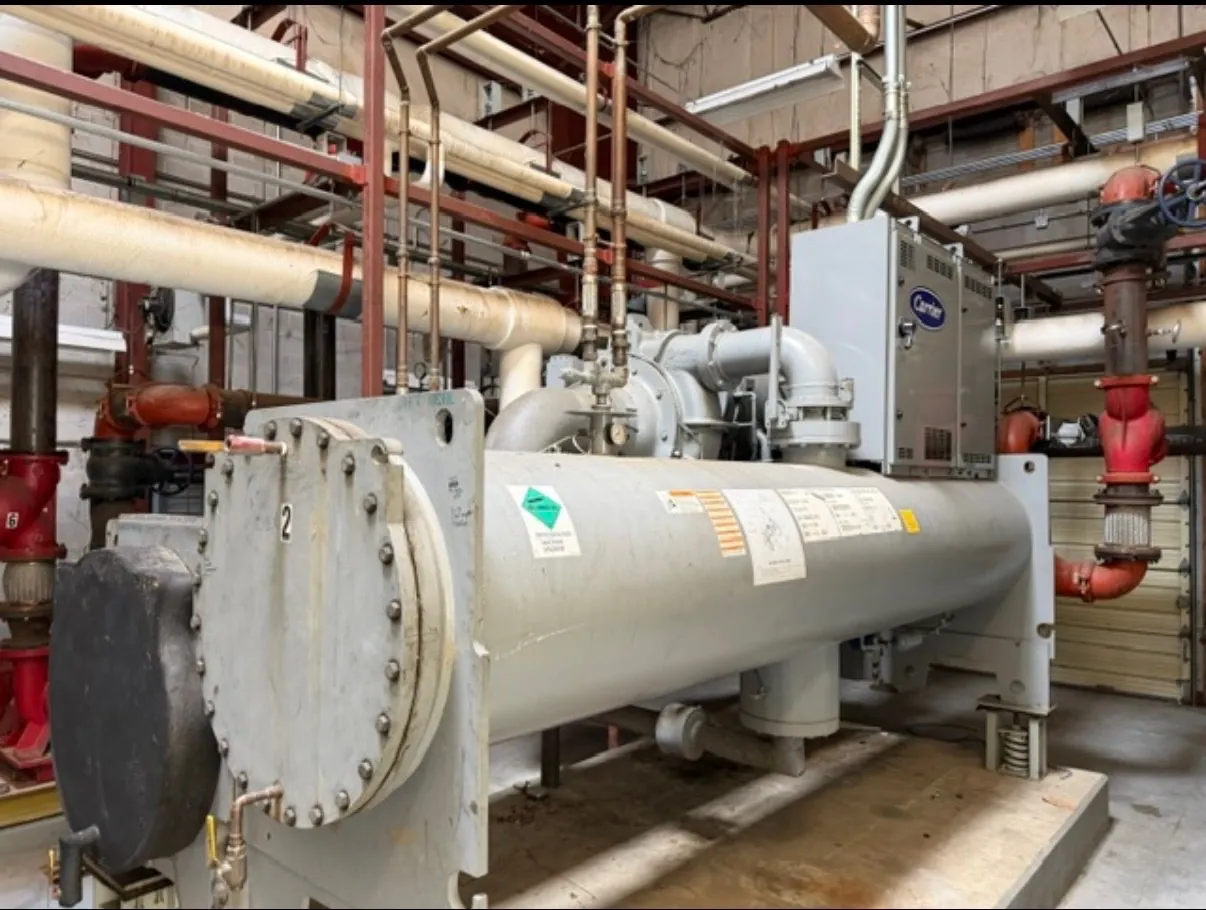
Sell a 200–299 Ton Chiller
We consider chillers rated 200 to 299 tons and handle the agreed removal and freight throughout South Carolina.
We buy chillers. We don’t sell them.
Your chiller.
Our logistics.
Have a surplus or decommissioned chiller? We’re the buyer—here to make moving it straightforward.
From a single unit to equipment from a larger facility, tell us what you have. We buy industrial and commercial chillers across South Carolina and coordinate the work to get them moved.
See how it works
All types & sizes
Air-cooled or water-cooled, centrifugal, screw or scroll. Tell us what you have.
We handle the logistics
We coordinate rigging, refrigerant recovery, loading and freight for the equipment we buy.
Made for sellers
Send the details and nameplate photos to start a conversation about your chiller.
Three steps.
One less chiller.
- 01
Send the details
Share what you know, along with photos of the unit and nameplate.
- 02
Get a quote
We’ll review your equipment and discuss an offer with you.
- 03
Leave the logistics to us
We coordinate removal and freight for the chillers we purchase.
Sell a 200–299 Ton Chiller in South Carolina
If you own a used chiller rated from 200 to 299 tons, South Carolina Chiller Buyers can consider it for purchase. We are a direct buyer, not a seller of replacement equipment. For an owner comparing offers, the useful question is not only “What is the price?” but also “What work, access coordination, and removal responsibility are included in the purchase scope?”
We consider chillers across all tonnages, including units below 20 tons; 20 to 2,000+ tons is a common range. We also consider all brands and refrigerants. An offer depends on the particular equipment and the terms agreed, so a capacity range alone cannot establish a price or removal date.
Compare the Full Purchase Scope
When reviewing a potential sale, distinguish the amount offered for the equipment from the work the buyer will handle after the purchase is agreed. South Carolina Chiller Buyers provides upfront payment and handles disconnects, necessary refrigerant recovery through appropriately qualified personnel, crane and rigging, loading, hauling, and freight. Freight is covered.
That scope can matter when comparing alternatives. For example, if one possible buyer expects the owner to arrange rigging or freight while another takes on those tasks after agreement, the headline amounts do not describe the same transaction. Confirm what is included, what access the site must provide, and which obligations remain with the authorized owner or site representative before deciding.
Capacity Is Not Transport Weight
A rating of 200 to 299 tons describes cooling capacity; it does not tell you the chiller’s transport weight, dimensions, number of sections, or lifting requirements. Those details affect how equipment may be moved and loaded. The route to the loading point can be as important as the capacity: a large unit already removed may present a different access situation from an assembled chiller in a mechanical room or on a roof.
When requesting an offer, identify whether your 200–299 ton chiller is assembled, installed in a mechanical room, located on a roof, or already removed. If it consists of multiple pieces, say so. Describe the path and access conditions as you understand them, including any known limits that could affect removal planning. Do not dismantle or modify equipment to prepare it for a request.
Help Confirm the Equipment Rating
If the nameplate lists a rating from 200 to 299 tons, send a clear photograph of the whole label. Include the manufacturer and, if known, the compressor or condenser type. Explain whether the capacity comes from the actual unit’s nameplate, a drawing, or an estimate. This distinction helps avoid treating an approximate or system-level figure as a confirmed rating for the chiller being offered.
If the label is unavailable or difficult to read, provide the information you can identify without opening or altering the equipment. A drawing or other existing record may help clarify what is being considered, but note its source. The buyer can review the information and determine whether more detail is needed to evaluate the unit and plan a possible removal.
Equipment Condition and Refrigerant Details
You do not need to test, start, repair, or prepare the chiller to request an offer. Do not energize it or open, drain, vent, cut, or dismantle it for the inquiry. If you already know that it is operating, idle, incomplete, or has a reported issue, describe that status plainly; avoid presenting an unverified condition as confirmed.
Refrigerant and process fluid are different. Refrigerant is part of the chiller’s refrigeration circuit; process fluid, such as water or another circulating medium, belongs to the connected cooling system. You do not need to handle either to ask about a sale. After an agreed purchase, necessary refrigerant recovery is handled by appropriately qualified personnel. Share any known information about the equipment and its condition without attempting to release or remove fluids.
Ownership, Access, and Removal Planning
The authorized owner or site representative must provide permission and coordinate access. That responsibility remains important even though the buyer handles the removal work and freight after agreement. If the unit is in a controlled area, on a roof, or behind site-specific access restrictions, the representative should explain the arrangements and limitations so a removal plan can be considered.
For example, if a chiller is still installed and the route to the loading point is not yet confirmed, an offer and schedule may depend on clarifying access and removal conditions. If it is already removed, the location and loading access still matter. These are planning distinctions, not guarantees of a particular price, lifting method, or date.
Information to Gather Before Requesting an Offer
- Clear whole-nameplate photo, if available, and the source of the stated capacity.
- Manufacturer and known compressor or condenser type.
- Whether the chiller is assembled, in a mechanical room, on a roof, or removed.
- Known condition, number of pieces, and route or access details for removal.
- Confirmation that you are the owner or authorized representative, or can coordinate the owner’s permission.
Agree on Terms Before Scheduling
Once the equipment information and site conditions have been reviewed, discuss the purchase terms and removal scope before making arrangements. Payment is upfront, while the offer and removal schedule depend on the equipment and the agreement. Do not assume a specific price or date from the tonnage alone. A clear description of the unit, its location, and access conditions gives both parties a more practical basis for considering a sale in South Carolina.
Ready to move
your chiller?
Tell us what you know. If you’re unsure of a detail, leave it blank. Nameplate photos are a great place to start.

Request a quote.
Fill out what you can and we’ll be in touch.