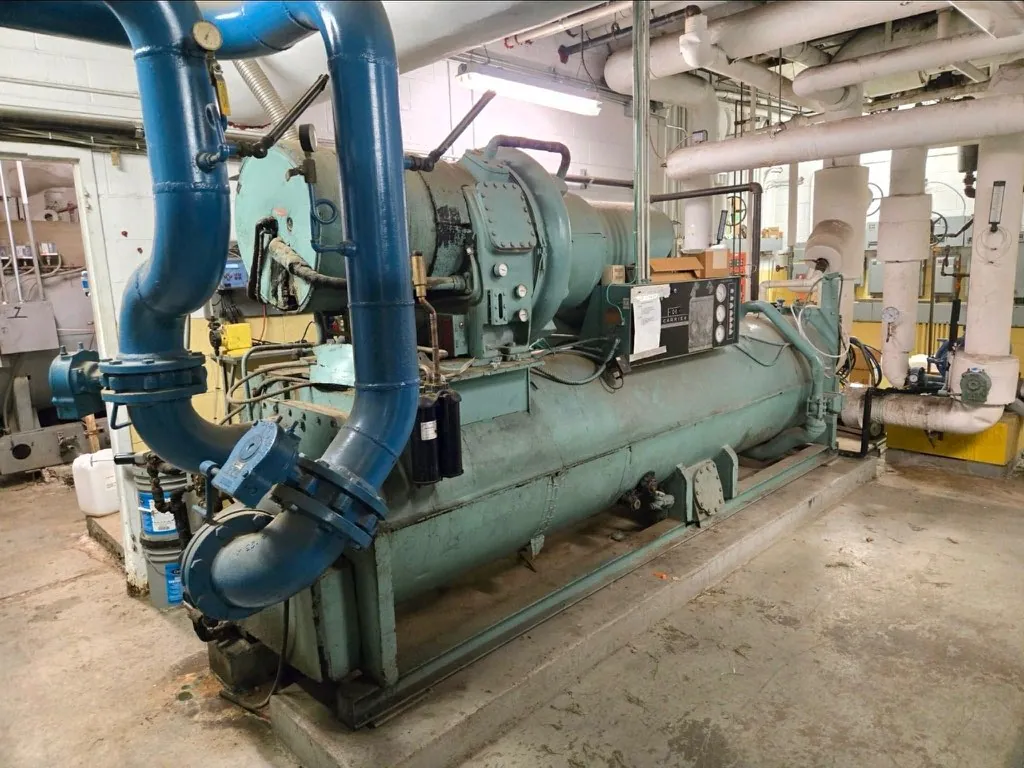
Sell a Used Office Building Chiller
We buy surplus office building chiller equipment and manage removal in coordination with the property.
We buy chillers. We don’t sell them.
Your chiller.
Our logistics.
Have a surplus or decommissioned chiller? We’re the buyer—here to make moving it straightforward.
From a single unit to equipment from a larger facility, tell us what you have. We buy industrial and commercial chillers across South Carolina and coordinate the work to get them moved.
See how it works
All types & sizes
Air-cooled or water-cooled, centrifugal, screw or scroll. Tell us what you have.
We handle the logistics
We coordinate rigging, refrigerant recovery, loading and freight for the equipment we buy.
Made for sellers
Send the details and nameplate photos to start a conversation about your chiller.
Three steps.
One less chiller.
- 01
Send the details
Share what you know, along with photos of the unit and nameplate.
- 02
Get a quote
We’ll review your equipment and discuss an offer with you.
- 03
Leave the logistics to us
We coordinate removal and freight for the chillers we purchase.
Sell a Used Office Building Chiller in South Carolina
South Carolina Chiller Buyers purchases surplus chillers from office properties across South Carolina. If a machine is inactive and its service history is incomplete, you can still request an offer without first proving that it operates. We are a direct buyer, not a seller of replacement equipment. We consider chillers of all tonnages, including units below 20 tons; 20 to 2,000+ tons is a common range. All brands and refrigerants are considered.
An office property's chiller may become surplus during a replacement, vacancy, or building closure. Before requesting an offer, establish who owns the equipment and who can authorize its sale. A building manager, property owner, tenant, or another authorized representative may need to approve access. Clarifying those roles early helps avoid delays after the parties agree on a purchase.
Start With What You Can Confirm
For an inactive machine with uncertain history, separate known information from estimates. Share the available nameplate details, approximate location in the building, and any records already on hand. If capacity or model information is missing, say so rather than guessing. Photographs or existing documents can help describe the equipment, but do not enter a hazardous area or disturb panels to obtain them.
Useful context may include whether the chiller was recently removed from service, whether its condition is unknown, or whether records indicate a prior fault. These details help frame the evaluation; they are not a request to restart, test, repair, open, drain, vent, cut, or dismantle the unit. You do not need to make the chiller operational or prepare it for an offer.
Capacity Is Not the Same as Removal Weight
Chiller tonnage describes cooling capacity, not the machine's transport weight or the space required to rig it out. A compact-looking unit can still present a substantial lifting and access challenge, while a larger-capacity machine may be assembled in a configuration that affects handling. For an office building, the route from the equipment room to an exterior loading point can matter as much as the unit's rated capacity.
If known, report the chiller's approximate dimensions, weight, and whether it is in a basement, rooftop area, or mechanical room. Do not estimate by moving or opening equipment. Unknown measurements can be identified as unknown and addressed as part of the removal review. The offer and schedule depend on the specific equipment and the agreement reached.
Flag Building Conditions That Could Affect Removal
Access conditions are project questions, not assumptions about your property or work you must perform. Mention any shared risers, other active equipment near the chiller, restricted service entrances, parking limitations, or known restrictions on moving loads through the building. If the unit sits among systems that must remain in service, identify that concern so the removal plan can account for it.
For example, if a chiller is in a shared mechanical space and adjacent equipment remains active, that may affect the work sequence and access window. If a service entrance is too small for the equipment, the removal team may need to assess another route or handling approach. These are conditional examples; the appropriate plan depends on the actual site and the parties' agreement. Do not disconnect equipment or arrange a shipment yourself.
Chiller Versus Other Building Equipment
Office properties often have multiple cooling components, but not every item in a mechanical room is part of the chiller being sold. A building may also contain pumps, cooling towers, air handlers, controls, or piping. Identify what is included in the proposed sale and what must remain, especially where components are shared or serve other active systems. This distinction helps prevent confusion during evaluation and removal planning.
Refrigerant inside a chiller is different from water or another process fluid in connected piping. Do not attempt to drain or release either. After a purchase is agreed, South Carolina Chiller Buyers handles disconnects and necessary refrigerant recovery through appropriately qualified personnel, along with crane and rigging, loading, hauling, and freight. Freight is covered.
What to Share When Requesting an Offer
A concise, candid description is more useful than an unsupported claim that a machine is in good condition. Include the following details when available:
- Chiller brand, model, capacity, and refrigerant, or which details are unknown.
- Whether the unit is operating, inactive, or of uncertain status, without testing it.
- Who owns the machine and which authorized representative can approve access.
- Its location, known access constraints, nearby active equipment, and any records already available.
You do not need to test, start, repair, or prepare your office building chiller to request an offer. Payment is upfront after an agreed purchase. The buyer coordinates removal and freight; the authorized owner or site representative still provides permission and coordinates access. No particular price or removal date can be promised before the equipment and agreement are reviewed.
Ready to move
your chiller?
Tell us what you know. If you’re unsure of a detail, leave it blank. Nameplate photos are a great place to start.

Request a quote.
Fill out what you can and we’ll be in touch.