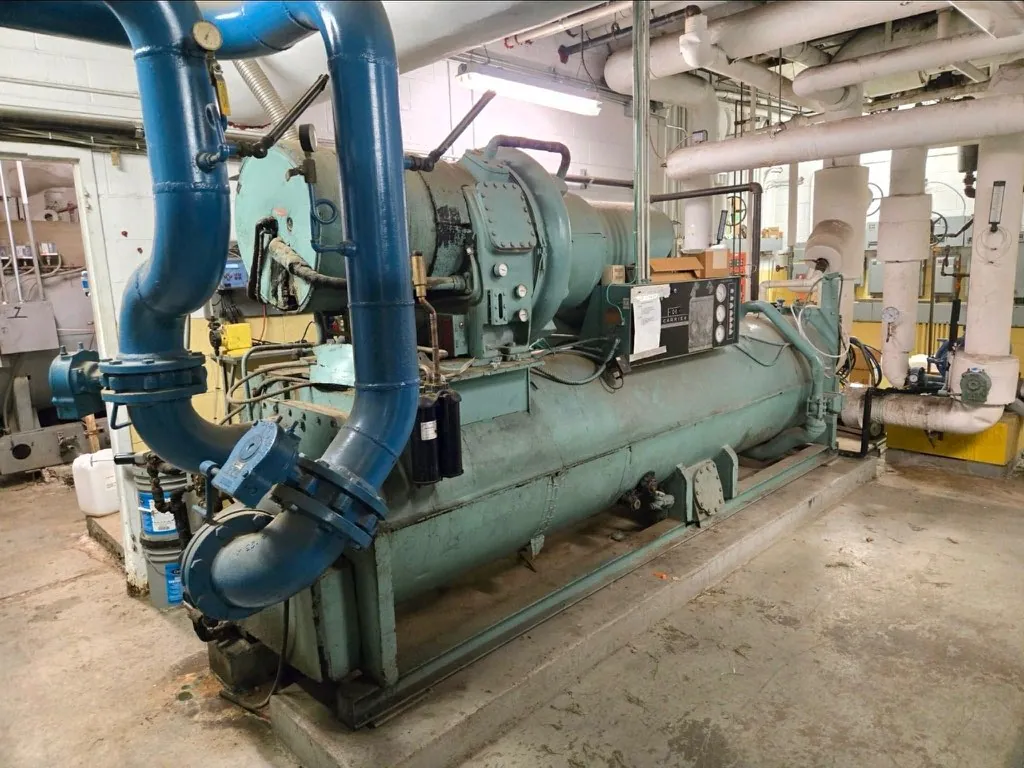
Sell a Used Pharmaceutical Facility Chiller
We buy surplus pharmaceutical facility chiller equipment and manage removal in coordination with the property.
We buy chillers. We don’t sell them.
Your chiller.
Our logistics.
Have a surplus or decommissioned chiller? We’re the buyer—here to make moving it straightforward.
From a single unit to equipment from a larger facility, tell us what you have. We buy industrial and commercial chillers across South Carolina and coordinate the work to get them moved.
See how it works
All types & sizes
Air-cooled or water-cooled, centrifugal, screw or scroll. Tell us what you have.
We handle the logistics
We coordinate rigging, refrigerant recovery, loading and freight for the equipment we buy.
Made for sellers
Send the details and nameplate photos to start a conversation about your chiller.
Three steps.
One less chiller.
- 01
Send the details
Share what you know, along with photos of the unit and nameplate.
- 02
Get a quote
We’ll review your equipment and discuss an offer with you.
- 03
Leave the logistics to us
We coordinate removal and freight for the chillers we purchase.
Sell a Used Pharmaceutical Facility Chiller in South Carolina
South Carolina Chiller Buyers purchases surplus pharmaceutical facility chillers directly from their owners. We are a buyer, not a seller of replacement equipment. If a unit is no longer needed, is being retired during a facility change, or is one of several similar machines being evaluated, you can request an offer without first testing, starting, repairing, or preparing the chiller.
We consider all tonnages, including units below 20 tons. Capacities from 20 to 2,000+ tons are common, but size alone does not determine whether equipment is worth reviewing. We consider all brands and refrigerants. Payment is upfront after the purchase terms are agreed; the offer and removal schedule depend on the equipment and the agreement.
Identify the Right Unit Before Discussing Removal
Where a pharmaceutical facility has several similar chillers, precise identification helps keep the sale scope separate from equipment that remains in service. Use information already available from asset records, equipment labels, or site documentation to distinguish the intended unit. You can share its location, manufacturer, model, serial number, and stated capacity if known, along with any uncertainty about those details. Do not open or energize equipment to find information.
Also clarify who owns the chiller and who has authority to approve its sale. If an authorized site representative must provide permission, identify that role early. This helps prevent a misunderstanding in which a unit is discussed for purchase but cannot be released by the owner or responsible representative.
Keep the Retired Chiller Separate from Active Utilities
A retired machine may sit among equipment that continues to support controlled operations. Describe the chiller’s known isolation boundary at a practical level: which identified unit is being considered and which adjacent or connected assets must remain outside the agreed scope. You do not need to disclose proprietary process details. If the boundary is not yet confirmed, say so rather than assuming that appearance or proximity establishes which systems can be removed.
For example, if a facility has several matching units and only one is surplus, identify that unit by its existing asset reference and location, subject to confirmation by the site representative. The other chillers should not be treated as included simply because they look alike. Any scope or access question can be resolved with the authorized representative before removal planning proceeds.
Share Relevant Site Procedures Without Exposing Process Information
Tell us about site-entry, cleanliness, or documentation procedures that could affect moving the equipment. Useful information might include who coordinates access, what advance notice is needed, what records must be reviewed, and whether the route or work area has site-specific controls. Share only what is necessary to plan the agreed work; proprietary formulas, product details, or other sensitive process information are not needed to request an offer.
The buyer can coordinate disconnects and removal with the designated site representative after the scope is agreed. The representative still needs to provide permission and coordinate access. Clear communication about the chiller’s location, the approved route, and any relevant site procedures helps establish a workable plan without suggesting that the seller must arrange shipment or dismantle the unit.
Capacity Does Not Tell the Whole Removal Story
A chiller’s rated tonnage describes cooling capacity, not the weight or dimensions that determine how it can be moved. Transport planning may depend on the machine’s physical configuration, installed components, access route, lifting clearances, and the equipment needed for rigging. A smaller-capacity unit is not automatically easy to move, and a high-tonnage unit is not automatically excluded.
Likewise, refrigerant and process fluid are different considerations. Refrigerant is part of the chiller’s cooling system; a facility’s process fluid may belong to a separate connected circuit. Do not drain, vent, cut, or dismantle anything to prepare for an inquiry. If records identify the refrigerant or describe the connected services, that information can help clarify the scope without requiring anyone to handle the equipment.
What Happens After an Agreed Purchase
Once the purchase scope is agreed, South Carolina Chiller Buyers handles the removal work: disconnects, necessary refrigerant recovery through appropriately qualified personnel, crane and rigging, loading, hauling, and freight. Freight is covered. The seller does not need to hire a carrier, ship the chiller, or arrange its preparation.
Removal timing is not guaranteed in advance. It depends on the equipment, agreed scope, site access, and the schedule established with the representative. If entry or documentation procedures apply, discuss them while the scope and removal plan are being coordinated.
Information That Can Help Start an Offer
You can begin with what is readily known and note anything that needs confirmation. A concise description helps distinguish one machine from similar equipment while avoiding unnecessary disclosure:
- Unit identification, location, and known capacity
- Brand, model, serial number, and refrigerant if available
- Confirmation of ownership or the authorized sale representative
- Known isolation boundary and equipment excluded from the sale
- Relevant entry, cleanliness, documentation, and access procedures
South Carolina Chiller Buyers can review pharmaceutical facility chillers of varied ages, brands, capacities, and refrigerants. An offer is based on the specific equipment and agreed terms, not on an assumed value or a promised removal date. Accurate identification and a clear site contact are practical first steps toward evaluating surplus equipment while protecting utilities that remain in operation.
Ready to move
your chiller?
Tell us what you know. If you’re unsure of a detail, leave it blank. Nameplate photos are a great place to start.

Request a quote.
Fill out what you can and we’ll be in touch.