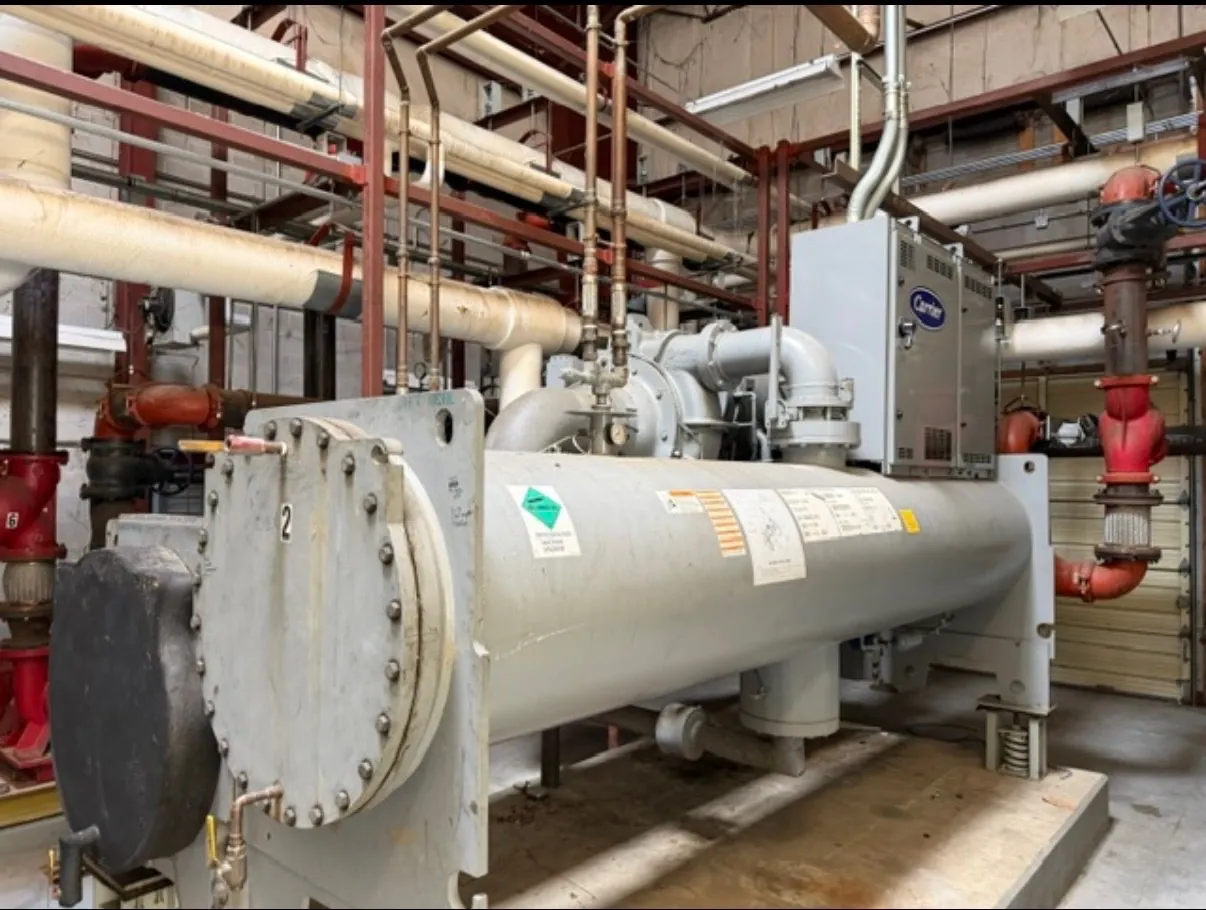
Sell a Used Laboratory Chiller
We buy surplus laboratory chiller equipment and manage removal in coordination with the property.
We buy chillers. We don’t sell them.
Your chiller.
Our logistics.
Have a surplus or decommissioned chiller? We’re the buyer—here to make moving it straightforward.
From a single unit to equipment from a larger facility, tell us what you have. We buy industrial and commercial chillers across South Carolina and coordinate the work to get them moved.
See how it works
All types & sizes
Air-cooled or water-cooled, centrifugal, screw or scroll. Tell us what you have.
We handle the logistics
We coordinate rigging, refrigerant recovery, loading and freight for the equipment we buy.
Made for sellers
Send the details and nameplate photos to start a conversation about your chiller.
Three steps.
One less chiller.
- 01
Send the details
Share what you know, along with photos of the unit and nameplate.
- 02
Get a quote
We’ll review your equipment and discuss an offer with you.
- 03
Leave the logistics to us
We coordinate removal and freight for the chillers we purchase.
Sell a Used Laboratory Chiller in South Carolina
If a laboratory is closing, relocating or clearing surplus equipment, deciding what to do with its chiller can be a separate task from winding down the work it supported. South Carolina Chiller Buyers purchases used chillers directly; we do not sell replacement equipment. We consider laboratory chillers of all tonnages, including units under 20 tons. Units from 20 to 2,000+ tons are also common in the market we evaluate, and we consider all brands and refrigerants.
You do not need to establish that the chiller is ready to run before requesting an offer. It may be operating, idle, disconnected, in need of repair or of unknown condition. Share what you know, and be clear about what is uncertain. The equipment and the agreed terms determine whether there is a purchase and when removal can be scheduled; neither a particular price nor a specific removal date can be promised in advance.
Start with the Laboratory’s Closure Plan
Before treating the chiller as ordinary surplus, identify who has authority to approve its sale and who can coordinate access at the property. An authorized owner or site representative must grant permission and help arrange entry, even though you do not need to hire a rigging or freight company. If the laboratory is part of a larger building, confirm which party controls the room, loading route and any restricted areas.
A useful first description includes the unit’s model and any known capacity information, its general condition, and whether it is still connected to other systems. If the nameplate or records are unavailable, say so rather than guessing. A laboratory chiller might serve one instrument, a process or a building loop; that role can affect what needs to be distinguished from the chiller during a sale.
Define What Is Included
Describe whether associated pumps, controls and heat exchangers are included in the proposed sale or will remain with the laboratory. Note any other equipment that shares a skid or sits close to the chiller, so the purchase boundary can be discussed before removal planning. A connected accessory is not automatically part of the chiller purchase, and an item that the laboratory intends to keep should be identified early.
Also distinguish the chiller’s refrigeration circuit from the laboratory’s process-fluid piping. Refrigerant belongs to the chiller’s refrigeration system; process fluid may circulate between the unit and an instrument or other laboratory equipment. These are different systems, and a description of one does not establish the condition or contents of the other. Do not open piping, drain fluid or try to demonstrate operation. The buyer can discuss the equipment boundary and safe handling before removal.
Flag Access and Handling Concerns
Tell us about known access restrictions and any process-fluid or contamination concerns relevant to the equipment or its surroundings. Useful details may include controlled entry procedures, limited working hours, a narrow route, steps, overhead obstructions or restrictions on moving items through adjoining spaces—if applicable to your site. This information helps determine what questions and coordination are needed; it does not mean you should move or prepare the chiller yourself.
Do not energize, open, drain, vent, cut or dismantle the unit to gather information. You are not required to test, start, repair or prepare it to request an offer. If the condition or contents are unknown, report that plainly and let the buyer discuss the next steps and the scope of removal with the authorized site contact.
Separate Capacity from Removal Weight
Tonnage describes cooling capacity, not the weight that must be lifted or hauled. A compact laboratory chiller can still require careful handling, while a higher-capacity machine may have a different transport profile depending on its construction and configuration. Model details, dimensions if already available, and site access are more useful for removal planning than treating tonnage as a weight estimate. Do not attempt to measure or reposition equipment if doing so would create a safety risk.
Laboratory chillers are not limited to one size, brand or refrigerant. A unit below 20 tons is not automatically outside consideration, and an unfamiliar make or refrigerant does not by itself settle whether the chiller can be purchased. The actual equipment and sale terms still need review.
What Happens After an Agreed Purchase
Once a purchase is agreed, South Carolina Chiller Buyers handles the removal logistics: disconnects, necessary refrigerant recovery through appropriately qualified personnel, crane and rigging, loading, hauling and freight. Freight is covered. The laboratory’s role is to ensure the authorized owner or site representative has approved the work and can coordinate access and any applicable site procedures; the seller does not need to ship the chiller.
Payment is upfront. The removal schedule depends on the equipment, site conditions and agreement, so allow the access plan and equipment boundary to be settled before relying on a closure date. If building access is limited or other laboratory equipment must remain in place, raise that during the discussion rather than assuming the chiller can be removed on a particular day.
A Practical Information Checklist
When you request an offer for surplus laboratory chillers in South Carolina, a concise account of the following can help start a clear discussion:
- Model, known capacity, brand and refrigerant information, if available.
- Whether the chiller is operating, idle, disconnected or of unknown condition.
- Which pumps, controls and heat exchangers are included or staying with the laboratory.
- Known process-fluid or contamination concerns, access restrictions and the authorized site contact.
These details are a starting point, not a demand that you inspect or prepare the equipment. Describe what is known, identify uncertainties and let the buyer discuss the proposed scope, offer and removal schedule with the person authorized to approve access and the sale.
Ready to move
your chiller?
Tell us what you know. If you’re unsure of a detail, leave it blank. Nameplate photos are a great place to start.

Request a quote.
Fill out what you can and we’ll be in touch.