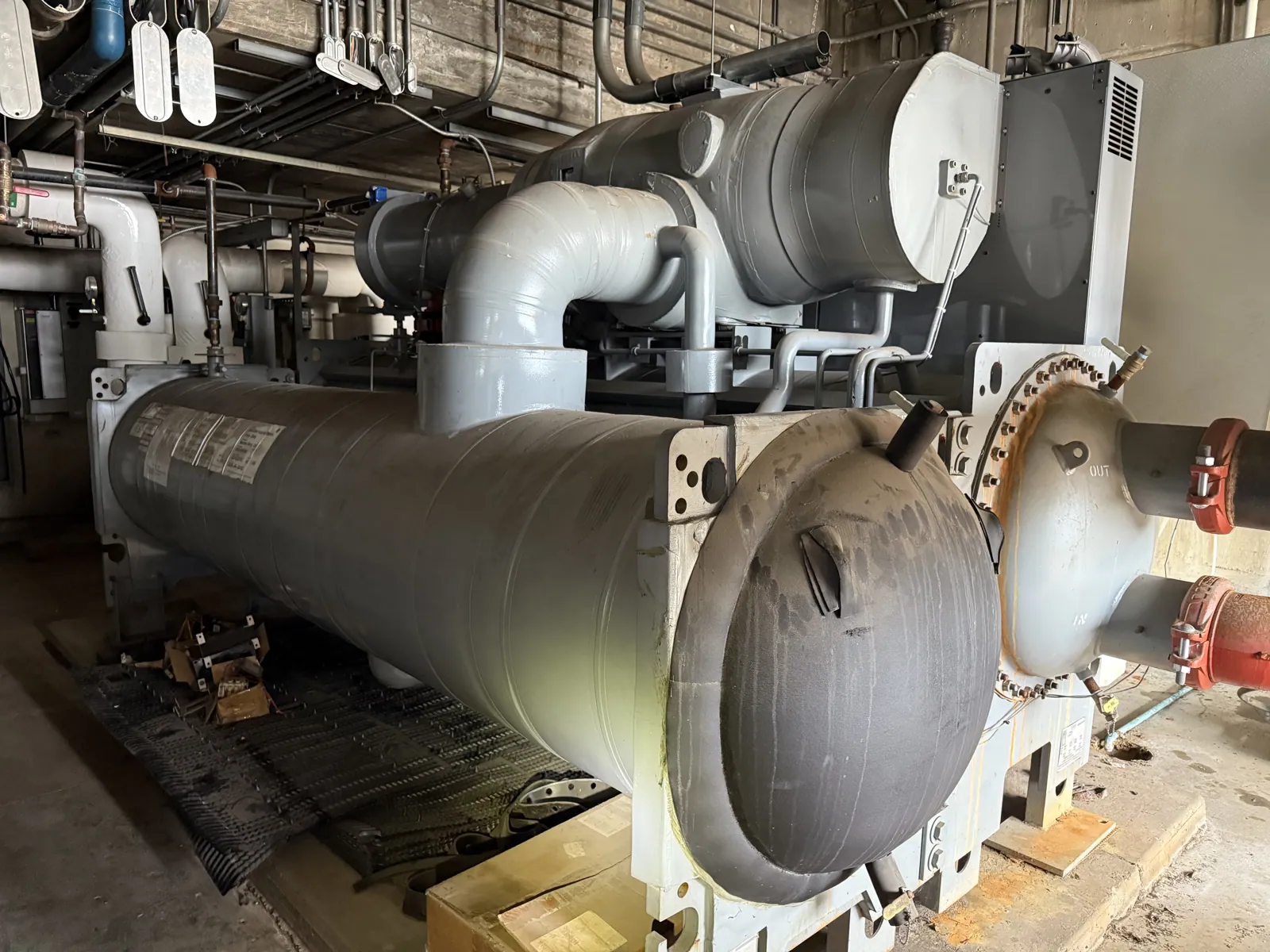
Sell a Used Campus Chiller
We buy surplus campus chiller equipment and manage removal in coordination with the property.
We buy chillers. We don’t sell them.
Your chiller.
Our logistics.
Have a surplus or decommissioned chiller? We’re the buyer—here to make moving it straightforward.
From a single unit to equipment from a larger facility, tell us what you have. We buy industrial and commercial chillers across South Carolina and coordinate the work to get them moved.
See how it works
All types & sizes
Air-cooled or water-cooled, centrifugal, screw or scroll. Tell us what you have.
We handle the logistics
We coordinate rigging, refrigerant recovery, loading and freight for the equipment we buy.
Made for sellers
Send the details and nameplate photos to start a conversation about your chiller.
Three steps.
One less chiller.
- 01
Send the details
Share what you know, along with photos of the unit and nameplate.
- 02
Get a quote
We’ll review your equipment and discuss an offer with you.
- 03
Leave the logistics to us
We coordinate removal and freight for the chillers we purchase.
Sell a Used Campus Chiller in South Carolina
When a campus closes, consolidates buildings, or replaces its central plant, a chiller may become surplus before the surrounding systems are ready to change. South Carolina Chiller Buyers purchases used chillers directly from authorized owners. We buy equipment; we do not sell replacement units. Campus facilities teams, property owners, and authorized representatives can request an offer without first testing, starting, repairing, or preparing the chiller.
We consider all tonnages, including units below 20 tons. Chillers from 20 to 2,000+ tons are also common, and we consider all brands and refrigerants. Whether your campus chiller is a stand-alone machine or part of a larger plant, the first step is to establish what is being sold and what the campus still needs to protect.
First, Confirm the Chiller Is Truly Surplus
A campus closure or plant replacement can leave equipment serving more than one building. Before requesting an offer, identify whether the specific chiller is retired or still needed by a shared loop, controls network, or neighboring machine. A unit may look redundant while still supporting another building’s cooling or operating sequence.
For example, if a replacement plant is expected to take over service only after a later phase, the existing chiller may need to remain untouched until that transition is complete. If a machine is already retired and isolated from future campus plans, it may be a stronger candidate for sale. These are planning examples, not assumptions about any particular campus. Do not open, energize, drain, vent, cut, or dismantle equipment to establish its status.
Separate the Chiller from the Campus System
The chiller is one asset; its connected system may include piping, controls, electrical connections, pumps, or equipment shared with other buildings. Be clear about which machine is included in the sale and which components must remain. If a shared loop or control arrangement must be preserved, flag that boundary early so the removal plan can account for it.
Chiller capacity and transport weight are different considerations. Tonnage describes cooling capacity, not the load a crane or trailer must handle. The unit’s construction, dimensions, configuration, and site access affect removal planning. Do not estimate lifting requirements from capacity alone or attempt to prepare the machine yourself. The buyer can review available equipment information and coordinate the agreed removal work.
Identify the Owner and Campus Access Contact
The equipment owner and the person who manages campus access may be different people. The owner or authorized representative must have permission to sell the chiller. A facilities, security, property, or project contact may separately need to approve entry, routes, work hours, and coordination with other campus operations.
When requesting an offer, identify both roles if they are separate. Also note any exam periods, public events, occupancy limits, construction phases, or other restrictions that could affect access. For instance, if a building is occupied during exams, a removal window may need to avoid that period. The schedule depends on the equipment, access conditions, and the final agreement; no particular date is guaranteed.
Share Useful Information Without Preparing the Unit
Provide what is already available, such as the manufacturer, model, approximate capacity, refrigerant, equipment location, and known access constraints. Existing records, nameplates that can be viewed safely, or project documents may help describe the asset. You do not need to operate the chiller to verify details or arrange repairs before asking for an offer.
Refrigerant and process fluid are not interchangeable terms. Refrigerant circulates within the chiller’s refrigeration system; process fluid or chilled water may circulate through connected campus piping. Do not drain or release either in preparation for a sale. After an agreed purchase, South Carolina Chiller Buyers handles necessary refrigerant recovery through appropriately qualified personnel as part of the removal process.
What the Agreed Removal Covers
After the purchase is agreed, the buyer handles disconnects, necessary refrigerant recovery, crane and rigging, loading, hauling, and freight. Freight is covered. The seller does not need to hire a carrier or ship the chiller. The authorized owner or site representative still needs to provide permission and coordinate access so the work can be planned around campus conditions.
Removal timing and the offer depend on the equipment and the agreement. A large machine with restricted access may require different planning from a smaller unit in an open service area. Sharing accurate information about the chiller’s status, boundaries, and access conditions helps everyone assess the next steps without assuming a price or removal date in advance.
A Practical Campus Seller Checklist
- Confirm that the chiller is retired and identify any shared loop, controls, or neighboring equipment that must remain untouched.
- Determine who is authorized to sell the asset and who coordinates campus entry and work access.
- Note occupancy, exam, event, or construction restrictions that could affect an agreed removal schedule.
- Share available equipment details and request an offer without testing, repairing, or dismantling the unit.
Request an Offer for Surplus Equipment
South Carolina Chiller Buyers pays upfront after an agreed purchase. If a campus closure or central-plant replacement has left a chiller with no continuing role, provide the information available and explain what must remain in service. That gives the buyer a practical basis to consider the equipment and discuss removal arrangements with the authorized campus contacts.
Ready to move
your chiller?
Tell us what you know. If you’re unsure of a detail, leave it blank. Nameplate photos are a great place to start.

Request a quote.
Fill out what you can and we’ll be in touch.