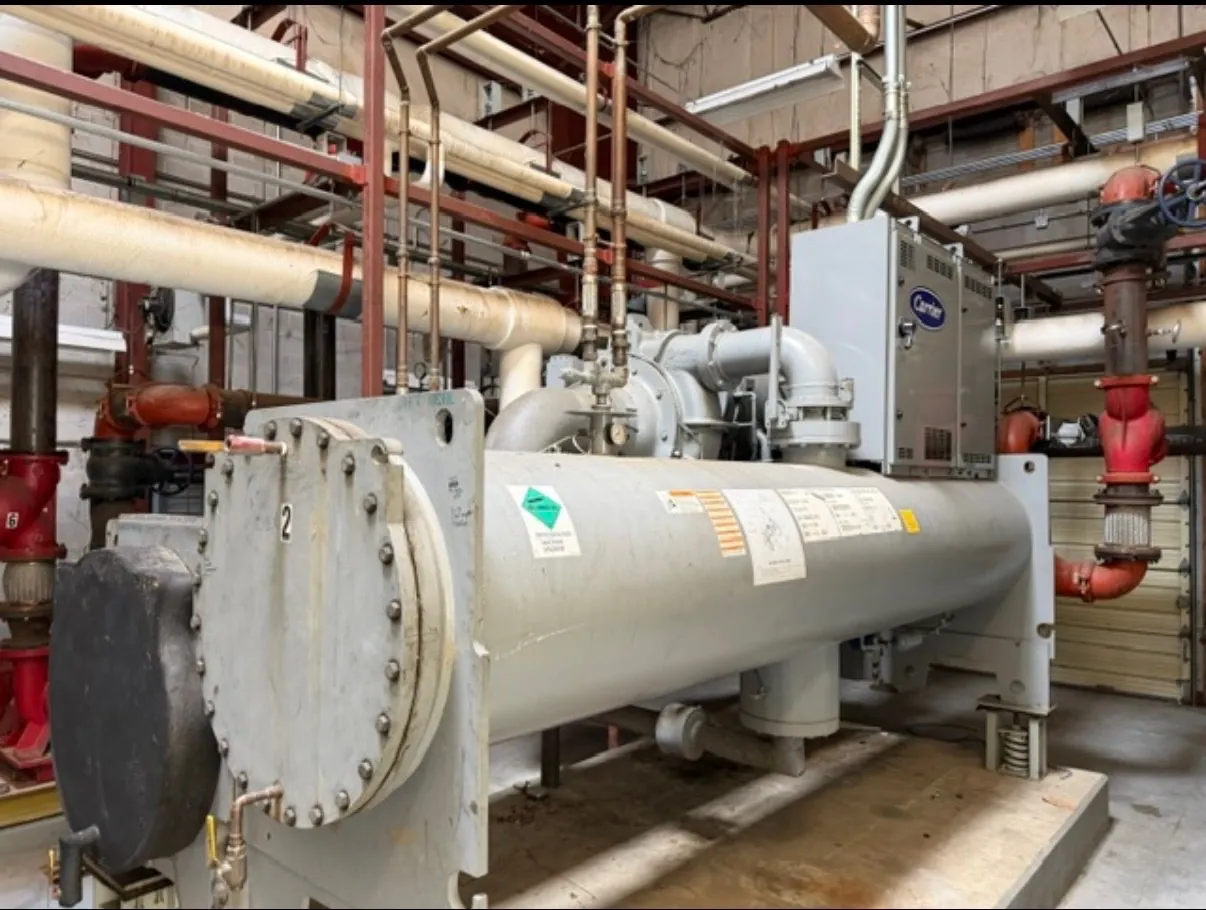
Sell a Used Manufacturing Plant Chiller
We buy surplus manufacturing plant chiller equipment and manage removal in coordination with the property.
We buy chillers. We don’t sell them.
Your chiller.
Our logistics.
Have a surplus or decommissioned chiller? We’re the buyer—here to make moving it straightforward.
From a single unit to equipment from a larger facility, tell us what you have. We buy industrial and commercial chillers across South Carolina and coordinate the work to get them moved.
See how it works
All types & sizes
Air-cooled or water-cooled, centrifugal, screw or scroll. Tell us what you have.
We handle the logistics
We coordinate rigging, refrigerant recovery, loading and freight for the equipment we buy.
Made for sellers
Send the details and nameplate photos to start a conversation about your chiller.
Three steps.
One less chiller.
- 01
Send the details
Share what you know, along with photos of the unit and nameplate.
- 02
Get a quote
We’ll review your equipment and discuss an offer with you.
- 03
Leave the logistics to us
We coordinate removal and freight for the chillers we purchase.
Sell a Used Manufacturing Plant Chiller in South Carolina
South Carolina Chiller Buyers purchases surplus manufacturing plant chillers directly from their owners. We buy equipment; we do not sell replacement chillers. If a plant is shutting down, changing its cooling arrangement, or clearing surplus machinery, you can request an offer for the chiller without first making it operational or ready for removal.
We consider all tonnages, including units below 20 tons. Equipment from 20 to 2,000+ tons is a common part of the market we review, and we consider all brands and refrigerants. The unit’s actual condition, configuration, and removal requirements inform the offer and schedule; no particular price or pickup date is guaranteed.
Clarify What the Chiller Served
During a plant shutdown, a chiller may have provided comfort cooling, cooled process equipment, or served both purposes. In your description, explain how the equipment was used and distinguish it from any production machinery or process lines that will remain. A chiller purchase is not automatically a purchase of the connected production system.
It can help to identify the intended sale boundary in plain terms: the chiller itself, any associated components you intend to include, and nearby assets that are excluded. Do not disconnect or dismantle anything to create that boundary. Share what is known so the proposed scope can be discussed before an agreement is made.
Describe the Plant’s Current Status
Let us know whether the facility is closed, partially operating, or being dismantled. That context helps identify access constraints and the people who need to coordinate a removal. Note any planned production activity, restricted areas, contractor scheduling requirements, or site procedures that could affect access.
For example, if a mechanical room has limited exit clearance, mention that before agreeing on removal arrangements. The buyer can consider the reported constraint when reviewing the equipment and access plan. Do not assume a unit can pass through a doorway based on its cooling capacity or appearance; physical dimensions, route clearance, and handling conditions matter.
Capacity Is Not Transport Weight
Tonnage describes cooling capacity, not the chiller’s shipping weight or the space needed to remove it. Two chillers with similar rated capacity may differ in dimensions, construction, and installed configuration. If available, share equipment identification details, approximate dimensions, photographs, or existing records. You do not need to open or alter the unit to gather information.
Likewise, the refrigerant inside a chiller is different from the process fluid that may have circulated through connected equipment. If you know which fluids were used, report that information as accurately as possible. Do not drain, vent, or handle refrigerant or process fluid to prepare the unit for an offer.
What to Share When Requesting an Offer
A useful initial description can be brief. Provide what you know, flag what is uncertain, and identify the person authorized to discuss the equipment and site access. Helpful details include:
- Manufacturer, model, approximate age, and rated tonnage, if known.
- Whether the chiller served comfort cooling, process equipment, or both.
- Which process lines, machinery, or nearby equipment are excluded from the proposed sale.
- Whether the plant is closed, partly operating, or undergoing dismantling.
- Room location, access route concerns, contractor coordination, and available equipment records.
You do not need to test, start, repair, or prepare the chiller before requesting an offer. If the unit’s operating condition is unknown, say so rather than arranging a startup solely for evaluation.
Removal and Site Coordination
After an agreed purchase, South Carolina Chiller Buyers handles the removal logistics, including disconnects, necessary refrigerant recovery through appropriately qualified personnel, crane and rigging, loading, hauling, and freight. Freight is covered. The owner or authorized site representative must still grant permission and coordinate access with the people responsible for the property.
Removal depends on the particular chiller, the site, and the terms agreed upon. A restricted route, active production area, or contractor schedule may require additional coordination. Discuss those conditions early; the offer and removal schedule depend on the equipment and agreement, so neither a specific amount nor a date should be assumed in advance.
Payment and Next Steps
Payment is upfront under the agreed purchase. To start, describe the chiller, its role in the plant, the assets that are not included, and any access limitations. Share records or photos only if they are available; do not energize, open, cut, dismantle, or otherwise alter equipment to provide them.
A clear account of the equipment and sale boundary helps both sides evaluate a surplus manufacturing plant chiller in South Carolina without confusing cooling capacity with removal requirements or the chiller with retained production assets. Once the details and access arrangements are understood, the purchase and removal can be discussed for the specific site.
Ready to move
your chiller?
Tell us what you know. If you’re unsure of a detail, leave it blank. Nameplate photos are a great place to start.

Request a quote.
Fill out what you can and we’ll be in touch.