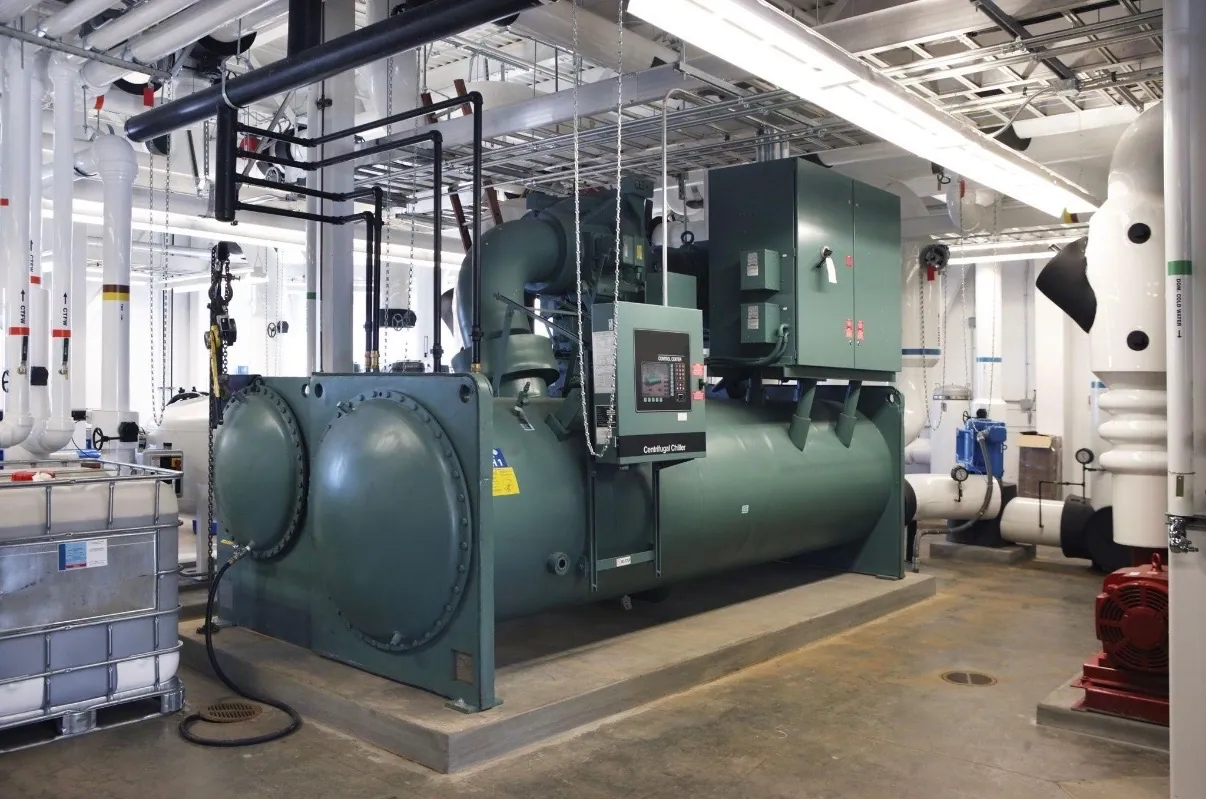
Sell a Used Hotel Chiller
We buy surplus hotel chiller equipment and manage removal in coordination with the property.
We buy chillers. We don’t sell them.
Your chiller.
Our logistics.
Have a surplus or decommissioned chiller? We’re the buyer—here to make moving it straightforward.
From a single unit to equipment from a larger facility, tell us what you have. We buy industrial and commercial chillers across South Carolina and coordinate the work to get them moved.
See how it works
All types & sizes
Air-cooled or water-cooled, centrifugal, screw or scroll. Tell us what you have.
We handle the logistics
We coordinate rigging, refrigerant recovery, loading and freight for the equipment we buy.
Made for sellers
Send the details and nameplate photos to start a conversation about your chiller.
Three steps.
One less chiller.
- 01
Send the details
Share what you know, along with photos of the unit and nameplate.
- 02
Get a quote
We’ll review your equipment and discuss an offer with you.
- 03
Leave the logistics to us
We coordinate removal and freight for the chillers we purchase.
Sell a Used Hotel Chiller in South Carolina
When a hotel retires or replaces central cooling equipment, the chiller may still have resale value—even if it is older, disconnected, or no longer needed. South Carolina Chiller Buyers purchases surplus hotel chillers directly. We consider all tonnages, including units under 20 tons; 20 to 2,000+ tons is a common range. We consider all brands and refrigerants, and pay upfront after a purchase is agreed.
Not sure what you have? You do not need to determine a final value or prove that the machine runs before requesting an offer. Clear, accurate information helps us assess the equipment and discuss a practical removal plan for the property.
Start with the nameplate, not an assumption
Chiller labels can be faded, obscured, or difficult to reach safely. Share the information you can read from an accessible label, such as the manufacturer, model, serial number, and stated capacity. If a field is illegible or missing, say so rather than filling in a guess. A photo can help us interpret the label without asking hotel staff to open or dismantle the unit.
Keep capacity separate from physical size and transport weight. A chiller’s stated tonnage describes cooling capacity; it does not tell us how heavy the equipment is or whether it can pass through a particular doorway. Approximate dimensions, visible configuration, and photos of the unit and surrounding access are useful planning details, but do not attempt to measure by entering an unsafe area or moving building components.
Use retrofit records as clues
Hotel equipment may have been modified during its service life. If available, records such as maintenance notes, past refrigerant service documentation, or retrofit paperwork can clarify what is installed today. Share the documents you have, including any uncertainty or gaps. An old label may show the original configuration, while later records may describe changes; neither should be treated as proof of the present condition without confirmation.
Refrigerant and process fluid are different things. Refrigerant circulates within the chiller’s refrigeration system, while water or another process fluid may serve the building’s cooling loop. Do not infer the refrigerant from the fluid in nearby pipes, a historical document, or the machine’s age. If the current refrigerant is unknown, identify it as unknown. Do not open the equipment, drain fluid, or vent refrigerant to find out.
Explain the hotel’s operating situation
Tell us whether the building is occupied, closed, or operating with limited services, and whether other cooling equipment will remain in use. These details help frame access and scheduling discussions; they do not require you to run the chiller. You are not expected to test, start, repair, clean, or prepare your hotel chiller to request an offer.
For example, if a hotel is occupied and another unit is serving guest areas, the removal discussion may need to account for guest circulation and the remaining cooling system. If the property is closed, access may be simpler, but restricted doors, roof routes, or shared service areas can still affect the plan. These are possibilities to discuss, not assumptions about any particular hotel.
Share the route and site constraints
Loading access, quiet hours, and elevator or roof access can influence removal planning when they apply. Photos of the chiller and the proposed route can help us understand clearances, turns, doors, and the relationship to nearby building services. Note known access limits and any areas that must stay available to guests or staff. Do not move equipment or alter the route to make it appear ready for removal.
The authorized owner or site representative must permit the work and coordinate access. After an agreed purchase, South Carolina Chiller Buyers handles disconnects, necessary refrigerant recovery through appropriately qualified personnel, crane and rigging, loading, hauling, and freight. Freight is covered. The seller does not need to hire a hauler or ship the chiller.
Useful details to gather
- Accessible nameplate photos and any legible make, model, serial, or capacity information.
- Available retrofit or service records, with unknown or conflicting details clearly identified.
- Photos of the equipment, loading area, and proposed route, if safe and permitted.
- Whether the hotel is occupied or closed, what cooling equipment will remain, and any access or quiet-hour constraints.
Agree on scope before removal
We consider the chiller as it is; a seller-run test is not required to begin a conversation. An offer and removal schedule depend on the equipment, site information, access, and the terms agreed with the authorized representative. No specific price or date can be promised before those details are reviewed.
Provide what is known, flag what is not, and let the buyer assess the information. That approach is especially useful when labels are old, retrofit records are incomplete, or hotel operations make access planning important.
Ready to move
your chiller?
Tell us what you know. If you’re unsure of a detail, leave it blank. Nameplate photos are a great place to start.

Request a quote.
Fill out what you can and we’ll be in touch.