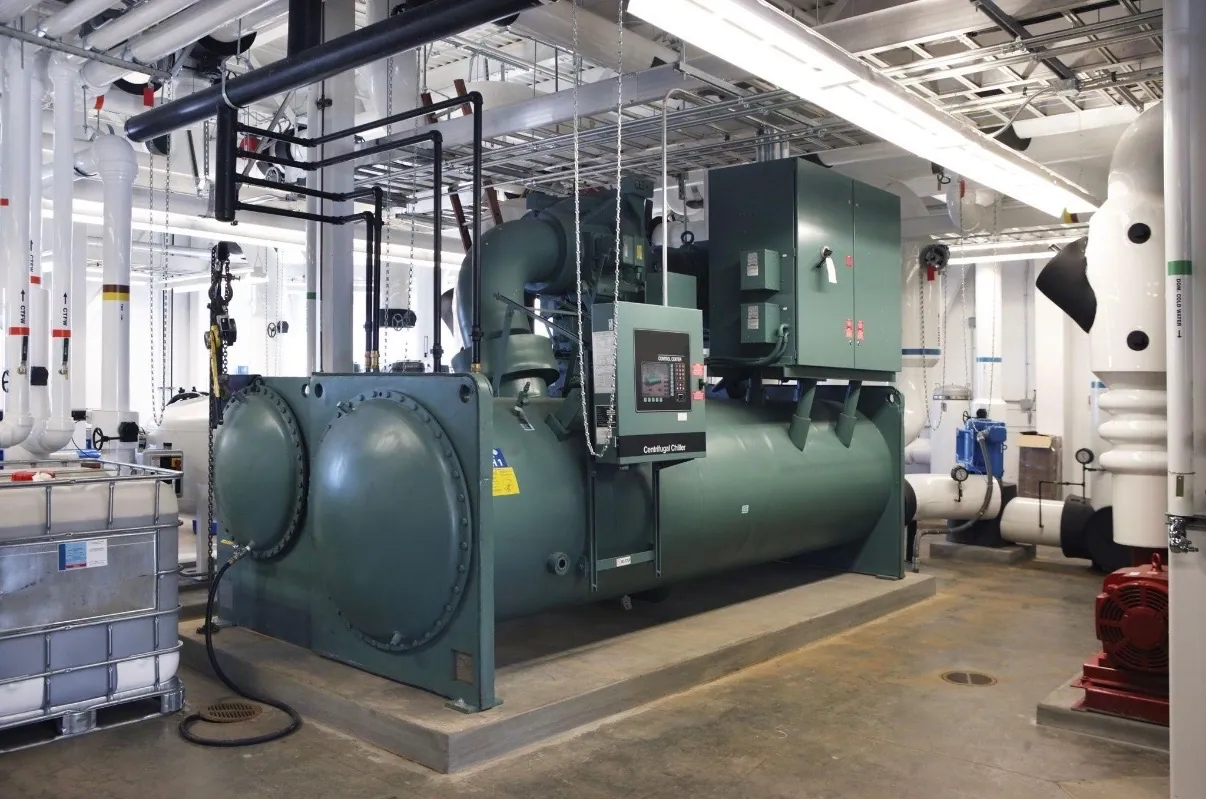
Sell a Used Power Plant Chiller
We buy surplus power plant chiller equipment and manage removal in coordination with the property.
We buy chillers. We don’t sell them.
Your chiller.
Our logistics.
Have a surplus or decommissioned chiller? We’re the buyer—here to make moving it straightforward.
From a single unit to equipment from a larger facility, tell us what you have. We buy industrial and commercial chillers across South Carolina and coordinate the work to get them moved.
See how it works
All types & sizes
Air-cooled or water-cooled, centrifugal, screw or scroll. Tell us what you have.
We handle the logistics
We coordinate rigging, refrigerant recovery, loading and freight for the equipment we buy.
Made for sellers
Send the details and nameplate photos to start a conversation about your chiller.
Three steps.
One less chiller.
- 01
Send the details
Share what you know, along with photos of the unit and nameplate.
- 02
Get a quote
We’ll review your equipment and discuss an offer with you.
- 03
Leave the logistics to us
We coordinate removal and freight for the chillers we purchase.
Sell a Used Power Plant Chiller in South Carolina
South Carolina Chiller Buyers purchases surplus power plant chillers; we do not sell replacement equipment. If a generating unit has shut down, changed operating plans, or no longer needs particular cooling equipment, selling the chiller may be one option for managing surplus assets. We consider all tonnages, including units below 20 tons, with 20 to 2,000+ tons a common range. We consider all brands and refrigerants.
A power plant can contain several cooling and electrical systems, and a shutdown does not necessarily mean they share an owner or disposition plan. Before requesting an offer, identify the specific chiller and establish who is authorized to approve its sale. The chiller may be a standalone asset, or it may be associated with equipment that remains in service or under another party’s control.
Confirm the Asset and Authority First
Useful initial details include the equipment’s location in the plant, its manufacturer and model if known, approximate capacity, and whether it is intact or has already been taken out of service. Photos or existing records may help identify the unit, but you do not need to test or start it, make repairs, or prepare it for a sale inquiry.
Ownership and access are separate questions. An authorized owner or site representative must provide permission for the transaction and coordinate access for removal. If multiple organizations control the plant, clarify who can approve the chiller’s sale and who can grant access to its location. This helps prevent planning around an asset that cannot yet be released.
Describe the Location and Access Conditions
Tell us whether your power plant chiller is in a turbine building, a mechanical area, or a separate enclosure. Note whether adjacent equipment or areas remain restricted, and share any existing isolation or access information that the site representative can provide. These details help the buyer assess how disconnects and lifting may be coordinated without assuming that nearby systems can be accessed or disturbed.
Consider a conditional rooftop situation: if a chiller sits on a roof above an operating area, site permission and crane access may be central to removal planning. The site representative may need to confirm whether a crane can reach the location, what access conditions apply, and which adjacent areas must remain restricted. These are planning questions, not a request for the seller to arrange a crane or dismantle equipment.
Capacity Is Not the Same as Removal Weight
A chiller’s tonnage describes its cooling capacity; it does not tell you how much the equipment weighs or how it can be transported. A high-capacity unit may require a different lifting and hauling plan from a compact unit, but capacity alone cannot establish the correct method. Location, configuration, access, and available equipment information also matter.
If weight or dimensions are not readily available, share what records you have rather than estimating beyond your knowledge. Do not open, drain, cut, dismantle, or energize the chiller to obtain information. The buyer can use the available details to discuss the proposed removal and identify what still needs confirmation with the authorized site representative.
Refrigerant and Process Fluid Are Different
Chillers may contain refrigerant as part of their cooling circuit, while plant process fluid or another water-based circuit may be connected to the equipment. These are not interchangeable terms, and knowing one does not establish the status of the other. Report known information about the chiller and its connections; do not vent refrigerant, drain fluid, or attempt to disconnect lines.
After an agreed purchase, South Carolina Chiller Buyers handles necessary refrigerant recovery through appropriately qualified personnel, along with disconnects and removal coordination. The seller does not need to arrange refrigerant work or prepare the unit before requesting an offer. If the plant has restrictions on access or adjacent systems, the site representative should identify them so the work can be coordinated appropriately.
What Happens After an Agreement
Once a purchase is agreed, the buyer handles the planned disconnects, necessary refrigerant recovery, crane and rigging, loading, hauling, and freight. Freight is covered. The authorized owner or site representative still needs to provide permission and coordinate site access; buyer-managed removal does not replace the site’s control over entry or restricted areas.
The offer and removal schedule depend on the equipment details, location, access conditions, and agreement. No specific price or removal date can be assumed before those factors are reviewed. A clear account of the chiller and its surroundings gives the buyer a more useful basis for discussing the next steps.
Information to Share for an Offer
- Identify the chiller and its known brand, model, capacity, and refrigerant information.
- Describe whether it is in a turbine building, mechanical area, separate enclosure, or rooftop location.
- Note known access limits, adjacent restricted systems, and who can authorize the sale and coordinate entry.
With those details, South Carolina Chiller Buyers can consider your surplus power plant chiller and discuss an offer. Payment is upfront after an agreed purchase. You do not need to test, start, repair, or dismantle the equipment to begin the conversation.
Ready to move
your chiller?
Tell us what you know. If you’re unsure of a detail, leave it blank. Nameplate photos are a great place to start.

Request a quote.
Fill out what you can and we’ll be in touch.