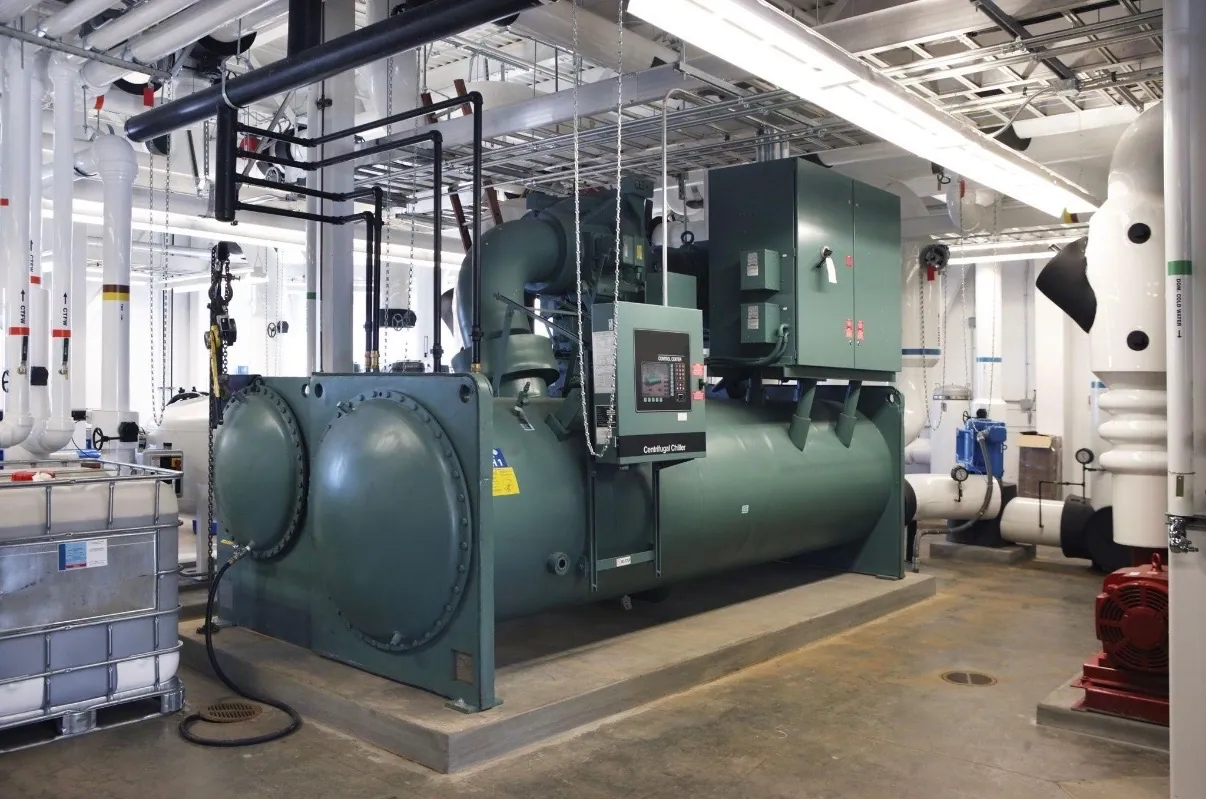
Sell a Used Hospital Chiller
We buy surplus hospital chiller equipment and manage removal in coordination with the property.
We buy chillers. We don’t sell them.
Your chiller.
Our logistics.
Have a surplus or decommissioned chiller? We’re the buyer—here to make moving it straightforward.
From a single unit to equipment from a larger facility, tell us what you have. We buy industrial and commercial chillers across South Carolina and coordinate the work to get them moved.
See how it works
All types & sizes
Air-cooled or water-cooled, centrifugal, screw or scroll. Tell us what you have.
We handle the logistics
We coordinate rigging, refrigerant recovery, loading and freight for the equipment we buy.
Made for sellers
Send the details and nameplate photos to start a conversation about your chiller.
Three steps.
One less chiller.
- 01
Send the details
Share what you know, along with photos of the unit and nameplate.
- 02
Get a quote
We’ll review your equipment and discuss an offer with you.
- 03
Leave the logistics to us
We coordinate removal and freight for the chillers we purchase.
Sell a Used Hospital Chiller in South Carolina
South Carolina Chiller Buyers purchases surplus hospital chillers in South Carolina. We are a direct buyer, not a seller of replacement equipment. If a hospital is closing, replacing central plant equipment, or assessing machinery no longer needed, you can request an offer without first testing, starting, repairing, or preparing your hospital chiller.
We consider all tonnages, including units below 20 tons; 20 to 2,000+ tons is a common range. We consider all brands and refrigerants. Whether a particular chiller is a fit depends on its condition, configuration, location, and the terms both sides agree to. An initial quote does not require patient details or sensitive operational information.
Start with Ownership and Site Coordination
The equipment owner or authorized representative should provide the information needed to identify the chiller and confirm authority to sell it. A separate facilities or site-access contact can explain the conditions for a visit and eventual removal. These roles may belong to the same person, but keeping them distinct helps avoid confusion: ownership establishes permission to sell, while site coordination establishes how and when the equipment can be reached.
For an initial discussion, useful details may include the unit’s manufacturer and model, approximate capacity, visible condition, and general location within the facility. Photos or existing records can help if they are readily available; do not open equipment or create access solely to gather information. The site contact can separately flag access restrictions without sharing protected health information, patient identities, or confidential operating details.
Separate the Chiller from Cooling That Must Continue
At a hospital closure or a facility with continuing patient services, first establish which areas and equipment remain active. A chiller that appears surplus may share piping, controls, electrical infrastructure, or other plant connections with cooling the property still needs. The equipment owner and facilities team should determine whether the specific unit is approved for sale and identify any dependencies before agreeing to removal.
For example, if a site is replacing one chiller while retaining other units for active departments, the owner can identify the unit under consideration and the facilities contact can explain which systems must remain available. That is a planning example, not an assumption about any particular hospital. South Carolina Chiller Buyers does not decide which equipment a facility can safely retire; that determination belongs to the owner and its qualified operational staff.
Share Access Conditions, Not Sensitive Information
Discuss security, infection-control, and protected-area requirements when applicable, and identify permitted access routes. A site contact can explain check-in procedures, escort needs, restricted zones, delivery or staging constraints, and any limits on the timing or route of removal. Share only the information needed to plan an equipment review and, if an agreement is reached, the work.
For instance, if a chiller is reachable only through a controlled service area, the contact can describe the approved route and who must authorize entry. There is no need to disclose patient schedules, names, diagnoses, or sensitive floor plans to request an offer. The buyer plans removal around agreed site conditions; access permission and coordination remain necessary.
Capacity Is Not Transport Weight
Chiller capacity, usually expressed in tons, describes cooling output; it does not tell a mover how heavy or difficult the unit will be to remove. Transport planning depends on the actual equipment, its dimensions and weight, its position, the path out of the building, and the available lifting and loading conditions. A large-capacity unit is not automatically the heaviest, and a smaller unit can still present access challenges.
If records provide model or weight information, the owner can pass them along. The site contact can describe relevant access limits or route conditions. Do not attempt to disconnect, drain, open, cut, or dismantle the chiller to make it easier to evaluate or move. Any technical work must be handled through appropriate qualified personnel and an agreed plan.
What Happens After an Agreement
Once a purchase is agreed, South Carolina Chiller Buyers handles disconnects, necessary refrigerant recovery through appropriately qualified personnel, crane and rigging, loading, hauling, and freight. Freight is covered. The seller does not need to hire a carrier or ship the unit. The authorized owner or site representative must still provide permission and coordinate access, including applicable security or operational arrangements.
Payment is upfront. The offer and removal schedule depend on the equipment and the agreement, so neither a specific price nor a particular removal date can be promised before those details are established. If the facility has continuing services, confirm internally that the proposed timing and access plan fit its operating requirements.
Information That Helps Start a Practical Review
Use the information available without disturbing the equipment. A concise first inquiry can separate commercial questions from access planning and help the owner and site contact contribute the right details.
- Owner or authorized representative’s contact details and confirmation of authority to discuss a sale.
- Chiller make, model, approximate tonnage, refrigerant if known, and general condition or status.
- General equipment location and any known removal-route, security, or access restrictions.
- Site contact information for coordinating a review and, if agreed, removal conditions.
With those basics, the owner can discuss the potential purchase while the site contact clarifies practical constraints. No testing, startup, repair, or special preparation is required just to request an offer.
Ready to move
your chiller?
Tell us what you know. If you’re unsure of a detail, leave it blank. Nameplate photos are a great place to start.

Request a quote.
Fill out what you can and we’ll be in touch.