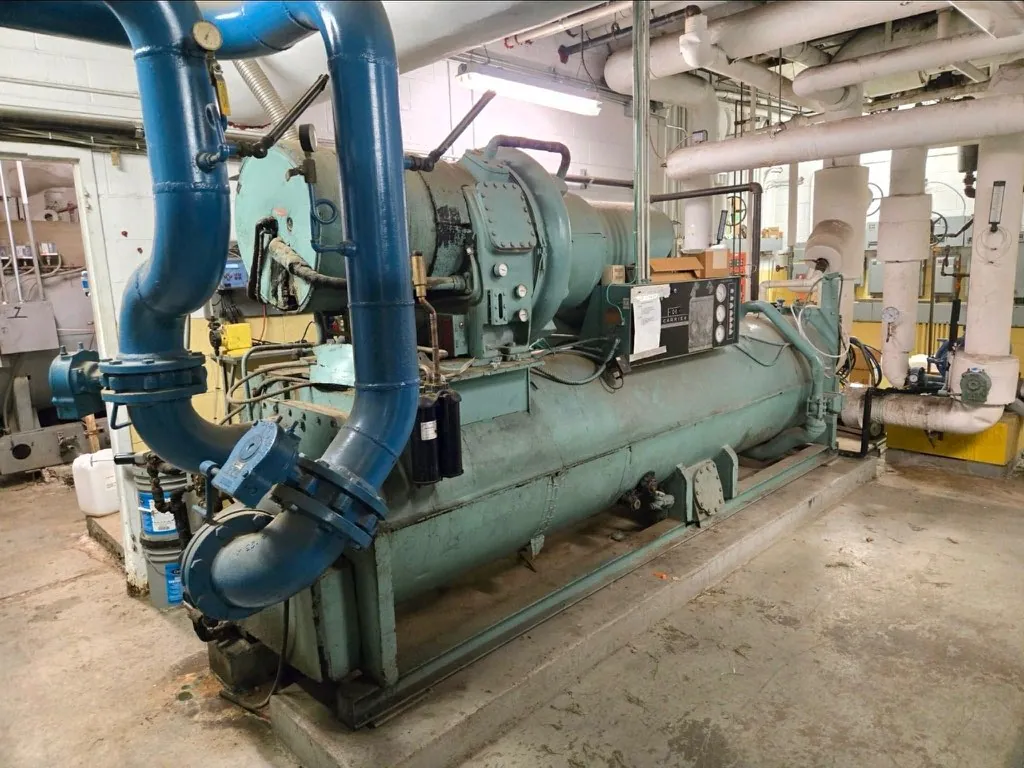
Sell a Used Convention Center Chiller
We buy surplus convention center chiller equipment and manage removal in coordination with the property.
We buy chillers. We don’t sell them.
Your chiller.
Our logistics.
Have a surplus or decommissioned chiller? We’re the buyer—here to make moving it straightforward.
From a single unit to equipment from a larger facility, tell us what you have. We buy industrial and commercial chillers across South Carolina and coordinate the work to get them moved.
See how it works
All types & sizes
Air-cooled or water-cooled, centrifugal, screw or scroll. Tell us what you have.
We handle the logistics
We coordinate rigging, refrigerant recovery, loading and freight for the equipment we buy.
Made for sellers
Send the details and nameplate photos to start a conversation about your chiller.
Three steps.
One less chiller.
- 01
Send the details
Share what you know, along with photos of the unit and nameplate.
- 02
Get a quote
We’ll review your equipment and discuss an offer with you.
- 03
Leave the logistics to us
We coordinate removal and freight for the chillers we purchase.
Turn a Partial Inventory into a Clear Chiller Discussion
Selling a surplus convention center chiller often begins before every equipment detail is known. A facility may have several machines in a central plant, records spread across maintenance files, and events already scheduled around normal operations. You do not need a complete technical survey to request an offer from South Carolina Chiller Buyers. Start with what you can identify, then flag what remains uncertain.
We are a direct buyer of used chillers in South Carolina, not a seller of replacement equipment. We consider all tonnages, including units below 20 tons; 20 to 2,000+ tons is a common range. We consider all brands and refrigerants. The purpose of an initial discussion is to identify the machine under consideration and understand the conditions around a possible purchase and removal.
Identify the Surplus Machine Among Shared Plant Equipment
At a convention or event facility, a chiller may serve more than one hall, connect to shared piping, or operate alongside other machines that must remain available. Be as specific as possible about which unit is surplus. If the equipment tag is difficult to read, a plant label, location description, or existing inventory record may help distinguish it from neighboring units.
Also explain what must stay in service. For example, if one machine is no longer planned for use but other chillers and shared piping support booked events, say so. That distinction helps shape a removal discussion around the surplus unit rather than implying that the entire plant or venue is available for shutdown. Do not disconnect or alter equipment to gather information.
Build a Useful Inventory from Available Records
Useful starting details may include the manufacturer, model, serial number, approximate tonnage, machine type, and refrigerant, when those details are already accessible in records or visible from a safe location. Note whether the chiller is installed, stored, or already disconnected, and mention known condition or operating history without arranging a startup solely for the sale inquiry.
A partial inventory is still helpful. If the model is unknown, identify the room or plant area and describe how the machine is labeled. If records disagree, say that they are uncertain rather than choosing a figure without confirmation. Photographs may help clarify identity when they can be taken safely without opening panels, entering restricted areas, or interfering with operations.
Separate Capacity from the Removal Picture
Capacity in tons helps identify the chiller, but it does not tell the whole story about removal. Transport weight, dimensions, rigging points, access routes, overhead restrictions, and the distance to a loading area can affect the practical plan. Share any information your team already has; do not estimate lifting requirements from capacity alone.
Likewise, refrigerant and process fluid are different. Refrigerant is part of the chiller’s cooling circuit; process fluid, often water or another circulating medium, belongs to the connected system. Existing records may identify the refrigerant, but sellers should not vent refrigerant, drain the system, or open the equipment to verify either fluid. After an agreed purchase, necessary refrigerant recovery is handled by appropriately qualified personnel as part of the buyer’s removal responsibilities.
Account for Events, Deliveries, and Service Access
If events or deliveries are ongoing, describe the scheduling constraints and service access requirements early. A loading dock reserved during setup, restricted plant-room access, or periods when noise and lifting activity would be disruptive may affect the sequence. A site-specific plan can address isolation, removal, staging, and freight without assuming the whole venue will be closed.
For instance, if a facility has an open event calendar but only limited maintenance windows, those windows can be raised during planning. This is a conditional example, not a promised schedule: the eventual timing depends on the equipment, site conditions, access, and agreement. The authorized owner or site representative must provide permission and coordinate access.
What Sellers Do Not Need to Prepare
You do not need to test, start, repair, or prepare the chiller to request an offer. Avoid energizing, opening, draining, cutting, dismantling, or otherwise modifying it for the inquiry. If the machine’s status is unknown, report that plainly. The purchase discussion can proceed from available information, with uncertainties identified rather than concealed.
- Identify the specific surplus chiller and note other plant equipment that must remain.
- Share available nameplate, capacity, refrigerant, condition, and access information.
- Flag event schedules, deliveries, service routes, and site approval requirements.
- Mark unknown details as unknown; no testing or repair is required to request an offer.
Purchase and Removal Responsibilities
Payment is upfront after the purchase is agreed. The offer and removal schedule depend on the equipment and the terms reached; neither a specific price nor a specific date can be assumed before those details are reviewed.
After an agreed purchase, South Carolina Chiller Buyers handles disconnects, necessary refrigerant recovery through appropriately qualified personnel, crane and rigging, loading, hauling, and freight. Freight is covered. The seller does not need to hire a carrier or ship the equipment. The site representative still needs to authorize the work and coordinate access so the agreed removal can be carried out within the facility’s operating constraints.
Start with What You Know
A clear first conversation does not require a perfect inventory. Identify the machine, distinguish it from chillers and piping that must remain in service, and share the records and access details already available. That gives the purchase discussion a practical starting point for surplus convention center chillers in South Carolina while leaving room to resolve missing information before an agreement and removal plan are set.
Ready to move
your chiller?
Tell us what you know. If you’re unsure of a detail, leave it blank. Nameplate photos are a great place to start.

Request a quote.
Fill out what you can and we’ll be in touch.