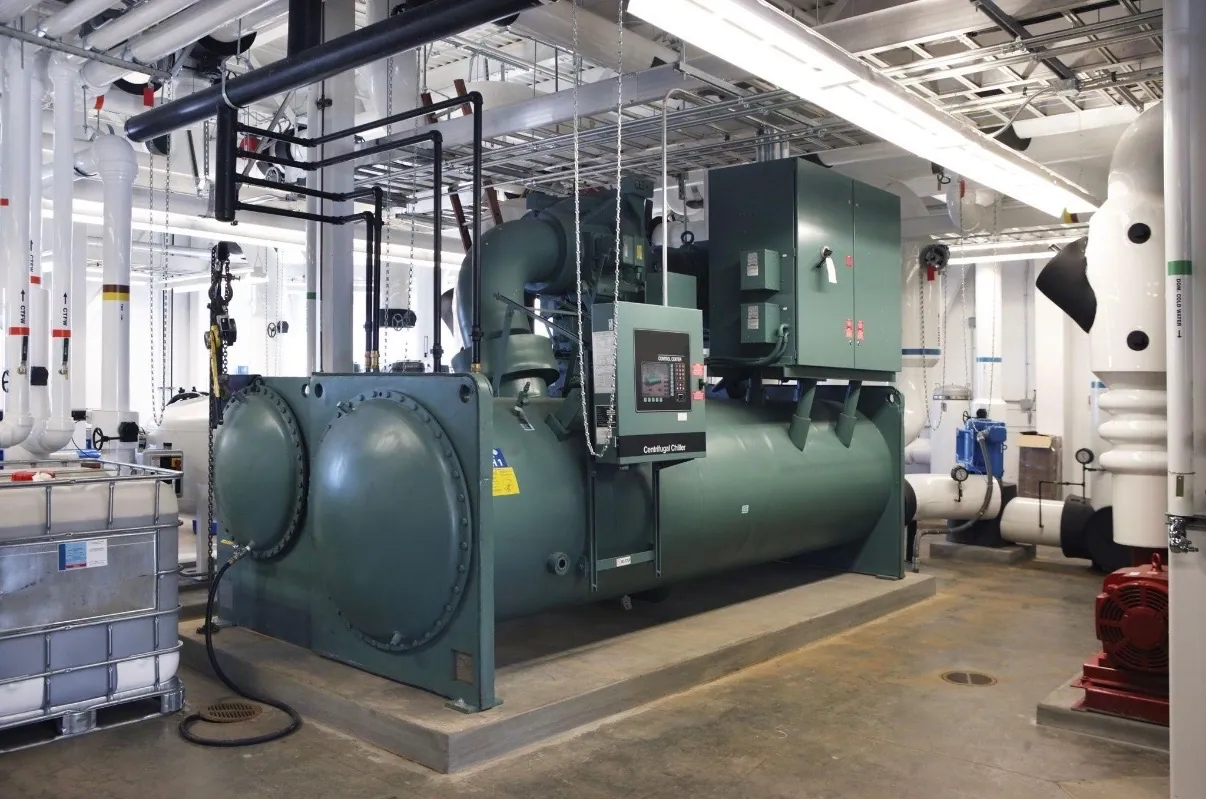
Sell a Used Chiller in North Charleston, SC
We buy used and surplus industrial chillers in North Charleston, with upfront payment and buyer-managed removal.
We buy chillers. We don’t sell them.
Your chiller.
Our logistics.
Have a surplus or decommissioned chiller? We’re the buyer—here to make moving it straightforward.
From a single unit to equipment from a larger facility, tell us what you have. We buy industrial and commercial chillers across South Carolina and coordinate the work to get them moved.
See how it works
All types & sizes
Air-cooled or water-cooled, centrifugal, screw or scroll. Tell us what you have.
We handle the logistics
We coordinate rigging, refrigerant recovery, loading and freight for the equipment we buy.
Made for sellers
Send the details and nameplate photos to start a conversation about your chiller.
Three steps.
One less chiller.
- 01
Send the details
Share what you know, along with photos of the unit and nameplate.
- 02
Get a quote
We’ll review your equipment and discuss an offer with you.
- 03
Leave the logistics to us
We coordinate removal and freight for the chillers we purchase.
Sell a Used Chiller in North Charleston, SC
If you are searching for a “chiller buyer near me” and your equipment is in North Charleston, South Carolina, South Carolina Chiller Buyers can discuss a direct purchase. We buy used and surplus chillers; we do not sell replacement equipment. A chiller may be at a closed factory, an occupied commercial property, a campus, a power plant, or a data center. Tell us the actual setting and confirm who has authority to sell it.
We consider units of every tonnage, including equipment below 20 tons. Chillers in the 20-to-2,000-plus-ton range are common, but capacity alone does not determine whether a unit is a fit. We consider all brands and all refrigerants. Payment is upfront after the purchase terms are agreed.
Separate Similar Machines Before Requesting an Offer
When a facility has several similar chillers, identify exactly which machine or machines are available. Shared model numbers or matching appearances do not necessarily mean the units have the same condition, configuration, or sale status. If, for example, one chiller is being retired while another must remain in service, make that distinction explicit so the offer and removal discussion apply to the intended equipment.
Useful identifying details may include the manufacturer, model and serial number from accessible records or existing labels, approximate capacity, and whether each unit is air-cooled or water-cooled. You can also describe its general location in the plant and note any visible accessories included in the sale. Do not open, dismantle, energize, or otherwise alter equipment to gather information. If a label cannot be safely viewed, say so; do not take risks to retrieve it.
Define the Equipment and Included Items
A sale can concern one packaged chiller or several machines from a central plant. State which chiller is being offered and whether accessories are part of the transaction or should remain on site. Depending on the installation, these could include items associated with the unit, such as a control panel or pump package. Describe what is actually present rather than assuming that every nearby component belongs with the chiller.
It also helps to distinguish the chiller from connected site systems. For a water-cooled installation, for instance, the chiller may be offered without the cooling tower or building piping; in another arrangement, certain components may be included. Clarify the intended boundary of the sale. Process fluid and refrigerant are different: process fluid circulates through the relevant system, while refrigerant is contained within the chiller’s refrigeration circuit. Do not drain, vent, cut, or disconnect anything to prepare an inquiry.
Capacity Is Not the Same as Removal Weight
Tonnage describes cooling capacity, not the weight or dimensions a removal crew must handle. Two machines with comparable capacity can differ substantially in physical size and transport requirements. When available from existing records, provide approximate dimensions or weight, and mention access conditions such as doors, clearances, floor level, or known lifting constraints. These are planning details, not a request for you to move or modify the equipment.
A large-capacity chiller may need a different lifting and hauling plan than a compact unit, while a tight route can affect planning regardless of tonnage. The equipment, site access, and agreed scope all matter. An offer and removal schedule depend on the particular chiller and the purchase agreement; neither a specific price nor a specific date can be promised in advance.
No Testing or Repair Required to Request an Offer
You do not need to start, test, repair, or prepare the chiller to ask us to consider a purchase. If operating status is unknown, report it as unknown. If the unit is out of service or has a known issue, describe that plainly rather than attempting a repair. Information already available from maintenance records, photographs, or equipment schedules can help identify the machine, but obtaining it should not involve opening panels or entering unsafe areas.
For facilities with multiple units, keep descriptions tied to the right machine. A simple written list can prevent confusion—for example, “Chiller A: offered; Chiller B: remains in service.” This is especially useful when units share a room, model, or common piping. Make clear whether the list is preliminary and who can confirm the sale authority and site details.
Removal, Access, and Site Coordination
After a purchase is agreed, South Carolina Chiller Buyers handles disconnects, necessary refrigerant recovery through appropriately qualified personnel, crane and rigging, loading, hauling, and freight. Freight is covered. The authorized owner or site representative must still provide permission and coordinate access, including any applicable site procedures and a workable removal route.
If the chiller is inside an operating or occupied facility, identify relevant access limits and coordinate with the person responsible for the site. For a closed facility, confirm that the representative arranging the transaction is authorized to grant access. Do not hire a separate crew or ship the equipment yourself. The removal plan is arranged according to the machine, access conditions, and agreed purchase scope.
What to Share for a North Charleston Chiller Inquiry
To begin, describe the equipment and setting accurately. If several similar chillers are present, identify the specific unit or group being offered and state which machines are excluded. Include any known capacity, brand, refrigerant, general condition, accessories, and access considerations. These details help us evaluate the opportunity without requiring you to test or prepare the equipment.
- Identify each chiller by an existing label, record, or clear description.
- State whether it is air-cooled or water-cooled and note known accessories included or excluded.
- Confirm who is authorized to sell and coordinate access at the North Charleston site.
With that information, we can discuss a direct purchase and the practical steps that may follow if terms are agreed. The equipment and site determine the offer and removal arrangements, so provide what you know and flag what remains uncertain.
Ready to move
your chiller?
Tell us what you know. If you’re unsure of a detail, leave it blank. Nameplate photos are a great place to start.

Request a quote.
Fill out what you can and we’ll be in touch.