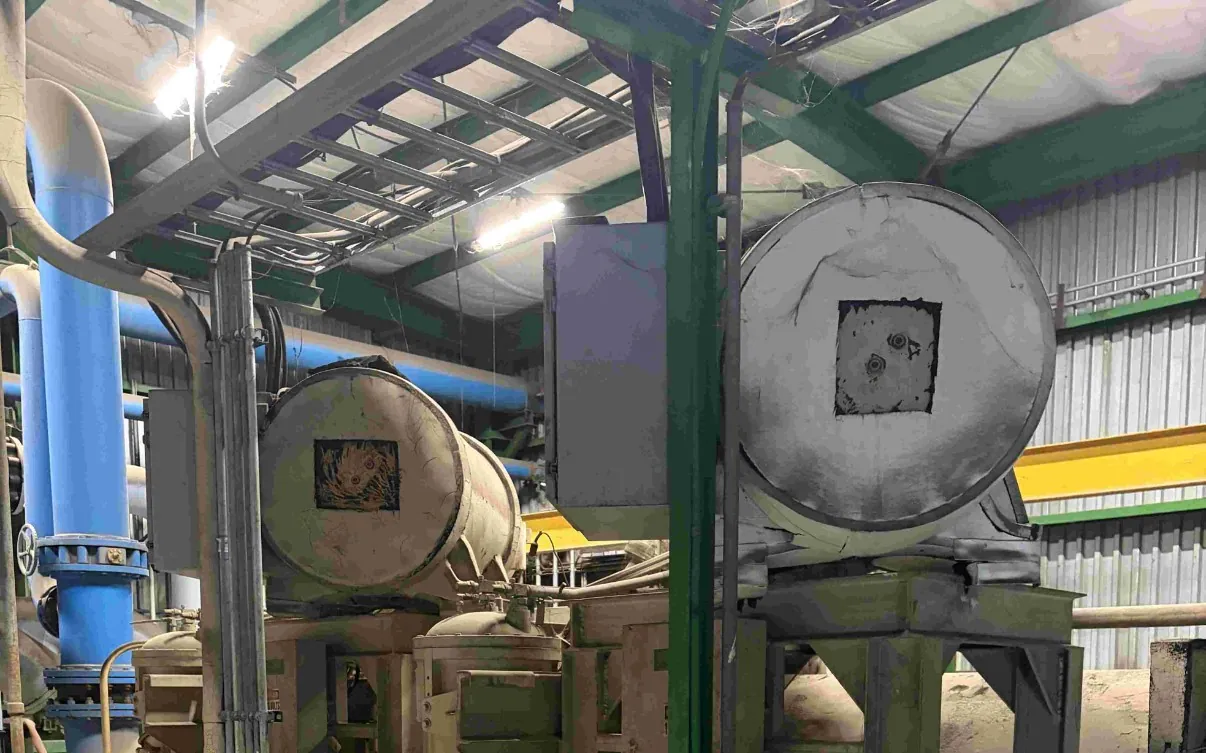
Sell a Surplus Centrifugal Chiller in St. Matthews, SC
We buy used centrifugal chiller equipment in St. Matthews and handle the agreed disconnect, rigging, and freight.
We buy chillers. We don’t sell them.
Your chiller.
Our logistics.
Have a surplus or decommissioned chiller? We’re the buyer—here to make moving it straightforward.
From a single unit to equipment from a larger facility, tell us what you have. We buy industrial and commercial chillers across South Carolina and coordinate the work to get them moved.
See how it works
All types & sizes
Air-cooled or water-cooled, centrifugal, screw or scroll. Tell us what you have.
We handle the logistics
We coordinate rigging, refrigerant recovery, loading and freight for the equipment we buy.
Made for sellers
Send the details and nameplate photos to start a conversation about your chiller.
Three steps.
One less chiller.
- 01
Send the details
Share what you know, along with photos of the unit and nameplate.
- 02
Get a quote
We’ll review your equipment and discuss an offer with you.
- 03
Leave the logistics to us
We coordinate removal and freight for the chillers we purchase.
Sell a Surplus Centrifugal Chiller in St. Matthews, SC
South Carolina Chiller Buyers purchases surplus centrifugal chillers in St. Matthews and throughout South Carolina. We are a direct buyer, not a seller of replacement equipment. If a machine is no longer needed, is part of a planned equipment change, or is being retained only as a spare, you can request an offer without first testing, starting, repairing, or preparing the chiller.
Centrifugal chillers use an impeller-driven compressor, but machines that look alike from the outside can differ in drive arrangement, controls, and internal condition. Useful details help us understand what is being offered and help the people handling site access plan responsibly. The owner or authorized representative supplies equipment and ownership information; the site access contact provides practical details about entry, clearances, and removal coordination.
Build a useful equipment record
Start with the full unit model and any accessible identification information. Record the compressor and motor arrangement, along with available details about the starter or drive and control package. If records are incomplete, say what is known and what is uncertain rather than estimating. Do not open panels or access enclosed areas to find information; existing labels, documents, or photographs already available are appropriate sources.
Capacity is not the same as shipping weight. A chiller’s tonnage describes cooling capacity, not how heavy the assembled package is or whether it can pass through a particular route. We consider chillers of all tonnages, including units below 20 tons; 20 to 2,000-plus tons is a common range. All brands and refrigerants are considered. If exact capacity or refrigerant information is unavailable, provide the best documented information and identify it as unconfirmed.
Photographs and access details answer different questions
Photographs can help distinguish the equipment and show its visible condition. Useful views include the shell ends, motor, starter or drive, identification plates, and any visible lifting points. Do not remove covers or alter the equipment to improve a photo. The site access contact can separately describe the route: doorway or opening dimensions, turns, overhead clearance, floor transitions, and any known limits on equipment movement.
For a large assembled package, measure clearances only when this can be done safely without moving or dismantling the chiller. Do not assume that the route used by a technician is large enough for removal. A narrow service entrance, low ceiling, or tight turn may affect the removal approach, so flag constraints early instead of treating a route as confirmed before it has been assessed.
Keep ownership information and site logistics connected
The equipment owner or authorized representative should identify the chiller being offered, confirm authority to sell it, and share the equipment records and photographs. If another person controls building access or coordinates contractors, introduce that contact or pass along their information. The access contact can then provide details about entry procedures, working hours, loading areas, and restrictions that may affect a removal plan.
Clear communication matters when those responsibilities sit with different people. For example, if a facilities representative knows the access route but not the unit model, the owner can provide the equipment record while the representative describes the route. If the owner is not the person who can authorize entry, confirm who can grant permission before scheduling removal. These are planning examples, not assumptions about any particular St. Matthews property.
From offer request to removal planning
Send the available equipment information and explain whether the chiller is surplus, what is known about its condition, and whether it remains installed. You do not need to make it operational or prove that it runs. An offer and a removal schedule depend on the equipment details, access information, and the terms agreed by both parties; neither a specific price nor a particular date can be promised in advance.
After a purchase is agreed, South Carolina Chiller Buyers handles the removal work, including disconnects, necessary refrigerant recovery through appropriately qualified personnel, crane and rigging, loading, hauling, and freight. Freight is covered. The authorized owner or site representative still needs to provide permission and coordinate access. Do not attempt to disconnect, drain, vent, cut, or dismantle the chiller.
Details to gather before requesting an offer
- Full unit model, known capacity, brand, and any available refrigerant information.
- Compressor and motor arrangement, plus details of the starter or drive and controls when documented.
- Photographs of the shell ends, motor, starter or drive, labels, and visible lifting points.
- Known condition, whether the unit is installed, and any uncertainty in the available records.
- Site access contact, permission requirements, route constraints, and loading-area information.
Describe uncertainty rather than making assumptions
Not every surplus centrifugal chiller has a complete record set, and visible condition cannot establish its internal condition. Share what you can verify and distinguish it from estimates or unanswered questions. For example, a model plate may identify the unit while the drive configuration remains unclear; that distinction is more useful than presenting an assumption as fact. With the owner’s equipment information and the site contact’s access details kept together, we can review the chiller for a potential purchase and discuss next steps.
Ready to move
your chiller?
Tell us what you know. If you’re unsure of a detail, leave it blank. Nameplate photos are a great place to start.

Request a quote.
Fill out what you can and we’ll be in touch.