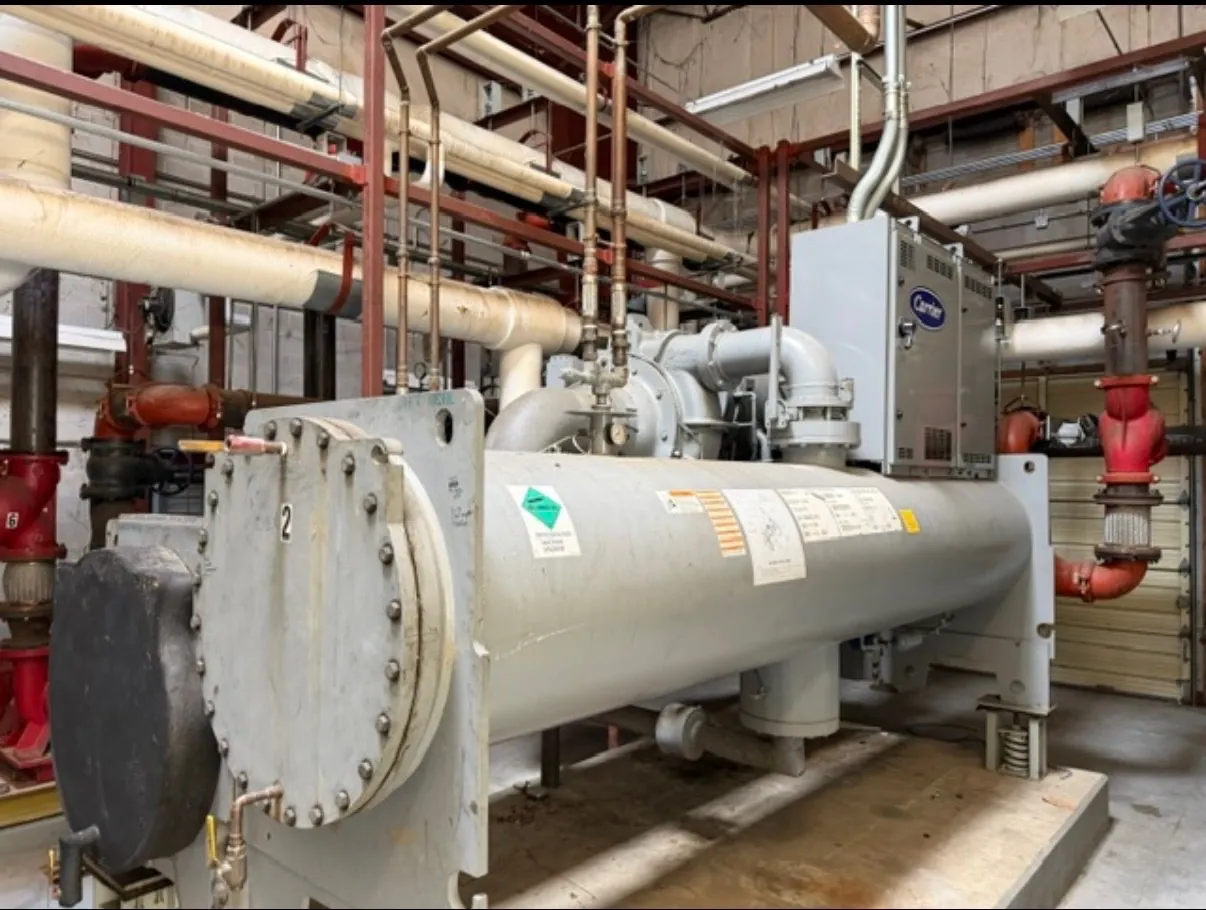
Sell a Surplus Air-Cooled Chiller in St. George, SC
We buy used air-cooled chiller equipment in St. George and handle the agreed disconnect, rigging, and freight.
We buy chillers. We don’t sell them.
Your chiller.
Our logistics.
Have a surplus or decommissioned chiller? We’re the buyer—here to make moving it straightforward.
From a single unit to equipment from a larger facility, tell us what you have. We buy industrial and commercial chillers across South Carolina and coordinate the work to get them moved.
See how it works
All types & sizes
Air-cooled or water-cooled, centrifugal, screw or scroll. Tell us what you have.
We handle the logistics
We coordinate rigging, refrigerant recovery, loading and freight for the equipment we buy.
Made for sellers
Send the details and nameplate photos to start a conversation about your chiller.
Three steps.
One less chiller.
- 01
Send the details
Share what you know, along with photos of the unit and nameplate.
- 02
Get a quote
We’ll review your equipment and discuss an offer with you.
- 03
Leave the logistics to us
We coordinate removal and freight for the chillers we purchase.
Sell a Surplus Air-Cooled Chiller in St. George, SC
If you have a surplus air-cooled chiller in St. George, South Carolina, South Carolina Chiller Buyers can consider purchasing the chiller directly. We buy used chillers; we do not sell replacement equipment. Before requesting an offer, clarify what is included in the sale and what must remain at the site. An air-cooled chiller may share a roof, pad, or service area with equipment that is not part of the purchase, so a clear boundary helps prevent confusion during removal.
Define the sale boundary before discussing removal
Describe the chiller as one identifiable unit and list any accessories you intend to include. Nearby pumps, piping, electrical gear, controls, and other cooling equipment may belong to a broader system rather than to the chiller itself. Do not assume that nearby items are included just because they serve the same process or sit next to the machine. If ownership or scope is uncertain, identify the question before agreeing to a purchase.
For example, if a chiller sits beside a separate pump skid that the site plans to retain, state that the pump skid is excluded and show where the boundary lies. If a control panel is mounted separately, explain whether it is included or must stay. These are illustrative situations, not assumptions about any particular St. George property. The authorized owner or site representative must approve what is sold and coordinate access for the agreed work.
Describe the air-cooled unit and its condition
Air-cooled equipment rejects heat through outdoor coils and fans rather than relying on a conventional cooling-tower loop. For an initial review, record the fan and coil condition, the compressor count if visible, and whether the unit stands on a roof, pad, or raised frame. Share the manufacturer, model, approximate age if known, capacity information, and available photographs or records. You do not need to test, start, repair, or prepare the chiller to request an offer.
Keep observations factual: note visible damage, missing panels, or known operating history, but do not open the unit or attempt to inspect internal components. Capacity and physical size are different considerations. A tonnage rating helps identify cooling capacity; it does not tell a mover the unit’s transport weight, dimensions, or lifting points. Available nameplate data and site photographs can help distinguish those questions without guessing.
Show the route from the chiller to the truck
Access can affect the removal plan even when the equipment itself is clearly identified. For a rooftop or elevated installation, provide photos that show the unit’s position, nearby edges, access constraints, and a possible protected ground area for lifting operations. A lift plan may be needed, depending on the actual installation and agreed scope. At grade, the route from the chiller to a truck still matters: show surrounding clearance, gates, turns, and overhead obstructions.
These details help the buyer assess the equipment and discuss logistics; they are not a request for you to arrange a crane, hire a hauler, or ship the unit. Do not move barriers or alter the installation just to take pictures. The site representative should identify access rules and coordinate entry with the buyer once a purchase is agreed.
Distinguish the chiller from fluids and connected systems
The refrigerant inside a chiller is not the same as process fluid or water in connected piping. A sale of the machine does not automatically include every line, vessel, pump, or accessory around it. Identify what belongs to the chiller and what the site intends to retain, and disclose any known fluid or refrigerant information from existing records. Do not drain, vent, cut, or dismantle equipment to clarify the boundary.
After an agreed purchase, South Carolina Chiller Buyers handles disconnects, necessary refrigerant recovery through appropriately qualified personnel, crane and rigging, loading, hauling, and freight; freight is covered. The seller is not expected to arrange shipping or prepare the unit for transport. The site representative still needs to authorize the work and coordinate access.
What to send when requesting an offer
- Photos of the chiller, its label if safely visible, and the surrounding installation.
- Known make, model, capacity, refrigerant, and equipment condition.
- A simple description of included items and equipment that must remain.
- Whether the unit is on a roof, pad, or frame, plus visible route constraints.
We consider chillers across all tonnages, including units below 20 tons; 20 to 2,000+ tons is a common range. We consider all brands and refrigerants. An offer and removal schedule depend on the specific equipment, access, scope, and agreement, so neither a price nor a date can be promised before those details are reviewed. Payment is upfront under the agreed purchase.
Make the next step a clear scope conversation
When requesting an offer for your air-cooled chiller in St. George, explain what the buyer may remove and what must stay in place. Share existing information and access photos, then allow the buyer to review the equipment and removal conditions. A well-defined scope supports a practical discussion without requiring the seller to test, dismantle, or transport the chiller.
Ready to move
your chiller?
Tell us what you know. If you’re unsure of a detail, leave it blank. Nameplate photos are a great place to start.

Request a quote.
Fill out what you can and we’ll be in touch.