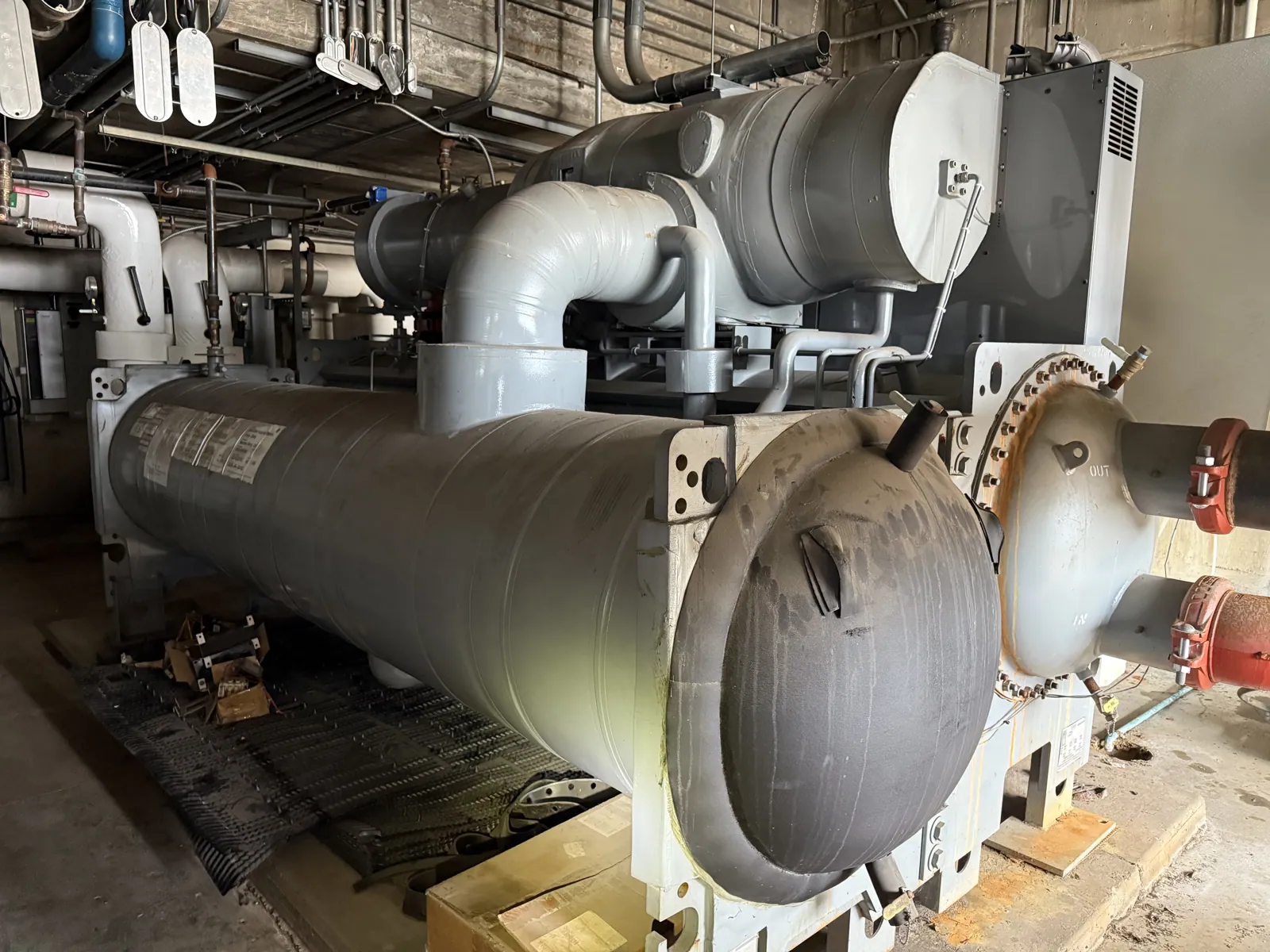
Sell a Used Chiller in St. George, SC
We buy used and surplus industrial chillers in St. George, with upfront payment and buyer-managed removal.
We buy chillers. We don’t sell them.
Your chiller.
Our logistics.
Have a surplus or decommissioned chiller? We’re the buyer—here to make moving it straightforward.
From a single unit to equipment from a larger facility, tell us what you have. We buy industrial and commercial chillers across South Carolina and coordinate the work to get them moved.
See how it works
All types & sizes
Air-cooled or water-cooled, centrifugal, screw or scroll. Tell us what you have.
We handle the logistics
We coordinate rigging, refrigerant recovery, loading and freight for the equipment we buy.
Made for sellers
Send the details and nameplate photos to start a conversation about your chiller.
Three steps.
One less chiller.
- 01
Send the details
Share what you know, along with photos of the unit and nameplate.
- 02
Get a quote
We’ll review your equipment and discuss an offer with you.
- 03
Leave the logistics to us
We coordinate removal and freight for the chillers we purchase.
Sell a Used Chiller in St. George, SC
If you are searching for a “chiller buyer near me” for equipment in St. George, South Carolina, South Carolina Chiller Buyers can discuss a direct purchase. We buy used and surplus chillers; we do not sell replacement equipment. A unit left behind during a property closure may be worth evaluating, whether it is in a closed factory, an occupied commercial property, a campus, a power plant, or a data center. The setting, access conditions, and seller’s authority all matter, so start by identifying where the chiller is and who can approve its sale.
We consider chillers of all tonnages, including units below 20 tons. Equipment from 20 to 2,000 or more tons is a common range, but capacity alone does not determine whether a unit is a fit. We consider all brands and all refrigerants. A single packaged machine and several central-plant chillers can both be discussed; describe the particular equipment being offered rather than treating every machine on site as part of one sale.
Start with ownership and the closure plan
Before requesting an offer, establish that the person handling the inquiry is authorized to sell the equipment or can connect us with the authorized owner or site representative. In a closure, that authority may belong to an owner, asset manager, landlord, lender, or another designated representative; the appropriate party depends on the actual arrangement. A contractor’s access to a property, by itself, should not be taken as permission to sell the chiller.
Also clarify whether the building is vacant, still operating, or in transition. An occupied property may require removal planning around access controls, nearby operations, or other work. A closed facility may have different access arrangements, but closure does not automatically mean the buyer can enter or remove equipment. The authorized representative must give permission and coordinate site access.
Identify the equipment included in the sale
For a single unit, distinguish the chiller from nearby equipment that may remain with the building. For a group of machines, identify which specific chillers are available and whether the offer should cover one unit or the whole group. Note whether each machine is air-cooled or water-cooled if known, and list accessories you intend to include or leave behind. That distinction helps avoid misunderstandings about the scope of a purchase, especially where pumps, cooling-tower components, controls, or other plant equipment are nearby.
Share information you already have, such as the manufacturer, model, approximate capacity, and available photographs or records. You do not need to test or start the machine to request an offer. Do not open, drain, vent, cut, dismantle, or energize equipment to gather details. If the nameplate or records are not readily available, say so; an initial discussion can still establish what information is practical to provide safely.
Separate capacity from removal logistics
A chiller’s tonnage describes cooling capacity, not its transport weight. Two machines with similar capacity can differ substantially in configuration, dimensions, and handling requirements. For a closure, available routes, door or yard access, overhead obstructions, and the removal sequence can affect the plan even when the equipment itself is clearly identified. These details help assess removal; they are not a reason for the seller to arrange a crane or ship the unit.
The refrigerant in a chiller is also different from the process fluid that may circulate through connected systems. Do not assume that identifying one tells you the condition or contents of the other. The seller does not need to drain or prepare the machine. If the agreed removal requires refrigerant recovery, the buyer handles it through appropriately qualified personnel.
What happens after you request an offer
South Carolina Chiller Buyers reviews the equipment and the proposed sale details, then discusses an offer and possible removal arrangements. The seller does not need to repair, test, start, or otherwise prepare the chiller to request that offer. Payment is upfront. The amount and the removal schedule depend on the equipment, site conditions, and the terms agreed by both parties; neither a particular price nor a specific removal date is guaranteed before those details are reviewed.
After an agreed purchase, the buyer handles disconnects, any necessary refrigerant recovery through appropriately qualified personnel, crane and rigging, loading, hauling, and freight. Freight is covered. The seller’s continuing role is to ensure the authorized representative has approved the transaction and can coordinate access for the agreed work. Do not arrange shipment or hire a separate crew on the assumption that it is required for an inquiry.
A practical decision path for a property closure
If a facility is closing and several machines remain, first confirm which chillers the owner is prepared to sell. For example, if one unit is reserved for another site while two others are surplus, identify those two separately and note any accessories included with them. If the plant is still operating during a transition, explain that constraint so removal can be considered in context. These are planning examples, not claims about any particular property in St. George.
- Confirm the seller’s authority and the site representative for access.
- Identify the specific chiller or group, known type, brand, capacity, and included accessories.
- Describe the property’s access situation and any closure or occupancy timing that may affect removal.
With those basics established, you can request a direct-purchase discussion for your chiller in St. George, South Carolina, without first paying to test, repair, or prepare it. The next steps depend on the equipment and the agreement reached.
Ready to move
your chiller?
Tell us what you know. If you’re unsure of a detail, leave it blank. Nameplate photos are a great place to start.

Request a quote.
Fill out what you can and we’ll be in touch.