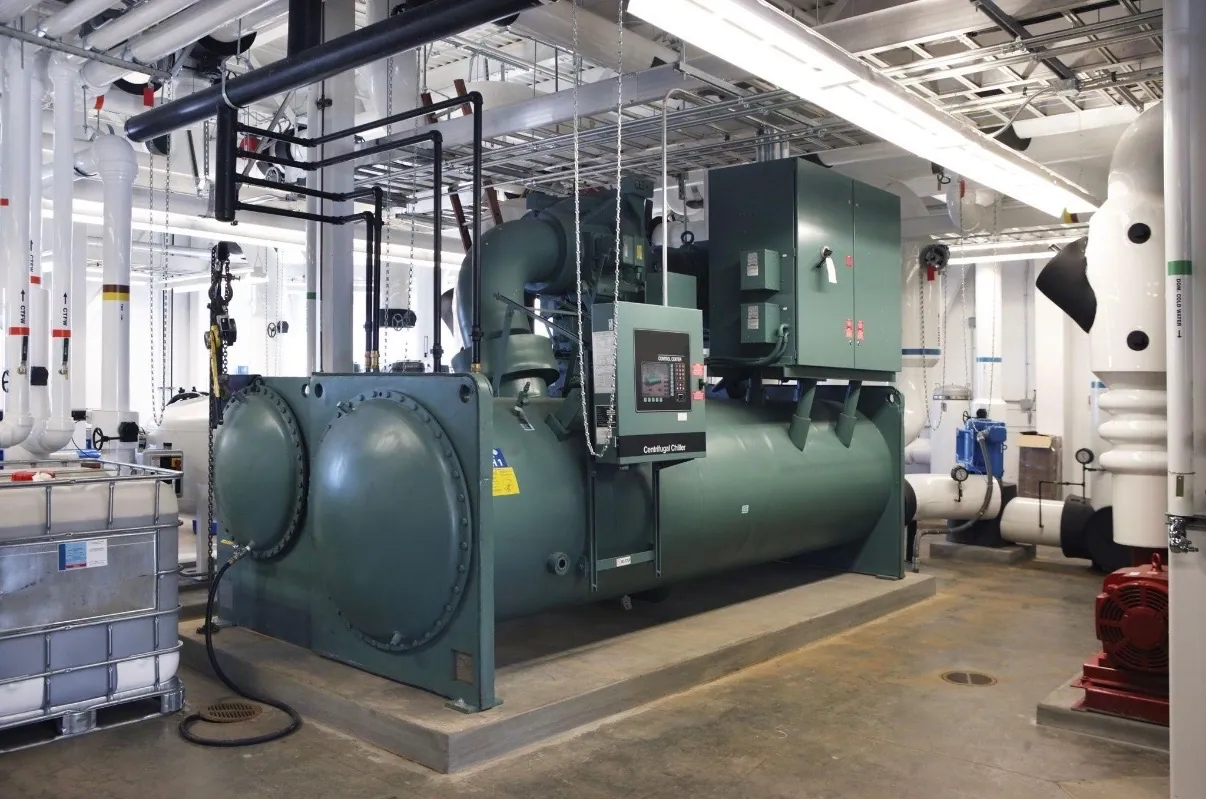
Sell a Surplus Centrifugal Chiller in St. George, SC
We buy used centrifugal chiller equipment in St. George and handle the agreed disconnect, rigging, and freight.
We buy chillers. We don’t sell them.
Your chiller.
Our logistics.
Have a surplus or decommissioned chiller? We’re the buyer—here to make moving it straightforward.
From a single unit to equipment from a larger facility, tell us what you have. We buy industrial and commercial chillers across South Carolina and coordinate the work to get them moved.
See how it works
All types & sizes
Air-cooled or water-cooled, centrifugal, screw or scroll. Tell us what you have.
We handle the logistics
We coordinate rigging, refrigerant recovery, loading and freight for the equipment we buy.
Made for sellers
Send the details and nameplate photos to start a conversation about your chiller.
Three steps.
One less chiller.
- 01
Send the details
Share what you know, along with photos of the unit and nameplate.
- 02
Get a quote
We’ll review your equipment and discuss an offer with you.
- 03
Leave the logistics to us
We coordinate removal and freight for the chillers we purchase.
Sell a Surplus Centrifugal Chiller in St. George, SC
South Carolina Chiller Buyers purchases surplus centrifugal chillers in St. George and throughout South Carolina. We are a direct buyer, not a seller of replacement equipment. We consider centrifugal machines across all tonnages, including units below 20 tons; 20 to 2,000+ tons is a common range, not a minimum or limit. Brand and refrigerant type do not automatically exclude a machine from consideration.
For a useful initial review, organize the available evidence before requesting an offer: nameplate details, known condition, included components, site access, and the terms you need to confirm. You do not need to test, start, repair, or prepare the chiller to ask us to evaluate it. The offer and removal schedule depend on the specific equipment and the agreement reached.
Start with the Nameplate and Compressor Arrangement
A centrifugal chiller uses an impeller-driven compressor. Record the complete unit model and serial number, along with any legible capacity, electrical, and refrigerant information on the nameplate. If a separate compressor or motor plate is visible, photograph that as well. Do not remove covers or disturb the machine to find a plate; a clear image from a safe, accessible position can be more useful than incomplete information gathered at risk.
Note the compressor and motor arrangement when it can be identified from existing records or visible labels. Centrifugal packages that look alike externally may have different controls, drive configurations, or internal condition. Those distinctions can affect how the equipment is assessed, so avoid relying on appearance alone or treating a neighboring model as an exact match.
Describe Condition Without Starting the Unit
Share what is already known from maintenance records, prior inspections, or the circumstances that made the chiller surplus. For example, if a machine was removed from service during a facility change, say so and distinguish that known history from assumptions about its operating condition. If the unit has a documented fault or missing component, identify it plainly. There is no need to energize the chiller, open it, drain it, vent refrigerant, or dismantle anything to request an offer.
Photographs can help clarify visible condition. Useful views may include the shell ends, motor, starter or drive, and any lifting points that are already exposed. Images should show the overall package as well as relevant labels, without requiring anyone to enter a hazardous area or move stored material. If a component is obscured or cannot be identified, note that rather than guessing.
Clarify What Is Included
List the items being offered with the chiller, such as a starter, drive, control cabinet, or other associated components, only when their inclusion is known. Separate equipment that remains at the site from equipment included in the proposed sale. This prevents confusion between the centrifugal package itself and nearby piping, pumps, electrical gear, or process equipment that may not be part of the transaction.
Also distinguish chiller refrigerant from the facility’s process fluid. They are not interchangeable descriptions: a chiller may contain refrigerant while connected systems carry a separate fluid. Report the refrigerant type if it is shown on records or labels, and describe other connected equipment only as needed to establish what is included. Do not attempt to recover or release any material yourself.
Measure the Route, Not Just the Chiller
Capacity in tons describes cooling capacity; it does not tell you the machine’s transport weight or whether it will fit through a route. If dimensions or weight are available from documentation, provide them as estimates or recorded figures and identify their source. For a large assembled package, useful clearance measurements include door and corridor widths, overhead obstructions, turns, floor transitions, and the exterior route to the loading area.
Do not assume the chiller can leave through the opening used by a technician. Photograph the shell ends, motor, starter or drive, and any available lifting points, then note constraints that may affect removal. For instance, if an overhead beam or tight turn appears to limit movement, flag it for review rather than planning a dismantling method. The buyer and seller can discuss feasible removal arrangements before agreeing to the purchase.
Confirm Authority and Practical Terms
The owner or authorized site representative must approve the sale and provide permission for access. That representative should coordinate site entry, operating restrictions, and any required scheduling with the facility. If access depends on a landlord, contractor, or other party, identify that dependency early; an offer is not a substitute for permission to enter or remove equipment.
Once a purchase is agreed, South Carolina Chiller Buyers handles disconnects, necessary refrigerant recovery through appropriately qualified personnel, crane and rigging, loading, hauling, and freight. Freight is covered. Sellers are not expected to hire a carrier or ship the chiller. The removal plan still depends on the equipment, site conditions, access, and agreed terms, so no specific removal date should be assumed before coordination.
Request an Offer with a Concise Equipment Record
Send the information you can safely access, even if some details remain unknown. A short, accurate record helps separate confirmed facts from questions that need follow-up:
- Full unit model and serial number, plus compressor and motor arrangement if known
- Available condition history and the components included in the proposed sale
- Photos, documented dimensions or weight, and notable access or clearance limits
- Site representative’s authority, access requirements, and any timing constraints
With that information, we can review your centrifugal chiller in St. George and discuss an offer and removal terms based on the actual machine and site. Payment is upfront under the agreed purchase. The amount and schedule are determined through the equipment review and agreement, not by tonnage alone or an assumed local market rate.
Ready to move
your chiller?
Tell us what you know. If you’re unsure of a detail, leave it blank. Nameplate photos are a great place to start.

Request a quote.
Fill out what you can and we’ll be in touch.