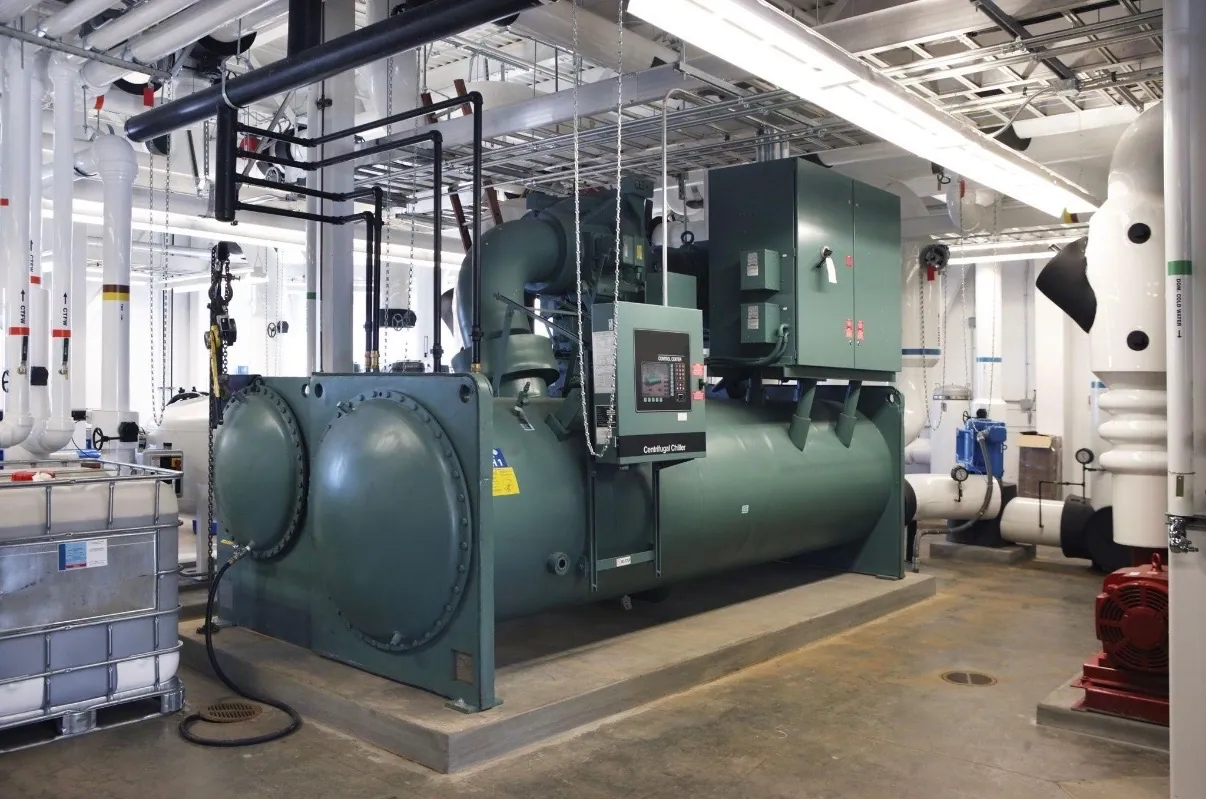
Chiller Nameplate Guide in South Carolina
Understand chiller nameplate information and the information needed for a direct chiller purchase in South Carolina.
We buy chillers. We don’t sell them.
Your chiller.
Our logistics.
Have a surplus or decommissioned chiller? We’re the buyer—here to make moving it straightforward.
From a single unit to equipment from a larger facility, tell us what you have. We buy industrial and commercial chillers across South Carolina and coordinate the work to get them moved.
See how it works
All types & sizes
Air-cooled or water-cooled, centrifugal, screw or scroll. Tell us what you have.
We handle the logistics
We coordinate rigging, refrigerant recovery, loading and freight for the equipment we buy.
Made for sellers
Send the details and nameplate photos to start a conversation about your chiller.
Three steps.
One less chiller.
- 01
Send the details
Share what you know, along with photos of the unit and nameplate.
- 02
Get a quote
We’ll review your equipment and discuss an offer with you.
- 03
Leave the logistics to us
We coordinate removal and freight for the chillers we purchase.
Chiller Nameplate Guide in South Carolina
A chiller nameplate is a useful first reference when you are considering selling used or surplus equipment in South Carolina. It can help identify the machine and narrow down what information a buyer needs to review. It cannot, by itself, confirm the chiller’s present condition, completeness, or refrigerant charge. For a useful offer assessment, pair a clear plate photo with a view of the full unit and a straightforward note about what is stored with it.
Photograph the plate, not just the lettering
The nameplate usually identifies the manufacturer and model, and may show the serial number, voltage, capacity, and refrigerant. Photograph the entire plate in good light so the edges and all printed fields are visible. If characters are hard to distinguish, send the image rather than guessing while transcribing them. A small error in a model or serial number can lead to confusion during equipment review.
Look for a separate retrofit or refrigerant label as well. If the chiller has been converted or relabeled, that second record may help explain the refrigerant information shown on the original plate. Do not remove covers or disturb the machine to find labels; use only markings that are safely visible.
What the plate can—and cannot—establish
Use the listed capacity as an identification clue, not as a complete description of the equipment’s current value or transport requirements. Rated cooling capacity and the weight of the machine are different things: tonnage describes cooling output, while transport weight affects lifting, loading, and hauling plans. A plate may contain a weight field, but it should not be treated as a substitute for confirming the actual configuration and handling needs.
Likewise, a refrigerant designation identifies what the equipment was designed or labeled for; it does not prove what is currently in the system. A nameplate is not proof that every component is present, that the refrigerant charge has not changed, or that the chiller is ready to operate. If you know that refrigerant was previously recovered, say so. Do not open, drain, vent, energize, or dismantle equipment to verify details.
Include the whole unit and the stored accessories
For a chiller that has been placed in storage, photograph the complete machine from a safe, accessible position. Include the nameplate image and, where practical, a separate photo of any controller, starter, or other equipment that is stored apart from the chiller. Describe whether those items are included in the proposed sale or are simply nearby. A separate controller or starter should not be assumed to be part of the chiller package just because it is in the same storage area.
If you know of modifications, missing controls, removed components, or prior refrigerant recovery, mention them plainly. For example, if a stored unit’s starter is present but its controller is not, explain that distinction rather than describing the chiller as a complete package. If you are unsure whether an item belongs with the unit, identify it as uncertain and provide a photo when available.
A practical photo-and-information checklist
- Take a readable photo of the full nameplate and any separate retrofit or refrigerant label.
- Photograph the overall chiller and separately stored controls or accessories.
- Share the make, model, serial number, voltage, capacity, and refrigerant only when legible; otherwise let the images speak for themselves.
- Note known modifications, missing items, or previous refrigerant recovery without trying to verify them by opening or operating the machine.
Capacity does not determine whether to ask
South Carolina Chiller Buyers considers chillers of all tonnages, including units below 20 tons; 20 to 2,000+ tons is a common range, not a cutoff. All brands and refrigerants are considered. A faded plate or incomplete paperwork does not automatically make a unit unsuitable for review. Send the clearest information available and identify what remains unknown so the equipment can be assessed without overstating its condition.
Offer review and removal responsibilities
South Carolina Chiller Buyers is a direct buyer, not a seller of replacement equipment, and payment is upfront after an agreed purchase. You do not need to test, start, repair, or prepare your chiller to request an offer. The offer and removal schedule depend on the equipment and the terms agreed; neither a specific price nor a particular date can be promised from a nameplate alone.
After an agreement, the buyer handles disconnects, necessary refrigerant recovery through appropriately qualified personnel, crane and rigging, loading, hauling, and freight, with freight covered. The authorized owner or site representative still needs to provide permission and coordinate access. Clear photos and accurate notes make the initial review more useful while leaving handling and removal planning to the buyer after the sale is agreed.
Ready to move
your chiller?
Tell us what you know. If you’re unsure of a detail, leave it blank. Nameplate photos are a great place to start.

Request a quote.
Fill out what you can and we’ll be in touch.