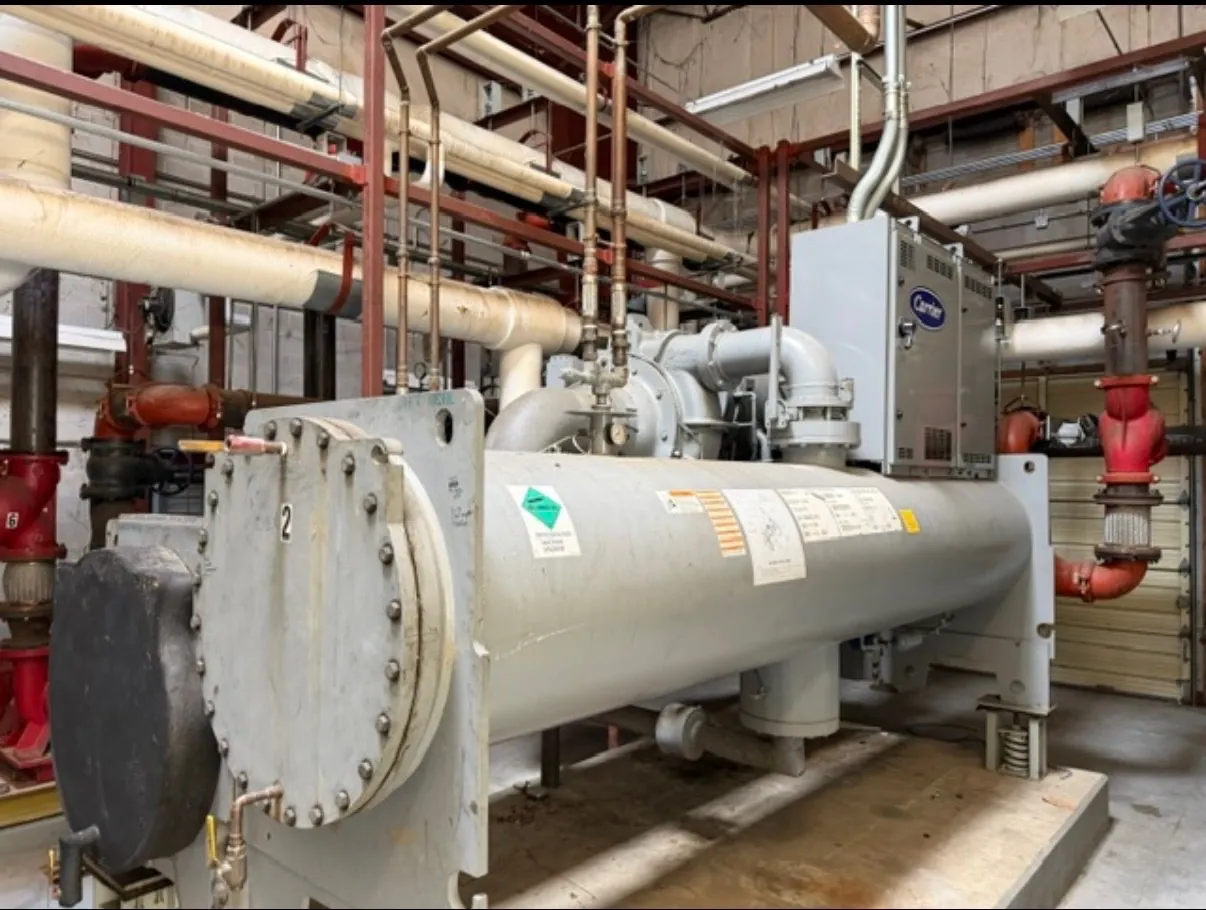
Data Center Decommissioning in South Carolina
Understand data center chiller decommissioning and the information needed for a direct chiller purchase in South Carolina.
We buy chillers. We don’t sell them.
Your chiller.
Our logistics.
Have a surplus or decommissioned chiller? We’re the buyer—here to make moving it straightforward.
From a single unit to equipment from a larger facility, tell us what you have. We buy industrial and commercial chillers across South Carolina and coordinate the work to get them moved.
See how it works
All types & sizes
Air-cooled or water-cooled, centrifugal, screw or scroll. Tell us what you have.
We handle the logistics
We coordinate rigging, refrigerant recovery, loading and freight for the equipment we buy.
Made for sellers
Send the details and nameplate photos to start a conversation about your chiller.
Three steps.
One less chiller.
- 01
Send the details
Share what you know, along with photos of the unit and nameplate.
- 02
Get a quote
We’ll review your equipment and discuss an offer with you.
- 03
Leave the logistics to us
We coordinate removal and freight for the chillers we purchase.
Data Center Chiller Decommissioning in South Carolina
Removing a chiller from a data center is not simply a matter of taking out equipment that has been switched off. The unit may connect to shared power, chilled-water headers, controls, or cooling trains that remain essential to other operations. South Carolina Chiller Buyers purchases used and surplus chillers in South Carolina, but the decommissioning plan must clearly distinguish your chiller from infrastructure that must remain in service.
We are a direct buyer, not a seller of replacement equipment. We consider chillers of all tonnages, including units below 20 tons; 20 to 2,000+ tons is a common range. We consider all brands and refrigerants. An initial discussion can establish whether the equipment may fit a purchase, without requiring you to start, test, repair, or prepare it.
Identify the Retired Unit and Protected Systems
Before requesting an offer, gather the information available from records, existing labels, or the responsible site team. Useful details include the unit’s make and model, approximate capacity, age if known, location, and whether it is intact or has known damage. Do not open panels or access equipment to collect information; existing documentation and observations made during normal site work are sufficient to begin.
Be precise about boundaries. If one chiller is retired while a header, pump, control panel, or adjacent cooling train must stay, identify those items and explain any separation constraints. A chiller’s rated capacity describes cooling output, not its transport weight. Rigging and freight planning depend on the actual equipment, configuration, route, and access—not tonnage alone.
Keep Cooling Operations and Removal Planning Separate
Data center cooling arrangements differ, so removal timing should be coordinated with the people responsible for ongoing operations. Discuss the proposed shutdown window, operating restrictions, required escorts, access approvals, and any limits on noise, movement, or work hours with the designated site contact. If the unit shares connections or controls with operating equipment, flag that early rather than assuming the retired chiller can be separated independently.
For example, if a site plans to remove a surplus chiller only after another cooling train is confirmed available, that sequence should be reflected in the access and schedule discussion. This is a planning example, not a statement about any particular facility. The agreed removal schedule depends on the equipment, access conditions, and purchase agreement; a specific date cannot be assumed before those details are reviewed.
Rooftop Access Requires Site Approval
A rooftop chiller may need a crane, a clear lifting path, and coordination around occupied areas or operating equipment. In a conditional scenario, a unit could be accessible only through a roof hatch or a crane lift over a restricted area. The site owner or authorized representative would need to approve access and coordinate any required escorts, lifting permissions, and operating restrictions before removal can proceed.
Crane access should not be treated as settled simply because a unit is outdoors. The route, setup area, overhead obstructions, loading location, and site rules all affect feasibility. Share known restrictions with the buyer and designated site contact; the removal approach and timing are subject to the equipment and agreed plan. Sellers do not need to hire a crane or arrange shipment.
Refrigerant Is Not Process Water
Chillers may contain refrigerant within the refrigeration circuit and water or another process fluid in separate connected piping. These are different materials and should not be confused when describing the equipment. Do not vent refrigerant, drain the unit, cut connections, dismantle components, or attempt to prepare it for lifting. Necessary refrigerant recovery is handled through appropriately qualified personnel as part of the agreed removal.
No seller performance test is required to request an offer. You do not need to energize the chiller, open it, or arrange repairs. If the unit’s condition or contents are uncertain, say so and let the removal plan account for what is known rather than asking staff to investigate the equipment physically.
What Happens After an Agreed Purchase
After the purchase is agreed, the buyer handles the planned disconnects, necessary refrigerant recovery through appropriately qualified personnel, crane and rigging, loading, hauling, and freight. Freight is covered. The authorized owner or site representative still needs to provide permission and coordinate access, including escorts and any shutdown or operating restrictions. The offer and removal schedule depend on the equipment and the agreement.
Prepare a useful first inquiry
- Identify the chiller and its location, and provide available make, model, and capacity information.
- State which headers, controls, power connections, or cooling trains must remain in place.
- Describe known rooftop, crane, route, escort, approval, or shutdown-window requirements.
- Share known condition details without testing, opening, draining, or dismantling the unit.
Request an Offer Without Starting the Chiller
South Carolina Chiller Buyers can consider your chiller based on available equipment details and site constraints. A clear account of what is retired, what must remain, and how authorized access is coordinated helps determine whether a purchase and removal plan are practical. There is no need to test or repair the unit before asking, and no fixed price or removal date should be expected until the equipment and agreement have been reviewed.
Ready to move
your chiller?
Tell us what you know. If you’re unsure of a detail, leave it blank. Nameplate photos are a great place to start.

Request a quote.
Fill out what you can and we’ll be in touch.