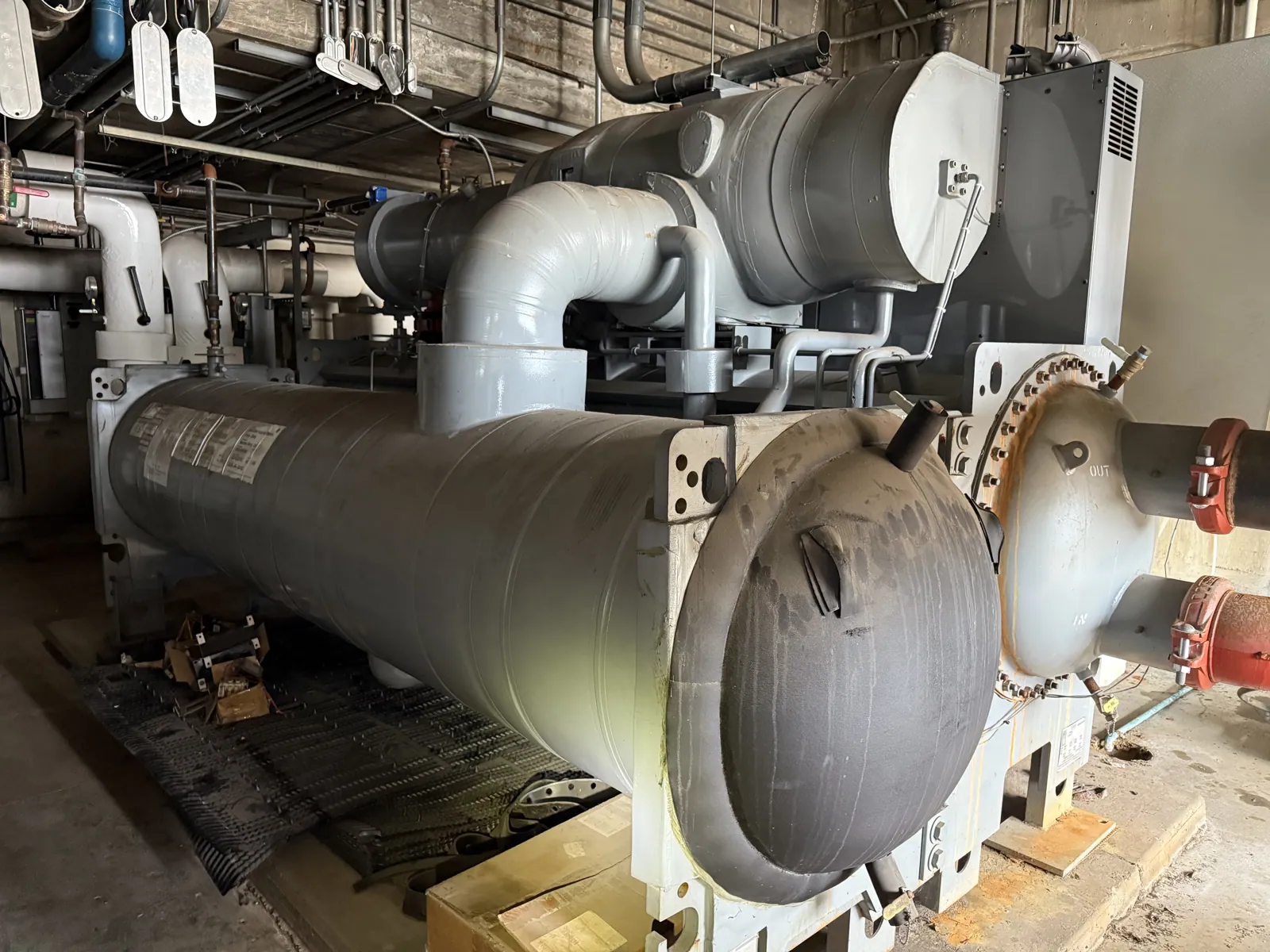
Chiller Decommissioning in South Carolina
Understand chiller decommissioning and the information needed for a direct chiller purchase in South Carolina.
We buy chillers. We don’t sell them.
Your chiller.
Our logistics.
Have a surplus or decommissioned chiller? We’re the buyer—here to make moving it straightforward.
From a single unit to equipment from a larger facility, tell us what you have. We buy industrial and commercial chillers across South Carolina and coordinate the work to get them moved.
See how it works
All types & sizes
Air-cooled or water-cooled, centrifugal, screw or scroll. Tell us what you have.
We handle the logistics
We coordinate rigging, refrigerant recovery, loading and freight for the equipment we buy.
Made for sellers
Send the details and nameplate photos to start a conversation about your chiller.
Three steps.
One less chiller.
- 01
Send the details
Share what you know, along with photos of the unit and nameplate.
- 02
Get a quote
We’ll review your equipment and discuss an offer with you.
- 03
Leave the logistics to us
We coordinate removal and freight for the chillers we purchase.
Chiller Decommissioning in South Carolina
Decommissioning a chiller for sale starts with agreeing on exactly what is being purchased and where the equipment boundary sits. A stored machine may be separate from its controller, starter, pumps, piping, or other supporting components. Clarify which items are included before requesting an offer so both sides can assess the same equipment and plan removal accordingly.
South Carolina Chiller Buyers buys used and surplus chillers in South Carolina; we do not sell replacement equipment. We consider all tonnages, including units below 20 tons, with 20 to 2,000+ tons representing a common range. All brands and refrigerants are considered. You do not need to start, test, repair, or prepare your chiller to request an offer.
Define the Equipment and Its Boundaries
Make a practical inventory of the chiller and any separate items that may be part of the transaction. For a unit in storage, for example, the controller may be mounted elsewhere and a starter may have been removed or retained separately. State whether those components are available and whether they are included in the proposed sale. Do not assume that equipment serving the chiller is automatically part of the purchase.
Describe what is known about the machine without opening, energizing, draining, or dismantling it. Identification plates, existing records, photographs already available, and a description of the storage condition can help establish what is being considered. If details are incomplete, say so; an offer can be evaluated with the information available, subject to agreement on the equipment.
Separate Capacity from Removal Logistics
Tonnage indicates cooling capacity, not the weight or dimensions of the equipment. Two chillers with similar capacity can present different handling requirements because of their construction, configuration, and access route. A compact unit rated below 20 tons can still need careful planning, while a larger machine may require a more involved lift and transport plan. Capacity helps identify the chiller; it does not by itself determine how removal will work.
For planning, consider the unit’s location, clearances, doors or openings, overhead constraints, and the route from its current position to the loading area. These are details to coordinate with the buyer, not reasons for the seller to arrange a crane or ship the equipment. The buyer handles the agreed crane and rigging, loading, hauling, and freight after a purchase is agreed.
Know What Decommissioning Covers
After agreement on the purchase, the buyer handles the agreed disconnects, necessary refrigerant recovery through appropriately qualified personnel, crane and rigging, loading, hauling, and freight. Freight is covered. The seller does not need to hire a contractor to dismantle or prepare the chiller for pickup, and should not be asked to vent refrigerant or cut connections.
Refrigerant and process fluid are different. Refrigerant is part of the chiller’s refrigeration circuit and requires appropriate recovery; process fluid may be in connected piping or a separate system. Do not drain or alter either system to make the unit appear ready. Describe known conditions and leave work to the appropriate personnel under the agreed removal plan.
Coordinate Permission and Site Access
Although the buyer manages the removal work, the authorized owner or site representative must approve access and coordinate it. Identify who can confirm permission, explain site access arrangements, and communicate any relevant restrictions or scheduling needs. If the chiller is stored at a location the seller does not control, obtain the necessary authorization before committing to a sale or removal date.
For instance, if a stored chiller is behind a locked area or the available access window is limited, the representative can raise that during planning. This is a conditional example, not an assumption about any particular South Carolina site. Clear access information helps the parties agree on workable logistics without asking the seller to move or prepare the equipment.
Request an Offer Without Starting the Unit
Useful information can include the brand and model, approximate tonnage, known condition, storage location, and what is included in the proposed sale. Mention whether a controller or starter is separate, missing, or available as a separate item. If the machine’s operating condition is unknown, report it as unknown rather than trying to verify it by running the chiller.
Payment is upfront. The offer and removal schedule depend on the equipment and the agreement, so neither a particular price nor a specific date should be assumed before those details are reviewed. Once the purchase and boundaries are agreed, the buyer and authorized site representative can coordinate access and removal. You do not need to test, start, repair, open, drain, or dismantle your chiller to begin.
Before You Discuss Removal
- Identify the chiller and list separate items, such as its controller or starter, noting what is included.
- Confirm who is authorized to approve access and coordinate with the buyer.
- Share known equipment and access details without operating or altering the unit.
- Agree on the equipment boundary, offer, and removal plan before scheduling work.
Ready to move
your chiller?
Tell us what you know. If you’re unsure of a detail, leave it blank. Nameplate photos are a great place to start.

Request a quote.
Fill out what you can and we’ll be in touch.