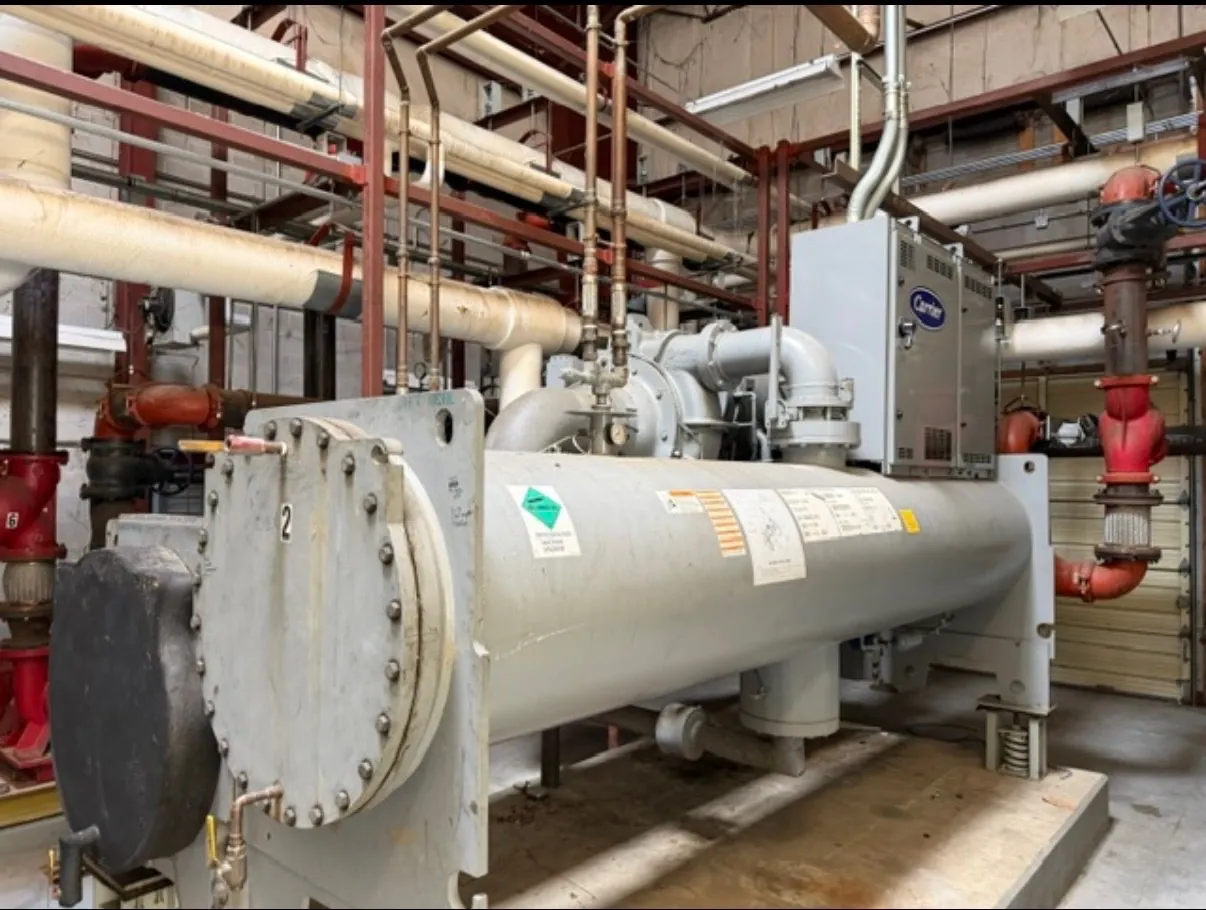
Chiller Rigging in South Carolina
Understand chiller rigging and the information needed for a direct chiller purchase in South Carolina.
We buy chillers. We don’t sell them.
Your chiller.
Our logistics.
Have a surplus or decommissioned chiller? We’re the buyer—here to make moving it straightforward.
From a single unit to equipment from a larger facility, tell us what you have. We buy industrial and commercial chillers across South Carolina and coordinate the work to get them moved.
See how it works
All types & sizes
Air-cooled or water-cooled, centrifugal, screw or scroll. Tell us what you have.
We handle the logistics
We coordinate rigging, refrigerant recovery, loading and freight for the equipment we buy.
Made for sellers
Send the details and nameplate photos to start a conversation about your chiller.
Three steps.
One less chiller.
- 01
Send the details
Share what you know, along with photos of the unit and nameplate.
- 02
Get a quote
We’ll review your equipment and discuss an offer with you.
- 03
Leave the logistics to us
We coordinate removal and freight for the chillers we purchase.
Chiller Rigging in South Carolina: Plan Around the Actual Unit
Removing a used or surplus chiller is a lifting and access job, not simply a matter of matching a crane to the unit’s cooling capacity. South Carolina Chiller Buyers purchases chillers in South Carolina and arranges the required crane or rigging after a purchase agreement. The practical starting point is information about your chiller: its documented dimensions and weight, lifting points, installed position, and route to the loading area.
You do not need to test, start, repair, or prepare the chiller to request an offer. If you have equipment records, photographs, or site information already available, those details can help assess the removal. Do not energize, open, drain, vent, cut, or dismantle equipment to gather them.
Cooling Tons Are Not Transport Weight
A chiller’s nominal tonnage describes its cooling capacity. It is not a statement of how many pounds or tons the machine weighs. Two chillers with similar cooling ratings may differ in dimensions, construction, configuration, and installed accessories. A capacity figure alone cannot determine the lifting method, rigging needs, or whether a unit can pass through a particular opening.
Use documented equipment weight when it is available, and distinguish it from shipping weight or an estimate that may not describe the installed assembly. The actual lifting plan may need to account for attached components and the unit’s configuration. If the weight is unknown, say so rather than treating tonnage as a substitute. The buyer can consider the available information and clarify what else is needed for an offer or removal plan.
Record the Route, Not Just the Chiller
Rigging planning includes the full path from the unit to the loading area. A machine may be accessible where it sits but difficult to move through a doorway, around overhead services, or across a floor transition. Describe the route as clearly as you can, including changes in elevation and any narrow or obstructed areas.
- Share known dimensions and equipment weight, along with the source of those figures if available.
- Identify visible lifting points and nearby obstructions without approaching or altering the equipment.
- Describe doors, overhead services, roof edges, floor transitions, and the route to the loading area.
- Note whether the chiller is indoors, outdoors, elevated, or in a restricted-access area.
For example, if a chiller is on a roof, the route may involve roof-edge clearance and a suitable crane position; if it is indoors, door width and overhead piping may be important. These are conditional planning examples, not assumptions about any particular South Carolina site. Provide what you know and let the buyer evaluate the removal requirements.
Access Details Affect the Removal Plan
Rigging arrangements depend on the equipment and the agreed removal conditions. A crane may be appropriate for one site, while another situation may require a different rigging approach. Available space, overhead clearance, ground access, the unit’s position, and the loading area all matter. Do not assume that a chiller’s rated capacity identifies the necessary crane or proves that a specific route will work.
The authorized owner or site representative must give permission and coordinate access. That person can help identify site restrictions, arrange entry, and communicate relevant access procedures. South Carolina Chiller Buyers handles the agreed disconnects, necessary refrigerant recovery through appropriately qualified personnel, crane and rigging, loading, hauling, and freight. Freight is covered. The seller does not need to hire a rigger or ship the chiller.
Refrigerant and Process Fluid Are Different
Chillers may contain refrigerant within the refrigeration circuit and may also connect to a separate process-fluid or water circuit. These are not interchangeable substances, and their presence should not be treated as a reason for the seller to drain or open the machine. Do not vent refrigerant or attempt to disconnect lines. After an agreed purchase, necessary refrigerant recovery is handled by appropriately qualified personnel as part of the buyer’s removal responsibilities.
If you know the refrigerant type from existing records, you may include it when requesting an offer. South Carolina Chiller Buyers considers chillers using all refrigerants; uncertainty about the type does not make it appropriate to inspect internal circuits yourself.
What to Provide When Requesting an Offer
South Carolina Chiller Buyers is a direct buyer, not a seller of replacement equipment. It considers all brands and tonnages, including units below 20 tons; 20 to 2,000+ tons is a common range. A complete account of the machine and access can support a more practical discussion, but you do not need to make the chiller operational or prepare it for removal to ask.
Share the make and model if known, capacity, available weight and dimension records, general condition, location on site, and a description of the route to the loading area. Photos can help show visible access conditions when they can be taken safely without opening or disturbing the unit. Payment is upfront after an agreed purchase. The offer and removal schedule depend on the equipment and agreement, so neither a price nor a specific date should be assumed before those details are reviewed.
Coordinate the Site After Agreement
Once the purchase terms are agreed, coordinate access with the authorized site representative and confirm any relevant site restrictions with the buyer. Keep the route and loading area information current if conditions change. The buyer arranges the agreed disconnects, qualified refrigerant recovery where necessary, lifting and rigging, loading, hauling, and freight. Clear information about documented weight, lifting points, and the travel path helps the parties plan the removal without asking the seller to dismantle or ship the equipment.
Ready to move
your chiller?
Tell us what you know. If you’re unsure of a detail, leave it blank. Nameplate photos are a great place to start.

Request a quote.
Fill out what you can and we’ll be in touch.