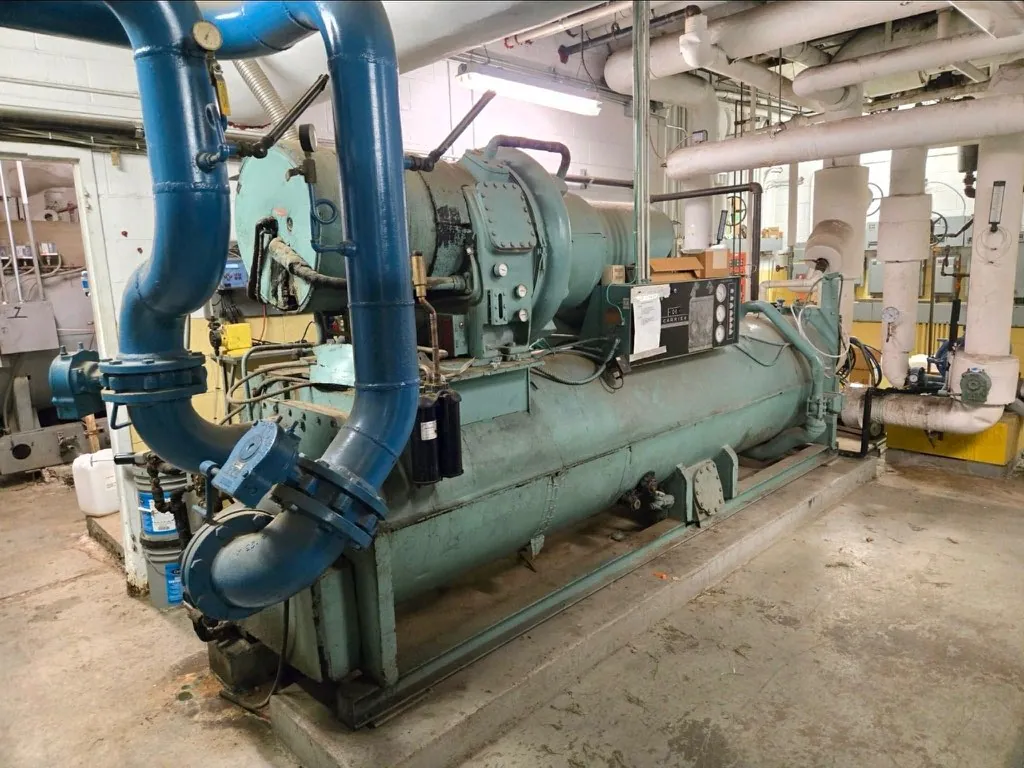
Chiller Valuation in South Carolina
Understand chiller valuation and the information needed for a direct chiller purchase in South Carolina.
We buy chillers. We don’t sell them.
Your chiller.
Our logistics.
Have a surplus or decommissioned chiller? We’re the buyer—here to make moving it straightforward.
From a single unit to equipment from a larger facility, tell us what you have. We buy industrial and commercial chillers across South Carolina and coordinate the work to get them moved.
See how it works
All types & sizes
Air-cooled or water-cooled, centrifugal, screw or scroll. Tell us what you have.
We handle the logistics
We coordinate rigging, refrigerant recovery, loading and freight for the equipment we buy.
Made for sellers
Send the details and nameplate photos to start a conversation about your chiller.
Three steps.
One less chiller.
- 01
Send the details
Share what you know, along with photos of the unit and nameplate.
- 02
Get a quote
We’ll review your equipment and discuss an offer with you.
- 03
Leave the logistics to us
We coordinate removal and freight for the chillers we purchase.
How Chiller Valuation Works in South Carolina
For used and surplus chillers in South Carolina, a useful valuation starts with the specific equipment and the conditions for removing it—not a tonnage figure alone. South Carolina Chiller Buyers is a direct buyer of chillers, not a seller of replacement equipment. We consider units of all tonnages, including those below 20 tons; 20 to 2,000+ tons is a common range. All brands and refrigerants are considered.
There is no fixed value or guaranteed price based on a short description. An offer and removal schedule depend on the chiller, the information available, site access, and the terms agreed for the transaction. Sharing clear details early helps the owner and the site access contact understand what is being evaluated and what would need to happen next.
What Goes Into an Offer
Rated capacity is one part of the picture, but it is not a proxy for either market value or removal difficulty. Brand, model, configuration, completeness, apparent condition, refrigerant, and the work required to disconnect and transport the particular unit may all affect an offer. A complete chiller with identifiable components may present a different evaluation from an incomplete unit, even if their stated capacities are similar.
It also helps to distinguish capacity from transport weight. Tons describe cooling capacity, not how heavy or awkward a machine is to move. Physical dimensions, construction, location within a building, available route, and lifting constraints can influence rigging and freight planning. A large-capacity unit is not automatically the heaviest, easiest, or most valuable unit to remove.
Information the Owner Can Share
The owner or authorized representative can begin with the nameplate details, if already visible and safely accessible, along with known brand, model, rated capacity, refrigerant type, and approximate age. Photos of the exterior, nameplate, surrounding area, and apparent condition can help clarify what is being discussed. Do not energize, open, drain, vent, cut, or dismantle equipment to gather information. If a detail cannot be confirmed without doing so, say that it is unknown.
Be candid about missing parts, known damage, prior removal attempts, or whether the chiller is still connected. A request for an offer does not require the seller to test, start, repair, or prepare the unit. The buyer can review the information provided and identify any remaining questions before purchase terms are agreed.
Coordinate the Site Access Contact Early
The equipment owner and the person who controls access may be different people. The owner may know the equipment history and have authority to sell it; a facilities manager, landlord, tenant, or other site representative may know building procedures, access hours, loading areas, and route restrictions. Keep those roles clear so equipment details and site logistics reach the right people.
For example, if an owner has authority to sell a chiller but does not manage the building, the site contact can confirm whether a proposed access route is available and what coordination is needed. If the access contact cannot approve a sale, that person can still help identify site constraints while the authorized owner handles purchase decisions. These are conditional examples; arrangements vary by property.
Before removal is scheduled, the authorized owner or site representative must provide permission and coordinate access. Useful details may include the unit’s location, door or corridor constraints, overhead clearance, loading access, and any known restrictions on moving equipment. Do not assume that a chiller can be removed simply because it is no longer needed.
Compare Offers on the Same Terms
A headline amount alone may not show which offer is more useful. Compare proposals by confirming what the payment covers, when payment is made, and which removal responsibilities are included. Ask whether freight, crane or rigging, refrigerant recovery, and disconnect work are part of the agreed transaction. Different assumptions about those items can make two offers difficult to compare.
- Confirm the equipment and any included components, the cash payment terms, and when payment is due.
- Clarify who handles disconnects, qualified refrigerant recovery, crane and rigging, loading, hauling, and freight.
- Review access responsibilities and the proposed removal schedule, which depends on the equipment and agreement.
With South Carolina Chiller Buyers, payment is upfront, and freight is covered. After an agreed purchase, the buyer handles disconnects, necessary refrigerant recovery through appropriately qualified personnel, crane and rigging, loading, hauling, and freight. The owner or authorized site representative still provides permission and coordinates access. Confirm the precise terms and schedule for the specific transaction rather than relying on a general estimate.
Refrigerant Is Not Process Fluid
When describing a chiller, distinguish its refrigerant from any water, glycol, or other process fluid associated with the system. They serve different purposes and may be handled differently. If the fluid type or status is unknown, report that uncertainty instead of attempting to drain or otherwise alter the equipment. Necessary refrigerant recovery is handled by appropriately qualified personnel as part of the agreed removal process.
From Initial Details to a Decision
A practical first exchange can be brief: identify the unit as best you can, share available photos and known condition, and explain who can authorize the sale and who can coordinate site access. The buyer may need follow-up information to assess the specific machine and removal conditions. If details are incomplete, that does not mean the owner must service or prepare the chiller before requesting an offer.
Once the equipment and transaction terms have been reviewed, the parties can decide whether to proceed and coordinate a removal schedule. An offer is not a promise of a particular price or date until the equipment and agreement are reviewed. Clear communication between the owner and site access contact helps prevent avoidable surprises while keeping valuation grounded in the actual chiller and the work required to remove it.
Ready to move
your chiller?
Tell us what you know. If you’re unsure of a detail, leave it blank. Nameplate photos are a great place to start.

Request a quote.
Fill out what you can and we’ll be in touch.