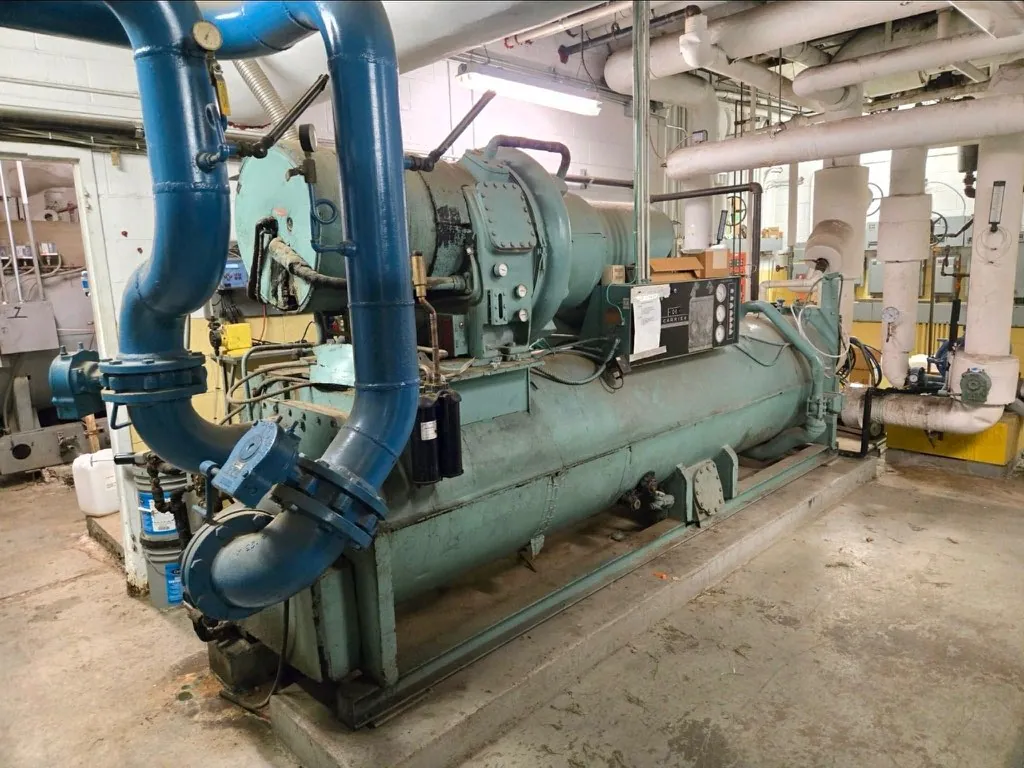
Chiller Cash Offers in South Carolina
Understand chiller cash offer and the information needed for a direct chiller purchase in South Carolina.
We buy chillers. We don’t sell them.
Your chiller.
Our logistics.
Have a surplus or decommissioned chiller? We’re the buyer—here to make moving it straightforward.
From a single unit to equipment from a larger facility, tell us what you have. We buy industrial and commercial chillers across South Carolina and coordinate the work to get them moved.
See how it works
All types & sizes
Air-cooled or water-cooled, centrifugal, screw or scroll. Tell us what you have.
We handle the logistics
We coordinate rigging, refrigerant recovery, loading and freight for the equipment we buy.
Made for sellers
Send the details and nameplate photos to start a conversation about your chiller.
Three steps.
One less chiller.
- 01
Send the details
Share what you know, along with photos of the unit and nameplate.
- 02
Get a quote
We’ll review your equipment and discuss an offer with you.
- 03
Leave the logistics to us
We coordinate removal and freight for the chillers we purchase.
Chiller Cash Offers in South Carolina
When considering a cash offer for a used or surplus chiller in South Carolina, start with clear information about the machine and the site. South Carolina Chiller Buyers is a direct buyer, not a seller of replacement equipment. We consider chillers of all tonnages, including units below 20 tons; 20 to 2,000+ tons is a common range. We review all brands and refrigerants.
A useful offer identifies the specific chiller and states what the buyer is assuming about its condition, completeness, and access for removal. The owner can share equipment details, while a site access contact can clarify practical constraints such as entry procedures or scheduling. Those roles may belong to different people, so agree on who will provide each part of the information.
Build the offer around identifiable equipment
Start with the manufacturer, model, serial number, and nameplate capacity if these details are visible. Share clear photos of the nameplate and the overall machine, along with views of accessible components and any known accessories or disconnected sections. Photos help the buyer distinguish the offered equipment from nearby machinery and assess it without asking the seller to test or start it.
Capacity is not the same as transport weight. A chiller’s tonnage describes cooling capacity; it does not tell the buyer how heavy the machine is or whether it can pass through a particular route. If weight or dimensions are unknown, say so rather than estimating. The buyer can assess removal requirements using available equipment information and site details.
Separate equipment facts from site-access facts
The owner or authorized representative should confirm that they have authority to sell the chiller and can grant permission for its removal. The person coordinating access should describe the route and any known restrictions relevant to planning, such as required arrival procedures, limited access windows, or obstacles around the equipment. Share only what is known; a site contact need not certify the chiller’s mechanical condition.
If the owner is not the day-to-day site contact, establish a direct way for the buyer to resolve access questions with the authorized representative. For example, if an owner can approve the sale but another person controls entry scheduling, both should know which details have been provided and who will confirm the agreed removal plan. Do not treat an informal indication of access as permission to enter or remove equipment.
Useful information to gather before requesting an offer
- Visible nameplate details, approximate tonnage, brand, and model.
- Photos that show the chiller and its apparent completeness, without opening or altering it.
- Known condition or operating history, with unknowns stated plainly.
- The name and contact method for the authorized owner or representative.
- Access notes from the person coordinating the site, including known route or scheduling limits.
Describe condition without preparing the unit
You do not need to test, start, repair, or prepare your chiller to request an offer. Report what you know about its status and identify anything that may affect completeness, such as a control panel or accessory that is no longer with the machine. If a detail is uncertain, label it as uncertain. Do not energize, open, drain, vent, cut, or dismantle equipment to gather information.
Refrigerant and process fluid are different considerations. Refrigerant is part of the chiller’s refrigeration system; process fluid is the liquid circulated through an application’s cooling loop. Neither should be released or handled to improve an offer. If the equipment’s contents or status are unknown, communicate that uncertainty so removal can be planned appropriately.
Confirm what the written offer covers
Before accepting, ask for the payment timing, included services, and any sale conditions in writing. South Carolina Chiller Buyers pays upfront and covers freight. After an agreed purchase, the buyer handles disconnects, necessary refrigerant recovery through appropriately qualified personnel, crane and rigging, loading, hauling, and freight. The accepted agreement defines the equipment being purchased and the removal scope.
Review the offer against the actual machine and the access information supplied. If the nameplate, apparent completeness, or route differs from what was described, flag the difference before agreeing. The offer and removal schedule depend on the equipment and the agreement; neither a particular price nor a specific date can be assumed in advance.
Coordinate approval and removal responsibly
Once terms are agreed, the authorized owner or site representative still needs to provide permission and coordinate access. Share the agreed scope with the person responsible for site entry so the buyer can plan around the correct equipment and the applicable access arrangements. If permission, access, or equipment identity is unresolved, clarify it before setting expectations about removal.
This information flow keeps the offer grounded in what is known: the owner identifies and authorizes the asset, the site contact explains access, and the written agreement records the purchase and removal scope. That approach helps a South Carolina seller evaluate a cash offer without taking on testing, preparation, or shipping responsibilities.
Ready to move
your chiller?
Tell us what you know. If you’re unsure of a detail, leave it blank. Nameplate photos are a great place to start.

Request a quote.
Fill out what you can and we’ll be in touch.