Sell Your Used Process Chiller
We buy surplus process chiller equipment throughout South Carolina and manage the agreed removal.
We buy chillers. We don’t sell them.
Your chiller.
Our logistics.
Have a surplus or decommissioned chiller? We’re the buyer—here to make moving it straightforward.
From a single unit to equipment from a larger facility, tell us what you have. We buy industrial and commercial chillers across South Carolina and coordinate the work to get them moved.
See how it works
All types & sizes
Air-cooled or water-cooled, centrifugal, screw or scroll. Tell us what you have.
We handle the logistics
We coordinate rigging, refrigerant recovery, loading and freight for the equipment we buy.
Made for sellers
Send the details and nameplate photos to start a conversation about your chiller.
Three steps.
One less chiller.
- 01
Send the details
Share what you know, along with photos of the unit and nameplate.
- 02
Get a quote
We’ll review your equipment and discuss an offer with you.
- 03
Leave the logistics to us
We coordinate removal and freight for the chillers we purchase.
Sell Your Used Process Chiller in South Carolina
South Carolina Chiller Buyers purchases used process chillers directly from owners and authorized site representatives. We buy equipment; we do not sell replacement chillers. Process units are often tied to production needs instead of a building’s comfort-cooling loop, so the details of the process and the equipment included in a sale can help us evaluate your unit and plan its removal.
We consider all tonnages, including units below 20 tons. A range of 20 to 2,000+ tons is common, but capacity alone does not determine whether we can make an offer. We consider all brands and refrigerants. Payment is upfront after an agreement, with the purchase and removal arrangements based on the equipment and the terms accepted by both parties.
Describe the Chiller and Its Process Role
When requesting an offer, share the nameplate capacity and model information if available. Also describe the process fluid, such as water or a known water-and-glycol mixture, if you know what the system uses. Process fluid is not the same as refrigerant: the former circulates through the process side, while refrigerant operates within the chiller’s refrigeration circuit. If either fluid or system history is uncertain, say so rather than making an assumption.
Clarify what is included in the sale. A heat exchanger, pump package, control panel, or other accessory may be separate from the chiller or may remain connected to the process system. Identify exclusions and shared connections when you can. No one needs to open, drain, or dismantle equipment to provide this information; existing records and a visual description from an authorized person may be enough to start the discussion.
Capacity Does Not Tell the Whole Removal Story
Cooling capacity, usually expressed in tons, is not the same as transport weight. Two chillers with similar capacity can differ in dimensions, configuration, and handling needs. Removal planning may depend on the unit’s overall size, its location, the route out of the facility, and access for loading equipment. A nameplate capacity is useful context, but it does not by itself establish a price, lifting plan, or schedule.
Whether a unit is a familiar make or a less common configuration is also only one part of the decision. We consider chillers across brands and refrigerants, while the final offer and removal plan depend on the particular equipment and the purchase agreement.
Disclose Shutdown and Connection Conditions
A production shutdown may leave special fluids in the process side, isolated branches nearby, or connections shared with operating equipment. Tell us what is known about those conditions, including any limits on access or work around the chiller. Do not guess at contents or assume that a line is empty because the unit is no longer running. Unknown fluid or system history should be disclosed for planning.
After an agreed purchase, South Carolina Chiller Buyers handles the equipment disconnect and removal planning with the site. Necessary refrigerant recovery is handled through appropriately qualified personnel. Sellers do not need to test, start, repair, prepare, drain, or dismantle the chiller to request an offer.
Consider Rooftop Access Before Agreeing on Removal
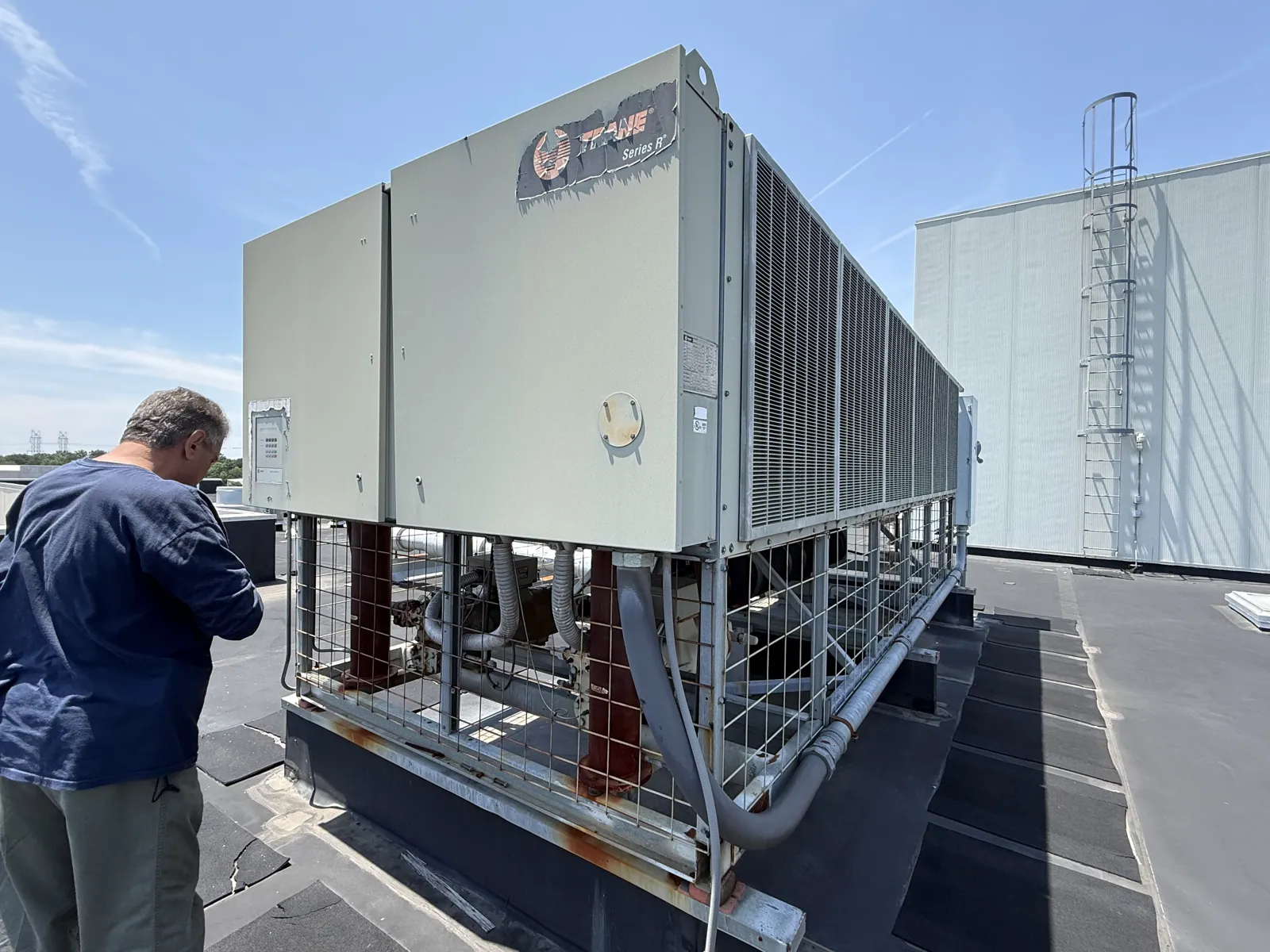
If your process chiller is on a roof, access can affect how removal is coordinated. For example, a site might require an approved work window, a designated crane setup area, or confirmation that a route from the roof to the loading point is available. These are conditional planning questions, not assumptions about any particular property. The authorized owner or site representative must grant permission and coordinate access, including any required site arrangements.
Crane and rigging, loading, hauling, and freight are handled by the buyer after the purchase is agreed, and freight is covered. The buyer and site representative coordinate the work; the seller does not need to hire a carrier or ship the equipment. The removal date depends on the unit, access conditions, and the agreement, so a specific date cannot be promised before those details are established.
What to Have Ready for an Offer Discussion
You can request an offer without operating or altering the equipment. Helpful information, if available, includes the model and capacity, the known process-fluid details, and a description of the chiller’s location and visible access route. Photos or records may help clarify what is being sold, but do not enter restricted areas or disturb equipment to obtain them.
- Identify the chiller and its known capacity or nameplate details.
- Describe the process fluid and disclose any unknown history.
- List included accessories and note excluded or shared connections.
- Explain site permission, access limits, and any rooftop crane considerations.
Agree on Scope Before the Unit Leaves
Before accepting a purchase, confirm which equipment and accessories are included, who is authorized to approve the transaction, and how site access will be coordinated. This helps distinguish the chiller being sold from process equipment that must remain in place. If conditions change or additional equipment is excluded, raise that before removal planning is finalized.
South Carolina Chiller Buyers can consider your used process chiller without requiring a test run or seller-managed shipment. The offer and removal schedule depend on the equipment and the agreed scope. Share what you know, clearly identify uncertainties, and leave disconnects, qualified refrigerant recovery, lifting, loading, hauling, and freight to the buyer’s coordinated removal process.
Ready to move
your chiller?
Tell us what you know. If you’re unsure of a detail, leave it blank. Nameplate photos are a great place to start.

Request a quote.
Fill out what you can and we’ll be in touch.