Sell Your Used Magnetic-Bearing Chiller
We buy surplus magnetic-bearing chiller equipment throughout South Carolina and manage the agreed removal.
We buy chillers. We don’t sell them.
Your chiller.
Our logistics.
Have a surplus or decommissioned chiller? We’re the buyer—here to make moving it straightforward.
From a single unit to equipment from a larger facility, tell us what you have. We buy industrial and commercial chillers across South Carolina and coordinate the work to get them moved.
See how it works
All types & sizes
Air-cooled or water-cooled, centrifugal, screw or scroll. Tell us what you have.
We handle the logistics
We coordinate rigging, refrigerant recovery, loading and freight for the equipment we buy.
Made for sellers
Send the details and nameplate photos to start a conversation about your chiller.
Three steps.
One less chiller.
- 01
Send the details
Share what you know, along with photos of the unit and nameplate.
- 02
Get a quote
We’ll review your equipment and discuss an offer with you.
- 03
Leave the logistics to us
We coordinate removal and freight for the chillers we purchase.
Sell Your Used Magnetic-Bearing Chiller in South Carolina
When you are comparing offers for a used magnetic-bearing chiller, look beyond the headline price. The purchase scope matters too: what equipment is included, who arranges removal, how freight is handled, and what condition information the buyer needs. South Carolina Chiller Buyers is a direct buyer of used chillers, not a seller of replacement equipment. We consider magnetic-bearing units across tonnages, brands, and refrigerants.
Some centrifugal chillers use magnetic-bearing compressors and electronic drives. Packages differ in controls and power requirements, so a clear description can help us assess what is actually being offered. You do not need to start, test, repair, or prepare your chiller to request an offer. If its history is incomplete, a fault is known, or a drive has been disconnected, describe the condition as-is rather than trying to verify it.
Compare the Scope, Not Just the Number
Two offers can appear similar while covering different responsibilities. Confirm whether the proposed purchase includes the chiller package as it currently stands and whether removal, loading, hauling, and freight are part of the buyer’s scope. With South Carolina Chiller Buyers, after a purchase is agreed, we handle disconnects, necessary refrigerant recovery through appropriately qualified personnel, crane and rigging, loading, hauling, and freight. Freight is covered.
The seller does not need to hire a rigging company or ship the unit. The authorized owner or site representative does need to give permission and coordinate access. Before accepting an offer, clarify what remains on site, what must be accessible, and how the removal plan fits the property’s access conditions. The offer and removal schedule depend on the equipment and the agreed arrangements; neither a specific price nor date can be assumed in advance.
Document the Package Without Powering It
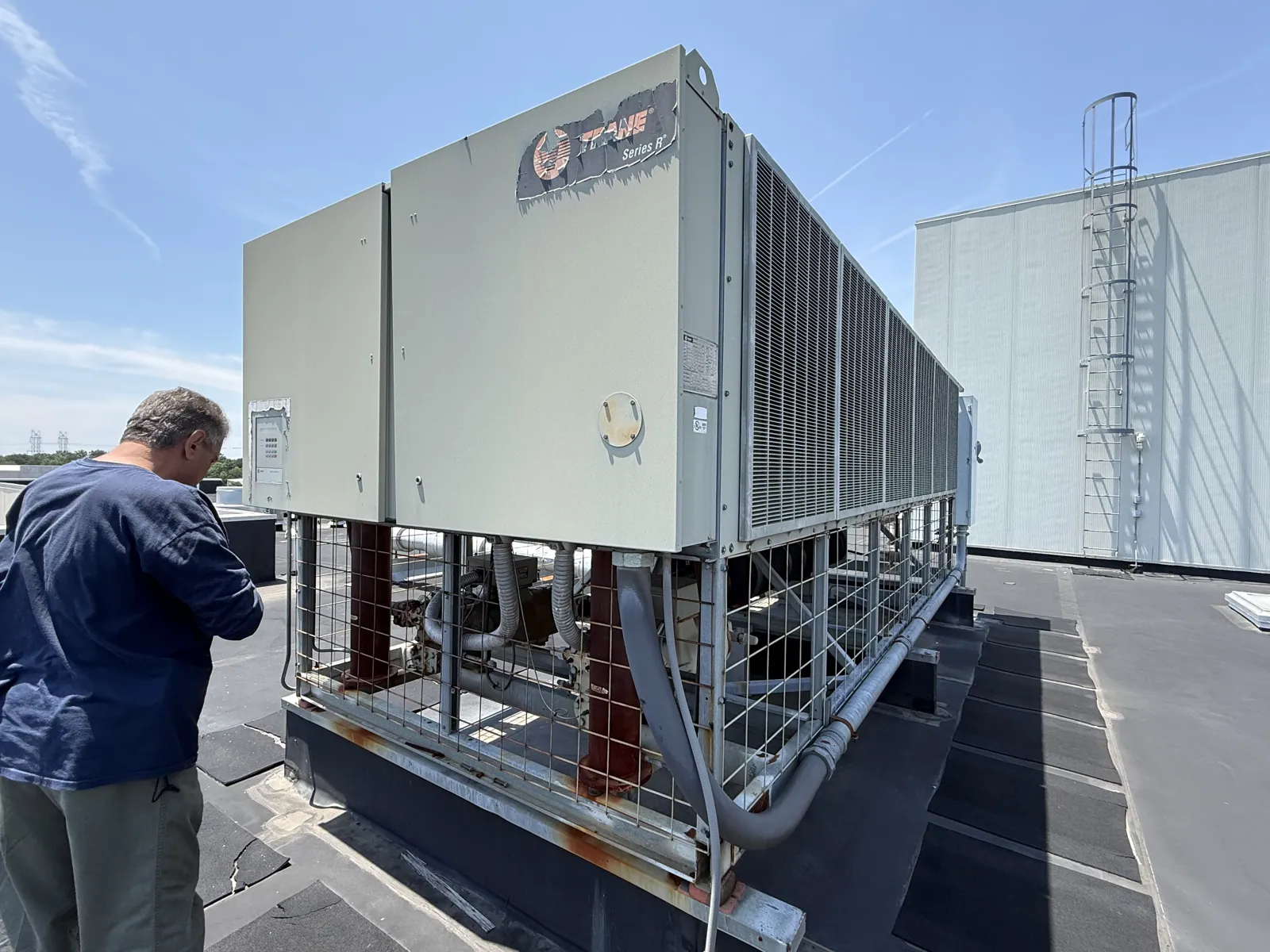
For an initial inquiry, useful photographs often show the compressor, drive cabinet, and unit nameplate. Include an overview of the chiller and note whether any controls or major components have already been removed. If a cabinet is closed, photograph its exterior; do not open it to gather information. A readable nameplate can help identify the model and rated capacity, while photos show whether the package appears complete.
Different magnetic-bearing packages have different controls and power requirements. A disconnected drive, unknown operating history, or reported fault can all be stated plainly. There is no need to energize the equipment to provide an initial inquiry, and you should not open, drain, vent, cut, or dismantle it for a quote. If records are available, share them as supporting context, not as a requirement to make the first contact.
Capacity Is Not Removal Weight
Chiller capacity, usually expressed in tons, describes cooling duty; it does not tell a rigger how heavy or difficult the unit will be to move. Transport planning depends on the actual equipment configuration, dimensions, access route, lifting points, and site conditions. A large-capacity unit is not automatically the heaviest package, and a compact package is not automatically easy to remove. Photos and equipment information help distinguish these questions.
South Carolina Chiller Buyers considers chillers of all tonnages, including units below 20 tons; 20 to 2,000-plus tons is a common range. Do not rule out an inquiry because your magnetic-bearing chiller is smaller or larger than a familiar size. The specific equipment and removal circumstances determine whether a purchase can be agreed and how it can be scheduled.
Separate Chiller Refrigerant From Process Fluid
Refrigerant belongs to the chiller’s cooling circuit, while process fluid is the water or other medium circulated through the connected system. They are not interchangeable, and a description of one should not be mistaken for the other. You do not need to drain either system to request an offer. After an agreed purchase, necessary refrigerant recovery is handled by appropriately qualified personnel as part of the buyer’s removal work.
If you know the refrigerant type, include it; South Carolina Chiller Buyers considers all refrigerants. If you do not know it, say so rather than guessing or attempting to access the system. Keep any available equipment labels or records for reference, and leave the chiller and its connections undisturbed for the inquiry.
What to Include When Requesting an Offer
A concise, accurate account is more useful than an unsupported claim that the unit works. Share the location in South Carolina, the equipment identity if known, its apparent condition, and what components remain with it. Mention access constraints that could affect removal, such as limited clearance or a controlled site entrance, if applicable. The owner or authorized site representative should be prepared to approve the sale and coordinate access.
- Photograph the compressor, drive cabinet, nameplate, and overall unit.
- State known faults, unknown history, disconnections, or removed components.
- Note capacity and refrigerant only when you have reliable information.
- Describe access conditions and confirm who can authorize entry and removal.
Payment is upfront. The amount and removal schedule are determined through assessment and agreement, not by a guaranteed rate or standard turnaround. By comparing the complete scope—purchase, removal responsibilities, freight, access, and payment—you can judge an offer on practical terms as well as price.
Ready to move
your chiller?
Tell us what you know. If you’re unsure of a detail, leave it blank. Nameplate photos are a great place to start.

Request a quote.
Fill out what you can and we’ll be in touch.