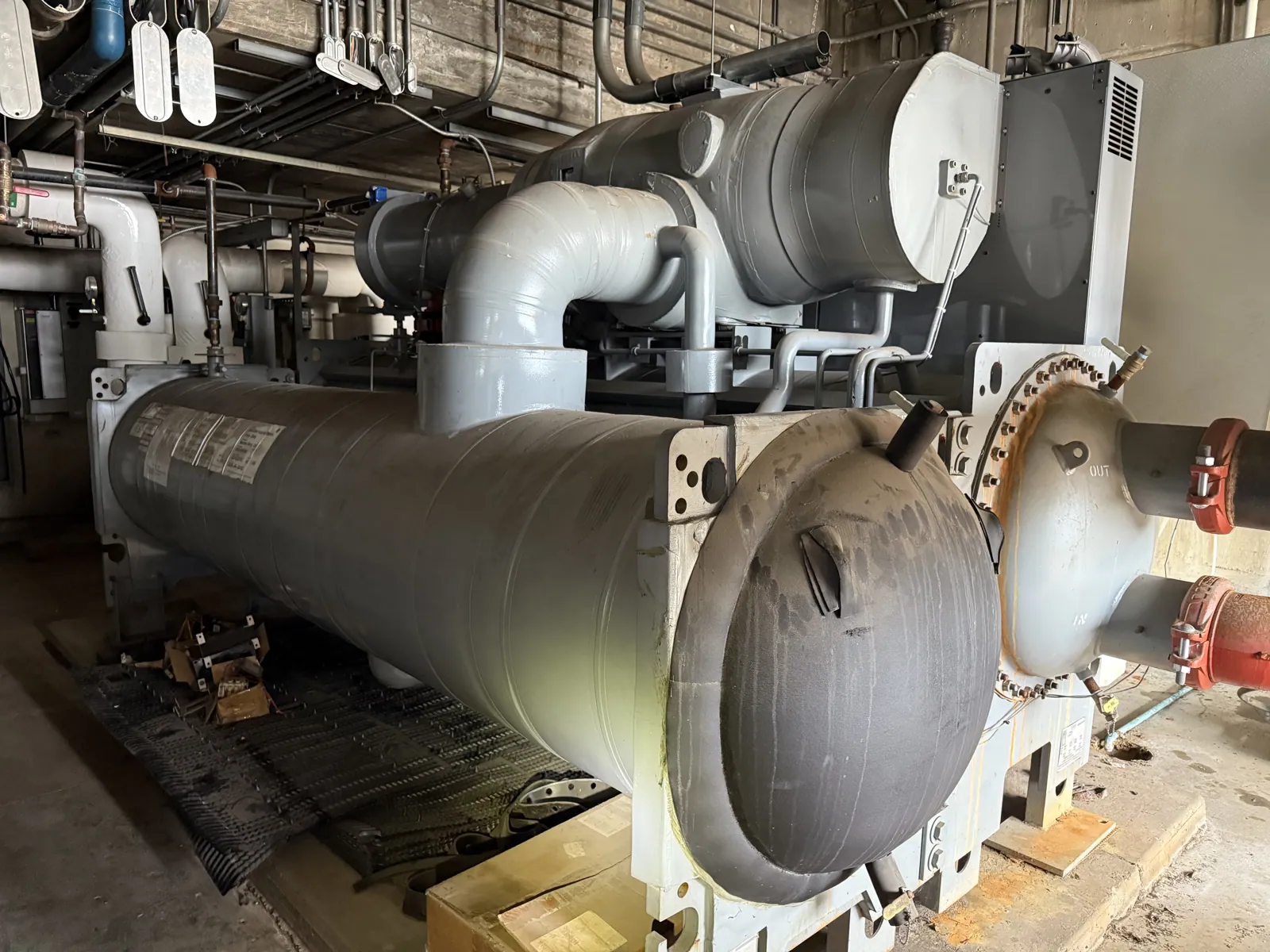
Sell Your Used Modular Chiller
We buy surplus modular chiller equipment throughout South Carolina and manage the agreed removal.
We buy chillers. We don’t sell them.
Your chiller.
Our logistics.
Have a surplus or decommissioned chiller? We’re the buyer—here to make moving it straightforward.
From a single unit to equipment from a larger facility, tell us what you have. We buy industrial and commercial chillers across South Carolina and coordinate the work to get them moved.
See how it works
All types & sizes
Air-cooled or water-cooled, centrifugal, screw or scroll. Tell us what you have.
We handle the logistics
We coordinate rigging, refrigerant recovery, loading and freight for the equipment we buy.
Made for sellers
Send the details and nameplate photos to start a conversation about your chiller.
Three steps.
One less chiller.
- 01
Send the details
Share what you know, along with photos of the unit and nameplate.
- 02
Get a quote
We’ll review your equipment and discuss an offer with you.
- 03
Leave the logistics to us
We coordinate removal and freight for the chillers we purchase.
Sell Your Used Modular Chiller in South Carolina
South Carolina Chiller Buyers buys used modular chillers directly from their owners. We are a buyer, not a seller of replacement equipment. We consider modular systems of all tonnages, including units below 20 tons; capacities from 20 to 2,000+ tons are common. All brands and refrigerants are considered, subject to the equipment and the agreed sale and removal scope.
A modular chiller may be a bank of connected units rather than one machine that moves as a whole. When you request an offer, describe how many modules are present, which ones are included, and whether common headers and supervisory controls are part of the sale. Those details help distinguish a complete system from a partial sale and clarify what equipment is staying at the site.
Describe the Modules and Their Boundaries
For a complete-system sale, identify every module that is included and note any shared components, such as headers, controls, or a common frame. If only some modules are for sale, define the boundary plainly: specify the modules to be removed and identify the equipment that must remain. A partial sale can require more scope clarification than a sale of an entire bank, particularly where components are shared.
Photographs can help show the arrangement without requiring you to handle the equipment. Useful views include the connections between modules, the supporting frame or pad, and the route from the equipment to the loading area. Include the separate controller or starter if it is available, and say whether it is included even if it is stored away from the chiller. Do not open or dismantle equipment to obtain pictures.
Stored Chillers and Separate Controls
A modular chiller that is out of service or in storage can still be considered. You do not need to test, start, repair, or prepare it to request an offer. Share what is known about its condition and status, and distinguish confirmed information from details you are unsure of. If a controller or starter has been removed and stored separately, explain where it is, whether it is believed to belong to the chiller, and whether it is included in the proposed sale.
Missing, disconnected, or separately stored controls can affect how the equipment is described and the removal scope, but they do not mean you must reinstall or energize anything before contacting us. The offer and removal schedule depend on the specific equipment and the agreement. No particular price or date can be promised before those details are reviewed.
Capacity Is Not the Same as Transport Weight
Chiller capacity, usually expressed in tons, indicates cooling capacity; it does not tell a hauler how heavy or difficult the equipment will be to move. A modular arrangement may divide the cooling capacity among several units, while the removal plan also depends on the modules’ individual size, overall configuration, access, and loading conditions. If you have reliable records listing capacities or weights, provide them, but do not estimate by moving or opening the equipment.
Also distinguish the chiller’s refrigerant from any process fluid used by the system. They are different materials with different roles. Do not drain, release, or handle either one as part of requesting an offer. If refrigerant recovery is needed for an agreed removal, it is handled by appropriately qualified personnel within the removal scope.
Information That Helps Clarify a Modular Sale
You can begin with a concise description and add details as they become available. These points are useful when asking about your modular chiller:
- Module count, known capacities, brand, and any available identification information.
- Whether all modules are included, or a clear list of those being sold and those staying.
- Whether common headers, supervisory controls, a separate controller, or a starter are included.
- Current location, known condition, storage status, and photographs of module connections and access.
For a conditional example, if a site has several connected modules but intends to retain one, the offer request should identify the units to be sold and show where the retained unit meets the proposed removal boundary. If a controller is stored in a different room or building, note its location and inclusion status rather than assuming it will travel with the chiller.
Access, Removal, and Payment
After an agreed purchase, South Carolina Chiller Buyers handles the removal work in scope: disconnects, necessary refrigerant recovery through appropriately qualified personnel, crane and rigging, loading, hauling, and freight. Freight is covered. The seller does not need to hire a carrier or ship the equipment. The authorized owner or site representative must still give permission for the sale and coordinate site access, including any relevant access arrangements for the equipment and loading route.
Payment is upfront. The timing of payment and removal, and the final scope, depend on the equipment and the agreement. Before finalizing a partial modular sale, make sure the included modules and shared components are clearly identified so the agreed removal does not extend to equipment that is meant to remain.
Request an Offer Without Preparing the Unit
To discuss selling your used modular chiller in South Carolina, share the module count, sale boundary, control and starter details, known condition, and available photographs. You do not need to start, test, repair, drain, or dismantle the equipment. Clear information about what is included—and what must stay—gives both sides a practical basis to review the equipment, agree on scope, and plan removal.
Ready to move
your chiller?
Tell us what you know. If you’re unsure of a detail, leave it blank. Nameplate photos are a great place to start.

Request a quote.
Fill out what you can and we’ll be in touch.