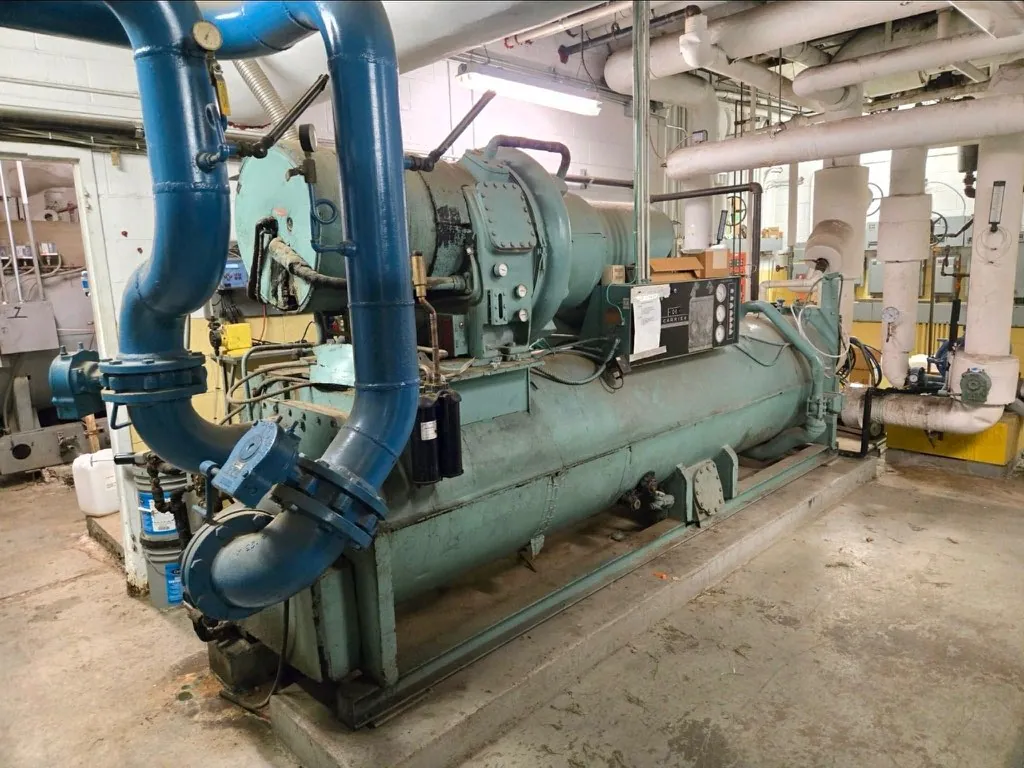
Sell a Chiller Labeled R-32
We consider chillers using R-32 and arrange appropriate recovery and removal in South Carolina.
We buy chillers. We don’t sell them.
Your chiller.
Our logistics.
Have a surplus or decommissioned chiller? We’re the buyer—here to make moving it straightforward.
From a single unit to equipment from a larger facility, tell us what you have. We buy industrial and commercial chillers across South Carolina and coordinate the work to get them moved.
See how it works
All types & sizes
Air-cooled or water-cooled, centrifugal, screw or scroll. Tell us what you have.
We handle the logistics
We coordinate rigging, refrigerant recovery, loading and freight for the equipment we buy.
Made for sellers
Send the details and nameplate photos to start a conversation about your chiller.
Three steps.
One less chiller.
- 01
Send the details
Share what you know, along with photos of the unit and nameplate.
- 02
Get a quote
We’ll review your equipment and discuss an offer with you.
- 03
Leave the logistics to us
We coordinate removal and freight for the chillers we purchase.
Sell a Chiller Labeled R-32 in South Carolina
South Carolina Chiller Buyers is a direct buyer of used chillers, including equipment labeled R-32. We buy equipment; we do not sell replacement chillers. R-32 is one part of an evaluation, not a complete description of the machine or its removal needs. A clear account of the nameplate, condition, included parts and site access helps us consider the unit and discuss an offer.
We consider chillers of all tonnages, including units below 20 tons. A range from 20 to 2,000+ tons is common, but capacity alone does not determine whether a chiller is worth reviewing. We consider all brands and refrigerants. You do not need to test, start, repair or prepare your R-32 chiller to request an offer.
Start with the Nameplate and R-32 Markings
Share the make, model, rated capacity and any other nameplate information you can read without disturbing the equipment. For equipment labeled R-32, include the full refrigerant label and visible safety markings when available. A legible photo can help distinguish the actual unit from a system description or a label on nearby equipment.
Do not treat the refrigerant label as a substitute for the chiller’s identity or specifications. Two units labeled with the same refrigerant may differ in capacity, design, condition and removal requirements. If a plate is faded or difficult to reach, provide what you can see from a safe, accessible position; do not open panels or move components to obtain more information.
Describe Condition Without Starting the Unit
Tell us whether the chiller is operating, shut down, disconnected or of unknown status, based on information already available to you. Note visible damage, missing components, corrosion, prior repairs or a known reason the equipment was taken out of service. These details help set expectations, but you are not required to diagnose the machine or prove that it runs.
For example, if an R-32 chiller was removed from service during a facility change and its operating history is available, that history may help us assess it. If the unit has been idle for years and its condition is uncertain, say so rather than guessing. Do not energize, open, drain, vent, cut or dismantle the chiller to support an offer request.
List What Comes with the Chiller
Identify major items included in the proposed sale, such as a matching control panel, pumps or other associated equipment, if applicable. Note what is separate, retained or already missing. A component should not be described as included unless it is part of the agreed sale; unclear boundaries can cause avoidable confusion when removal is planned.
Keep the distinction between the chiller and its surrounding system clear. Process fluid in connected piping is not the same as refrigerant inside the equipment. Do not drain or handle either to prepare for an offer. If the system includes separate vessels or auxiliary equipment, describe them separately so the buyer can understand what is being considered.
Explain Access and Removal Conditions
Useful access details include the unit’s indoor or outdoor location, the route from the chiller to a loading area, known doorway or overhead constraints, and whether a crane or rigging access may be needed. You do not need to move the unit or arrange shipping. The authorized owner or site representative must provide permission and coordinate access for any agreed removal.
Chiller capacity and transport weight are different measures. A higher-tonnage unit is not automatically heavier than every smaller unit, and capacity does not establish lifting requirements. If weight information is available, share it; otherwise, do not estimate from tonnage alone. The equipment, its configuration and the actual route all affect the removal plan.
R-32 Requires a Planned, Qualified Removal
The buyer’s removal plan must account for the actual refrigerant and applicable safety and recovery requirements. A seller should not vent or handle R-32 to request an offer. After a purchase is agreed, South Carolina Chiller Buyers handles disconnects, necessary refrigerant recovery through appropriately qualified personnel, crane and rigging, loading, hauling and freight. Freight is covered.
For instance, if the label confirms R-32 but the equipment’s condition or access is uncertain, those points can be reviewed before the removal plan is settled. The refrigerant alone does not determine the offer or dictate a date. Both the offer and schedule depend on the equipment and the agreement.
What to Send for an Offer
Share the available details in a straightforward order. Photos should be taken only from safe, accessible positions, without opening or disturbing the equipment. Useful information includes:
- Make, model, rated capacity, and the full R-32 label with visible safety markings when available.
- Known condition, operating history, and any missing or damaged components.
- Items included in the sale, plus the unit’s location and practical removal access.
Once the equipment and terms are reviewed, we can discuss an offer and removal arrangements. Payment is upfront under the agreed purchase. There is no need to hire a hauler, ship the chiller or complete refrigerant work before requesting an offer; the site representative’s role is to authorize the sale and coordinate access.
Ready to move
your chiller?
Tell us what you know. If you’re unsure of a detail, leave it blank. Nameplate photos are a great place to start.

Request a quote.
Fill out what you can and we’ll be in touch.