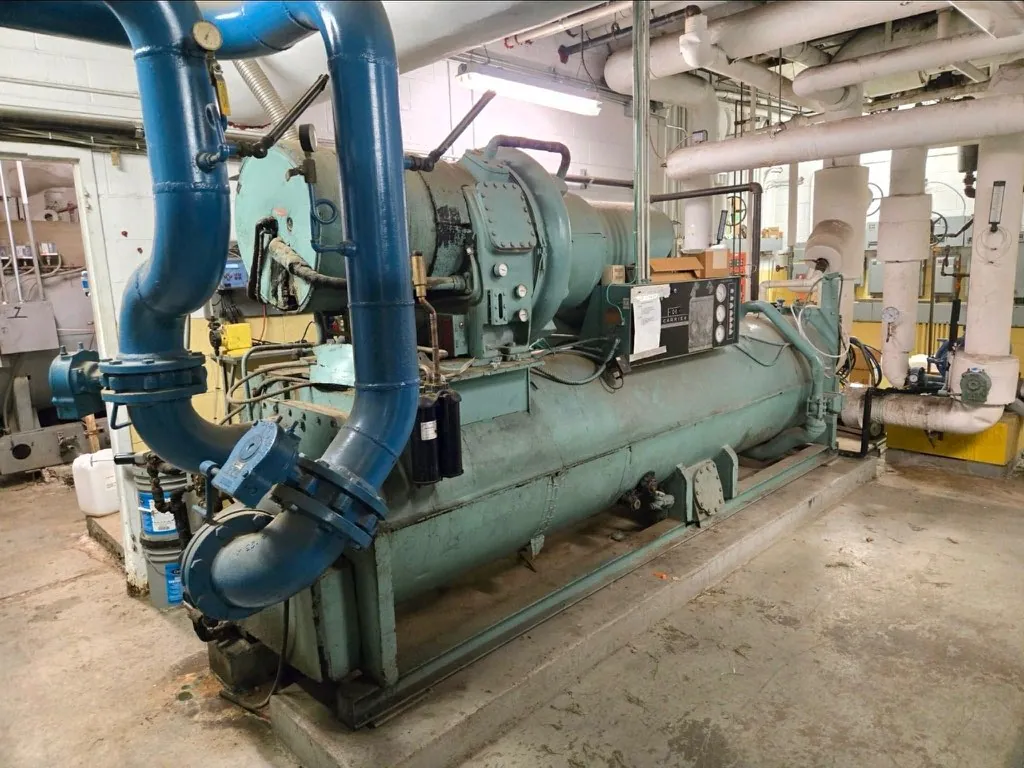
Sell a Chiller Labeled R-1234ze(E)
We consider chillers using R-1234ze(E) and arrange appropriate recovery and removal in South Carolina.
We buy chillers. We don’t sell them.
Your chiller.
Our logistics.
Have a surplus or decommissioned chiller? We’re the buyer—here to make moving it straightforward.
From a single unit to equipment from a larger facility, tell us what you have. We buy industrial and commercial chillers across South Carolina and coordinate the work to get them moved.
See how it works
All types & sizes
Air-cooled or water-cooled, centrifugal, screw or scroll. Tell us what you have.
We handle the logistics
We coordinate rigging, refrigerant recovery, loading and freight for the equipment we buy.
Made for sellers
Send the details and nameplate photos to start a conversation about your chiller.
Three steps.
One less chiller.
- 01
Send the details
Share what you know, along with photos of the unit and nameplate.
- 02
Get a quote
We’ll review your equipment and discuss an offer with you.
- 03
Leave the logistics to us
We coordinate removal and freight for the chillers we purchase.
Sell a Chiller Labeled R-1234ze(E) in South Carolina
South Carolina Chiller Buyers purchases used chillers in South Carolina, including equipment identified as using R-1234ze(E). We are a direct buyer, not a seller of replacement equipment. If you are reviewing an idle system, planning a facility change, or deciding what information to gather before requesting an offer, you do not need to start or test the chiller. Share what you can identify safely from existing records and visible nameplate information; we can discuss the remaining details with you.
We consider chillers across all tonnages, including units below 20 tons. Chillers from 20 to 2,000+ tons are a common range, but capacity alone does not determine whether a unit is worth reviewing. We also consider all brands and refrigerants. An offer and removal schedule depend on the specific equipment, available information, access, and the terms agreed with the owner.
Keep the Equipment Details Distinct
If the nameplate says R-1234ze(E), photograph the entire designation and any additional safety markings. Avoid shortening the label or guessing from memory: handling planning depends on the actual substance and equipment. Do not open the system or handle refrigerant to verify a marking. If the plate is unclear or partly obscured, tell us that rather than trying to alter or expose it.
The refrigerant is one part of the evaluation, not a substitute for the chiller’s make, model, rated capacity, condition, and removal access. A useful first message can include the nameplate information, approximate age if known, whether the equipment is installed or already disconnected, and a few clear exterior photographs taken from safe, accessible positions. If a detail is unknown, say so; a missing data point is better than an unsupported estimate.
Owner and Site Contact: Two Useful Roles
The equipment owner or authorized decision-maker provides the information needed to consider a purchase and approves the transaction. The site access contact helps explain how the unit can be reached and what coordination is needed for a removal visit. These roles may belong to one person, but they do not have to. For example, an owner may be managing a facility change from another location while a site representative knows the delivery entrance, access hours, and who controls entry. That is an illustrative situation, not a claim about any particular property.
To keep the process clear, the owner can send equipment details and identify who is authorized to approve a sale. The site contact can then confirm practical access information, such as the unit’s location, known restrictions, and how to arrange entry. Share only information each person is authorized to provide. Before removal, the authorized owner or site representative must give permission and coordinate access; knowing where a chiller is located does not by itself authorize its removal.
Information That Helps Move an Evaluation Forward
There is no need to create a technical report before requesting an offer. A concise set of facts can help us understand what is being considered and what questions remain. Useful information, when available, includes:
- Complete refrigerant designation and any visible safety markings
- Manufacturer, model, serial number, and rated capacity from records or the nameplate
- Known condition or operating history, without starting the equipment to check
- Whether the chiller remains connected and where it sits within the site
- The owner’s authorized contact and the person who can coordinate site access
Photographs should be limited to areas that can be viewed safely without opening, dismantling, or disturbing the equipment. If the nameplate cannot be reached safely, provide existing documentation instead or explain what is unavailable. We can use follow-up questions to clarify details; the seller does not need to repair, prepare, or prove operation of the unit to ask for an offer.
What the Refrigerant Label Does—and Does Not—Tell You
R-1234ze(E) identifies the refrigerant, not the chiller’s capacity, overall condition, or ease of removal. Likewise, the unit’s rated tonnage describes cooling capacity, not its transport weight. A large-capacity chiller is not automatically the heaviest unit to move, and a smaller unit is not automatically simple to remove. Actual handling plans depend on the equipment and site conditions, which can only be assessed in context.
Keep refrigerant separate from any process fluid associated with the installation. The label refers to the chiller refrigerant circuit; it should not be treated as a description of water, glycol, or another fluid used in the connected process. Do not drain, vent, open, cut, or dismantle the equipment to identify either fluid. If records distinguish the circuits, sharing that documentation can prevent confusion.
Removal Planning After an Agreed Purchase
For an agreed purchase, South Carolina Chiller Buyers handles the removal work: disconnects, any necessary refrigerant recovery through appropriately qualified personnel, crane and rigging, loading, hauling, and freight. Freight is covered. A seller should not vent or handle R-1234ze(E) to request an offer, and does not need to arrange shipping or hire a separate removal crew for the buyer’s work.
The site representative still has an important coordination role. They must provide or confirm authorized access and communicate relevant site arrangements so removal can be planned with the owner’s permission. The method and timing depend on the chiller, access, and the agreement. We do not promise a particular price or removal date before those details are understood and agreed.
Request an Offer Without Preparing the Chiller
Send the available nameplate details, photographs, and contact information for both the owner and site access representative, if they are different people. Identify uncertainties plainly, especially if the refrigerant designation is incomplete or the unit’s condition is unknown. There is no requirement to energize, open, drain, repair, or dismantle your R-1234ze(E) chiller to begin a conversation. Once we have enough information to review the equipment and discuss access, we can determine whether to make an offer and what removal coordination would require. Payment is upfront after an agreed purchase.
Ready to move
your chiller?
Tell us what you know. If you’re unsure of a detail, leave it blank. Nameplate photos are a great place to start.

Request a quote.
Fill out what you can and we’ll be in touch.