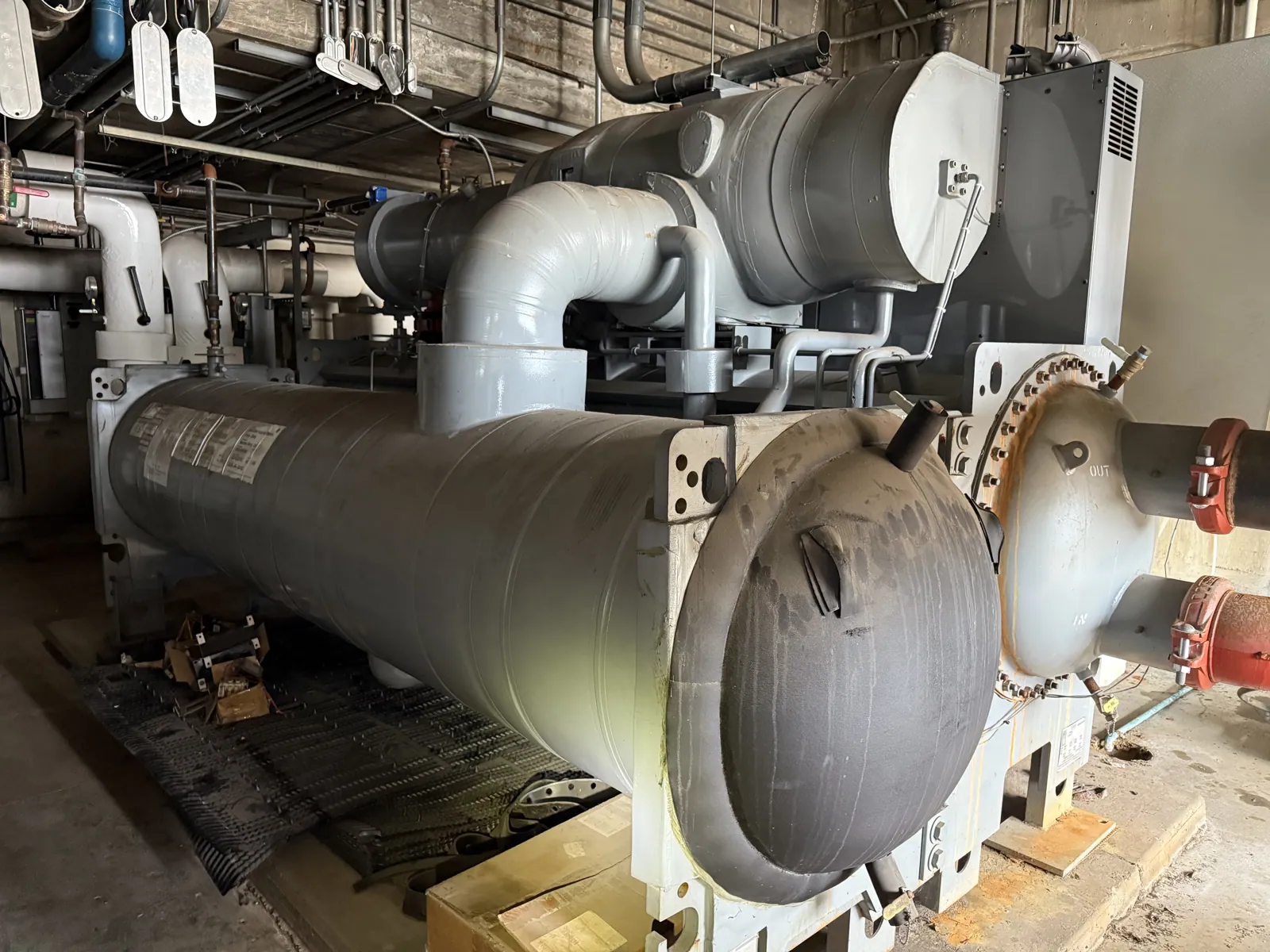
Sell a Surplus Water-Cooled Chiller in Columbia, SC
We buy used water-cooled chiller equipment in Columbia and handle the agreed disconnect, rigging, and freight.
We buy chillers. We don’t sell them.
Your chiller.
Our logistics.
Have a surplus or decommissioned chiller? We’re the buyer—here to make moving it straightforward.
From a single unit to equipment from a larger facility, tell us what you have. We buy industrial and commercial chillers across South Carolina and coordinate the work to get them moved.
See how it works
All types & sizes
Air-cooled or water-cooled, centrifugal, screw or scroll. Tell us what you have.
We handle the logistics
We coordinate rigging, refrigerant recovery, loading and freight for the equipment we buy.
Made for sellers
Send the details and nameplate photos to start a conversation about your chiller.
Three steps.
One less chiller.
- 01
Send the details
Share what you know, along with photos of the unit and nameplate.
- 02
Get a quote
We’ll review your equipment and discuss an offer with you.
- 03
Leave the logistics to us
We coordinate removal and freight for the chillers we purchase.
Sell a Surplus Water-Cooled Chiller in Columbia, SC
If you have an inactive water-cooled chiller in Columbia, South Carolina, an uncertain service history does not automatically rule out an offer. South Carolina Chiller Buyers purchases used chillers directly; we do not sell replacement equipment. We consider all tonnages, including units under 20 tons, with 20 to 2,000+ tons being a common range, and accept all brands and refrigerants.
You do not need to restart, test, repair, or prepare the machine to request an offer. Start with what you can safely identify from records, labels, and accessible views. If information is missing, say so rather than guessing. The equipment’s condition, configuration, and agreed removal scope affect the offer and schedule; neither a particular price nor a removal date is guaranteed.
Build a Reliable Picture Without Restarting the Unit
For a machine that has been idle, separate confirmed details from unknowns. A nameplate, prior asset record, or service document may help identify the manufacturer, model, capacity, age, and refrigerant. If a field is unreadable or records conflict, mark it as unverified. Do not energize the chiller to fill in gaps or open panels, piping, or refrigerant circuits.
Capacity is not the same as transport weight. Tonnage describes cooling capacity, while the machine’s weight and dimensions affect lifting, access, and hauling. A capacity label alone cannot establish whether a unit will fit through a doorway or what rigging it requires. Available dimensions, weight records, and clear photographs can help clarify those separate questions.
Map Both Water Circuits and What Stays
A water-cooled chiller normally connects to two distinct systems: a chilled-water loop that serves the process or building, and a condenser-water loop that carries heat toward cooling equipment. These are water circuits, not the refrigerant circuit inside the chiller. Identifying which visible connections belong to each loop helps describe the installation without opening or disturbing it.
Note whether the cooling tower, pumps, and associated controls are part of the sale or remain with the property. If the system serves other equipment, identify shared piping and components that must stay in use. For example, if a pump appears to serve more than one chiller, treat that as a scope question to confirm—not as an item to include by assumption.
Use Photos to Clarify the Removal Boundary
For water-cooled chiller removal, the disconnection plan must distinguish the chiller from shared piping and any cooling equipment that will remain operational. Useful photographs can show valves, insulation, visible pipe runs, the machine’s surroundings, and the route toward the machinery-room exit. Capture enough context to show how components relate; avoid entering restricted areas or moving guards, insulation, or equipment to get a picture.
Photos do not replace site authorization or a removal review. They help identify questions early, such as whether a pipe run appears shared or whether the exit route has a turn or overhead obstruction. If you cannot tell where a connection leads, describe the uncertainty rather than labeling it as dedicated to the chiller.
Information That Helps Frame an Offer
When requesting an offer, provide the details you can confirm and flag what remains unknown. A concise description is more useful than a guessed service history. These points can help establish the equipment and removal scope:
- Brand, model, readable nameplate information, and stated capacity.
- Known refrigerant information or an honest note that it is unknown.
- Whether the chiller is inactive, and any documented condition or service history.
- Which pumps, cooling tower, controls, and piping are included or excluded.
- Photos of connections, surrounding access, and the machinery-room exit.
A chiller with no recent operating record may still be considered, but do not present unverified performance as fact. The buyer evaluates the equipment and proposed scope before an agreement is made.
Coordinate Access and Removal After Agreement
Once a purchase is agreed, South Carolina Chiller Buyers handles the disconnection work, necessary refrigerant recovery through appropriately qualified personnel, crane and rigging, loading, hauling, and freight. Freight is covered. Sellers do not need to hire a carrier or ship the chiller themselves. Payment is upfront, with the agreed purchase and removal arrangements confirmed between the parties.
The authorized owner or site representative must still grant permission and coordinate access. That person can identify site restrictions, explain which adjacent systems must remain in service, and confirm the agreed equipment boundary. Do not attempt to disconnect, drain, vent, cut, or dismantle the chiller or its piping. The removal plan and timing depend on the equipment, access, and agreement.
Make the First Request Practical
If the machine’s history is incomplete, begin with its nameplate, available records, and safe exterior photographs. Add a clear note about the two water loops and any equipment or shared services that may remain. This gives the buyer a grounded starting point for reviewing your water-cooled chiller in Columbia without requiring you to restart it or make assumptions about its condition.
Ready to move
your chiller?
Tell us what you know. If you’re unsure of a detail, leave it blank. Nameplate photos are a great place to start.

Request a quote.
Fill out what you can and we’ll be in touch.