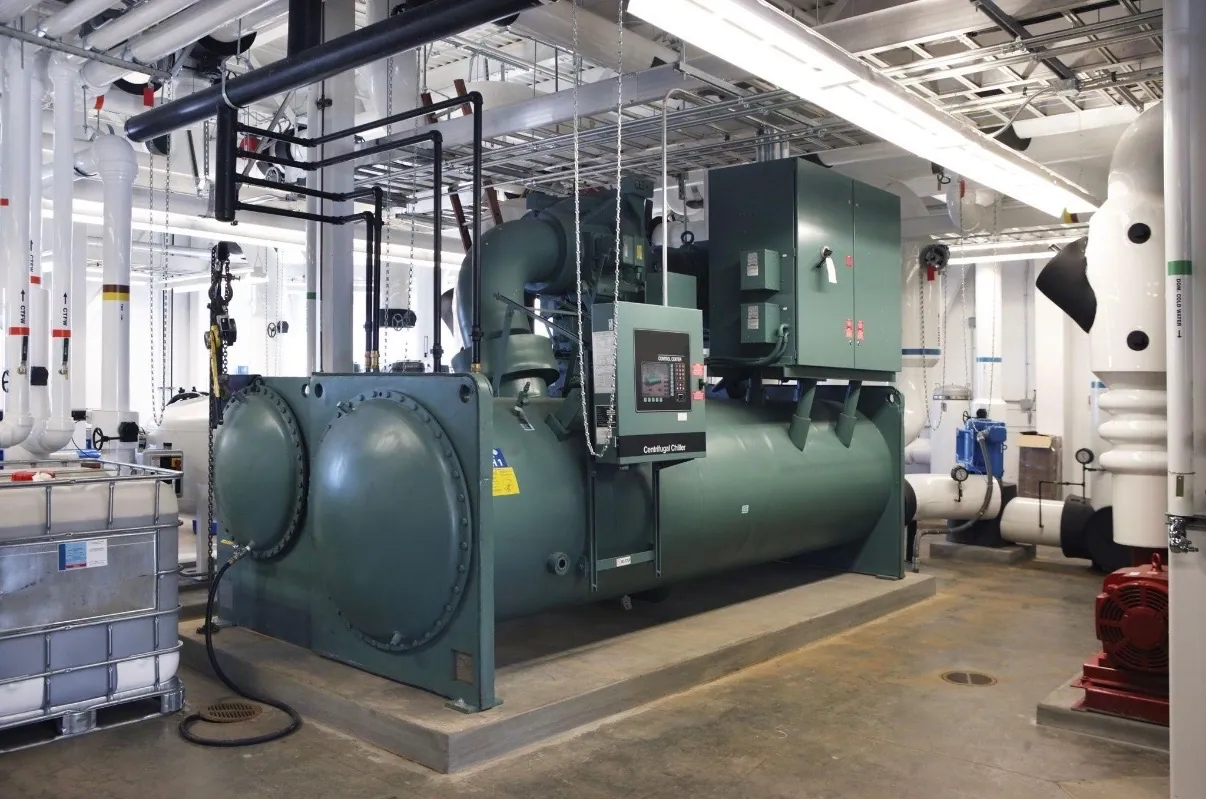
Sell a Used Multistack Chiller
We buy used and surplus Multistack chillers in South Carolina, with buyer-managed removal and freight.
We buy chillers. We don’t sell them.
Your chiller.
Our logistics.
Have a surplus or decommissioned chiller? We’re the buyer—here to make moving it straightforward.
From a single unit to equipment from a larger facility, tell us what you have. We buy industrial and commercial chillers across South Carolina and coordinate the work to get them moved.
See how it works
All types & sizes
Air-cooled or water-cooled, centrifugal, screw or scroll. Tell us what you have.
We handle the logistics
We coordinate rigging, refrigerant recovery, loading and freight for the equipment we buy.
Made for sellers
Send the details and nameplate photos to start a conversation about your chiller.
Three steps.
One less chiller.
- 01
Send the details
Share what you know, along with photos of the unit and nameplate.
- 02
Get a quote
We’ll review your equipment and discuss an offer with you.
- 03
Leave the logistics to us
We coordinate removal and freight for the chillers we purchase.
Sell a Used Multistack Chiller in South Carolina
South Carolina Chiller Buyers purchases used Multistack chillers directly from their owners. We buy equipment; we do not sell replacement chillers. Whether your system is being retired, downsized, or considered for removal as part of a larger project, an offer can be discussed without first testing, starting, repairing, or preparing the chiller.
Multistack is associated with modular chiller systems, so it helps to describe what is actually included in the proposed sale. Let us know how many modules are present, whether they operate together as a common system, and whether you are offering the full bank or selected modules. We consider chillers of all tonnages, including units below 20 tons; 20 to 2,000+ tons is a common range. We consider all brands and refrigerants.
Define the Sale Boundary Before Removal Planning
For a modular installation, “the chiller” may mean the complete bank or only part of it. A module-level inventory helps distinguish the equipment being sold from modules, controls, or connections that must stay in service. If only selected modules are available, identify them clearly rather than describing the entire system as available.
Photographs of the modules, common headers, and controls can help establish that boundary. They also give the buyer and site access contact useful context when discussing removal. If neighboring modules must remain, the disconnect and lift plan needs to account for retained connections and the space required to work without disturbing equipment outside the sale.
Share Information Through the Right People
The equipment owner or authorized representative provides the sale details: module count, intended sale boundary, available records, and any known operating or storage condition. A site access contact may be a different person. That contact can explain practical site requirements, coordinate entry, and identify access constraints, but should not be assumed to have authority to sell equipment.
When the owner and access contact are separate, agree on who will send which information and who can approve the sale. For example, an owner could provide the module inventory while the site representative supplies photographs of the route to the equipment. The owner or authorized representative should confirm the proposed sale boundary; the access contact should confirm that the buyer’s team can reach the equipment under the site’s procedures. This exchange helps prevent a quote discussion from being mistaken for permission to enter or remove property.
What Helps Us Review Your Multistack Chiller
You can request an offer without commissioning a startup, opening the equipment, or arranging repairs. Share what is already known and safe to document. If some details are uncertain, say so; do not guess at system configuration or imply that retained modules are included.
- Number of modules and which ones are offered
- Whether the modules operate as a common system
- Photographs showing the bank, common headers, and controls
- Known condition and any available equipment identification or records
- The owner’s authorized contact and the site contact for access coordination
- Known limits on entry, working space, or the route for removal
This information supports a practical review, but it does not set a guaranteed price or removal date. The offer and schedule depend on the equipment details, sale boundary, access, and the terms agreed between the parties.
Capacity Is Not the Same as Transport Weight
A chiller’s nominal tonnage describes cooling capacity, not how much the equipment weighs or whether it can pass through a particular route. A modular system’s total capacity also does not, by itself, establish the weight or dimensions of each module. Those distinctions matter when planning a lift, assessing access, and determining whether selected modules can be removed while others remain.
Photographs and available records can help frame those questions, but the removal plan must be based on the actual equipment and site conditions. Do not cut, dismantle, drain, or otherwise alter the system to make it easier to describe or remove. After an agreed purchase, South Carolina Chiller Buyers coordinates the disconnects, necessary refrigerant recovery through appropriately qualified personnel, crane and rigging, loading, hauling, and freight. Freight is covered by the buyer.
Permission, Access, and the Agreed Schedule
The authorized owner or site representative still needs to provide permission and coordinate access. That responsibility remains important even when the buyer handles removal logistics. The access contact should communicate site procedures and practical constraints, while the owner or authorized representative confirms that the equipment being removed is the equipment included in the sale.
For instance, if a bank shares headers or controls with modules that will remain, explain that before an offer is finalized. The buyer can then consider the defined boundary and discuss a suitable removal approach with the relevant contacts. Do not assume that a particular module can be separated without affecting retained equipment; that determination belongs in the site-specific planning process.
Discuss the Sale Without Preparing the Unit
If you are considering selling your Multistack chiller in South Carolina, begin with a clear module count, an accurate description of what is available, and the best owner and access contacts. You do not need to energize, open, drain, vent, or dismantle the equipment to request an offer. Once the purchase terms and removal arrangements are agreed, payment is upfront, and the buyer coordinates the removal work and freight rather than asking the seller to ship the chiller.
Ready to move
your chiller?
Tell us what you know. If you’re unsure of a detail, leave it blank. Nameplate photos are a great place to start.

Request a quote.
Fill out what you can and we’ll be in touch.