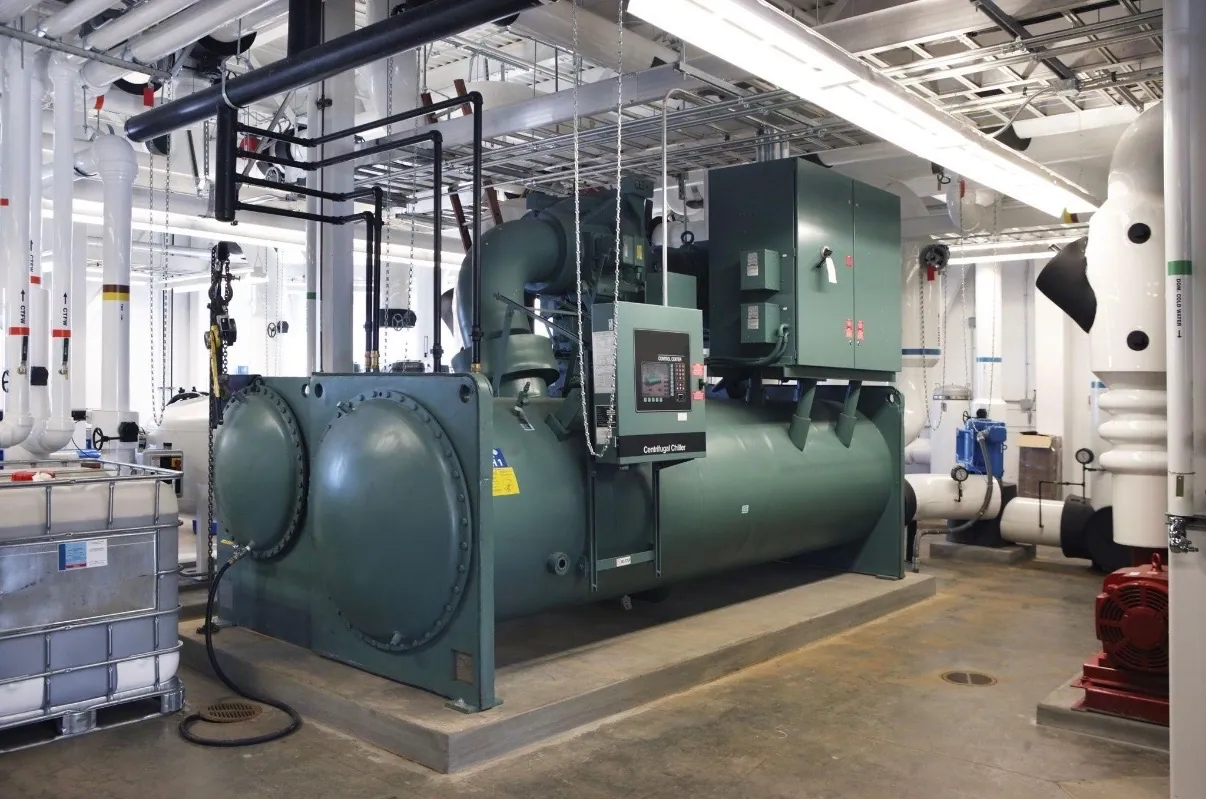
Sell a Chiller Labeled R-514A
We consider chillers using R-514A and arrange appropriate recovery and removal in South Carolina.
We buy chillers. We don’t sell them.
Your chiller.
Our logistics.
Have a surplus or decommissioned chiller? We’re the buyer—here to make moving it straightforward.
From a single unit to equipment from a larger facility, tell us what you have. We buy industrial and commercial chillers across South Carolina and coordinate the work to get them moved.
See how it works
All types & sizes
Air-cooled or water-cooled, centrifugal, screw or scroll. Tell us what you have.
We handle the logistics
We coordinate rigging, refrigerant recovery, loading and freight for the equipment we buy.
Made for sellers
Send the details and nameplate photos to start a conversation about your chiller.
Three steps.
One less chiller.
- 01
Send the details
Share what you know, along with photos of the unit and nameplate.
- 02
Get a quote
We’ll review your equipment and discuss an offer with you.
- 03
Leave the logistics to us
We coordinate removal and freight for the chillers we purchase.
Sell a Chiller Labeled R-514A in South Carolina
If a property is closing, changing use, or clearing equipment, an R-514A label can help identify a chiller for evaluation. South Carolina Chiller Buyers purchases used chillers directly; we are not a seller of replacement equipment. We consider equipment across tonnages, brands, and refrigerants, including chillers below 20 tons and units in the common 20-to-2,000-plus-ton range.
A property closure can involve several decisions at once: which equipment remains, who can authorize its removal, and when the area can be made available. Start by confirming that you own the chiller or are authorized to represent its owner. Then gather the available equipment details and describe any access limits. You do not need to test, start, repair, or prepare the chiller to request an offer.
Build an Accurate Equipment Picture
When R-514A is listed, include a clear photo of the refrigerant label and the chiller’s model label. Add the manufacturer, model, rated capacity, and any information already known about condition. If the equipment has been converted or refrigerant was previously recovered, say so. These details help us evaluate the chiller using the information available rather than relying on a refrigerant name alone.
Refrigerant is only one part of the assessment. A label does not establish the unit’s present condition, capacity, or removal requirements. If a label is missing or difficult to read, share what can be identified from existing records or safe, accessible views. Do not open, energize, drain, vent, cut, or dismantle equipment to obtain information.
Consider Capacity and Removal Separately
Rated tonnage describes cooling capacity, not the weight that a crane or truck must handle. Two chillers with similar capacity can differ in dimensions, construction, attached components, and lifting configuration. For a property closure, removal access can be as important as the nameplate rating: note the route from the equipment to the loading area, overhead or doorway restrictions, and any known limits on site access.
These are useful planning details, not a request for the seller to arrange transport. If, for example, a chiller sits in a room with a narrow exit or a restricted loading window, describing that constraint can help shape a practical removal plan. The actual approach and schedule depend on the equipment, access, and agreed purchase.
Use a Simple Closure Decision Path
- Confirm that you have owner authorization or are the authorized site representative.
- Send available photos of the R-514A and model labels, plus make, rated capacity, and known condition.
- Disclose any known conversion, prior refrigerant recovery, access limits, and relevant timing constraints.
- Review the offer and removal terms before committing; do not prepare or ship the chiller yourself.
Keep Refrigerant Handling With Qualified Personnel
R-514A is refrigerant contained within the chiller’s system; it is not the same as a process fluid that may circulate through connected piping or equipment. If the site has separate process-fluid circuits, their presence and known status can be noted, but sellers should not drain or alter them to seek an offer. Likewise, do not vent or handle R-514A. For an agreed purchase, the buyer arranges any necessary refrigerant recovery through appropriately qualified personnel.
South Carolina Chiller Buyers considers all refrigerants. A refrigerant label does not by itself make a unit acceptable or determine its value; the whole equipment picture and removal conditions matter. No seller action involving refrigerant is needed to begin the evaluation.
What Happens After an Agreed Purchase
Payment is upfront. Once a purchase is agreed, the buyer handles disconnects, necessary recovery, crane and rigging, loading, hauling, and freight; freight is covered. The seller or authorized site representative still needs to provide permission and coordinate access so the work can be planned safely and the property’s requirements can be respected.
In a closure, access may depend on other trades, building rules, or a handover date. Share those constraints early, but do not treat a requested date as a guaranteed removal appointment. The offer and removal schedule depend on the specific chiller and the agreement reached.
Request an Offer Without Starting the Unit
Send the information you can obtain safely, especially readable label photos and any known history of conversion or recovery. If capacity, condition, or access details are uncertain, identify them as unknown rather than guessing. This gives the buyer a clearer basis to assess your R-514A chiller while keeping testing, preparation, refrigerant handling, and transportation out of the seller’s responsibilities.
Ready to move
your chiller?
Tell us what you know. If you’re unsure of a detail, leave it blank. Nameplate photos are a great place to start.

Request a quote.
Fill out what you can and we’ll be in touch.