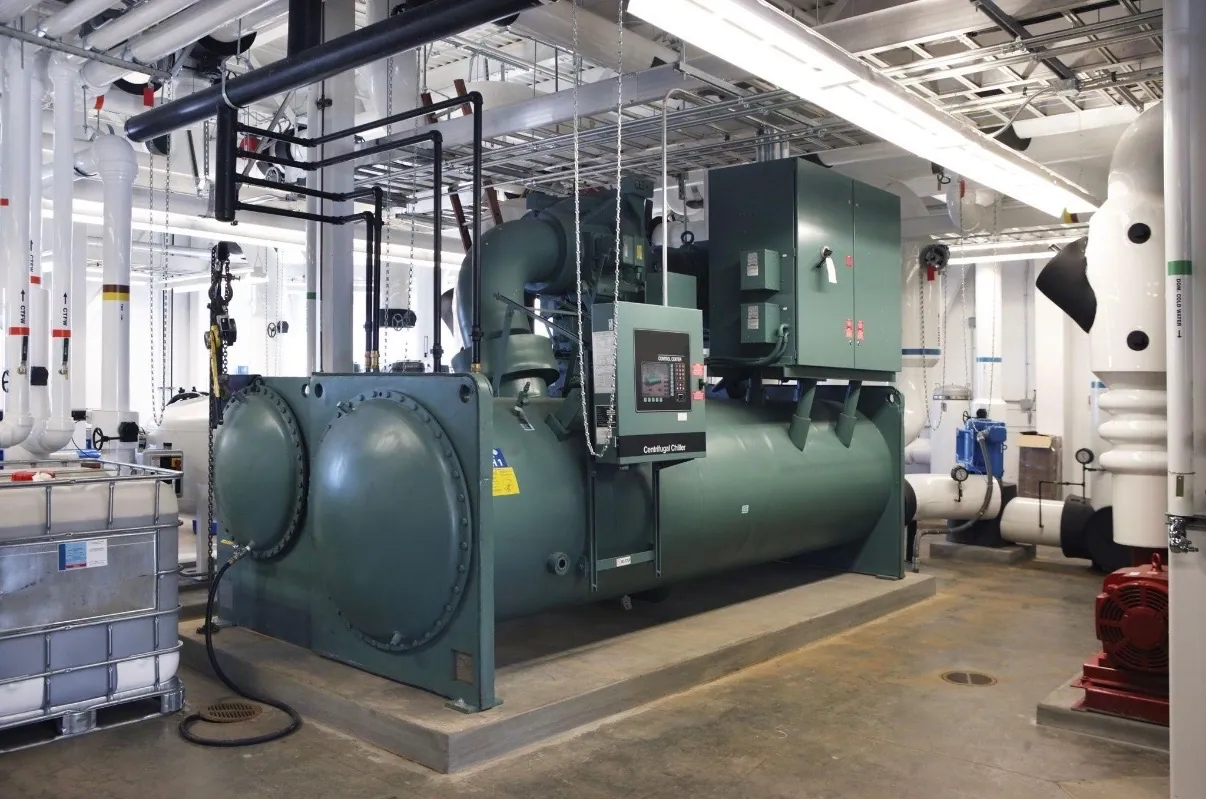
Sell a Surplus Centrifugal Chiller in Union, SC
We buy used centrifugal chiller equipment in Union and handle the agreed disconnect, rigging, and freight.
We buy chillers. We don’t sell them.
Your chiller.
Our logistics.
Have a surplus or decommissioned chiller? We’re the buyer—here to make moving it straightforward.
From a single unit to equipment from a larger facility, tell us what you have. We buy industrial and commercial chillers across South Carolina and coordinate the work to get them moved.
See how it works
All types & sizes
Air-cooled or water-cooled, centrifugal, screw or scroll. Tell us what you have.
We handle the logistics
We coordinate rigging, refrigerant recovery, loading and freight for the equipment we buy.
Made for sellers
Send the details and nameplate photos to start a conversation about your chiller.
Three steps.
One less chiller.
- 01
Send the details
Share what you know, along with photos of the unit and nameplate.
- 02
Get a quote
We’ll review your equipment and discuss an offer with you.
- 03
Leave the logistics to us
We coordinate removal and freight for the chillers we purchase.
Sell a Surplus Centrifugal Chiller in Union, SC
If your facility in Union, South Carolina has a centrifugal chiller it no longer needs, South Carolina Chiller Buyers can consider it for purchase. We are a direct buyer, not a seller of replacement equipment. We consider centrifugal chillers across tonnages, including units below 20 tons; 20 to 2,000+ tons is a common range. We also consider all brands and refrigerants. The equipment’s identity and condition matter more than whether another chiller at the site looks similar.
Separate similar machines before requesting an offer
Where a facility has several chillers, make a separate record for each machine rather than submitting one shared description. A centrifugal machine uses an impeller-driven compressor, but visually similar packages can differ in compressor and motor arrangement, controls, drive, and internal condition. Record the full unit model and the compressor and motor arrangement for each chiller. If a nameplate is hard to read, report what is legible and note what remains uncertain; do not remove covers or disturb the equipment to find more information.
Keeping the records distinct helps avoid assigning one machine’s details to another. For example, if two packages appear alike but have different model numbers or starter arrangements, identify those differences in the notes and photographs. That does not establish a value by itself, but it gives the buyer a clearer basis to review the specific unit under consideration.
Build a useful photo and access record
Photograph the shell ends, motor, starter or drive, and any visible lifting points. Include the unit’s identification plate when it can be photographed safely from an accessible position. For a large assembled package, record practical clearance measurements along the proposed removal route, including doorways and turns. Do not assume the chiller can exit through the same opening a technician uses to enter; equipment removal can require a different path and more room.
Photos and measurements are for evaluation and planning, not a request for you to prepare the chiller. Do not energize, open, drain, vent, cut, or dismantle it to produce information. If access or route details are unknown, say so. A site representative can coordinate access and clarify what is visible without altering the machine.
Distinguish capacity, weight, and fluids
Chiller capacity, usually expressed in tons, describes cooling output; it is not the machine’s transport weight. A high-capacity centrifugal unit may present substantial lifting and route-planning considerations, but tonnage alone does not tell a rigger how heavy the assembled package is or how it can be handled. Share available equipment records and visible dimensions when possible, and identify estimates as estimates rather than confirmed weights.
Refrigerant is also different from process fluid circulating through a chiller system. The refrigerant type is useful information for evaluation, while process fluid and connected piping are part of the site arrangement. Do not drain or release either to make the unit easier to assess. After an agreed purchase, necessary refrigerant recovery is handled by appropriately qualified personnel as part of the buyer’s removal process.
When a surplus unit may be worth reviewing
A conditional example: if a facility has multiple chillers and is retiring one while retaining the others, a separate model, compressor-and-motor description, and set of photos can help distinguish the surplus machine from operating equipment. In another situation, if a package is accessible but its route out is uncertain, recording that uncertainty and the known clearances is more useful than assuming removal will be straightforward. Neither situation guarantees an offer or a particular removal date; the equipment and agreed terms determine what can be arranged.
What to expect after agreement
Payment is upfront. You do not need to test, start, repair, or prepare the chiller to request an offer. If a purchase is agreed, South Carolina Chiller Buyers handles disconnects, necessary refrigerant recovery through appropriately qualified personnel, crane and rigging, loading, hauling, and freight. Freight is covered. The authorized owner or site representative must still provide permission for the transaction and coordinate access to the equipment.
Offer details and removal scheduling depend on the individual chiller, site access, and the agreement. Avoid relying on a fixed price or date before those details are reviewed. A clear, unit-by-unit description helps begin that review without requiring you to operate or modify the equipment.
Information to gather for each chiller
- Full unit model and any readable identification details.
- Compressor and motor arrangement, plus starter or drive information.
- Photographs of shell ends, motor, starter or drive, and visible lifting points.
- Known dimensions or route clearances, with uncertainties clearly noted.
- Available refrigerant information and the machine’s current status, without testing or disturbing it.
Use this record to identify your centrifugal chiller in Union accurately, especially when several similar units are present. Keep each machine’s notes and photographs together so the review concerns the intended surplus unit.
Ready to move
your chiller?
Tell us what you know. If you’re unsure of a detail, leave it blank. Nameplate photos are a great place to start.

Request a quote.
Fill out what you can and we’ll be in touch.