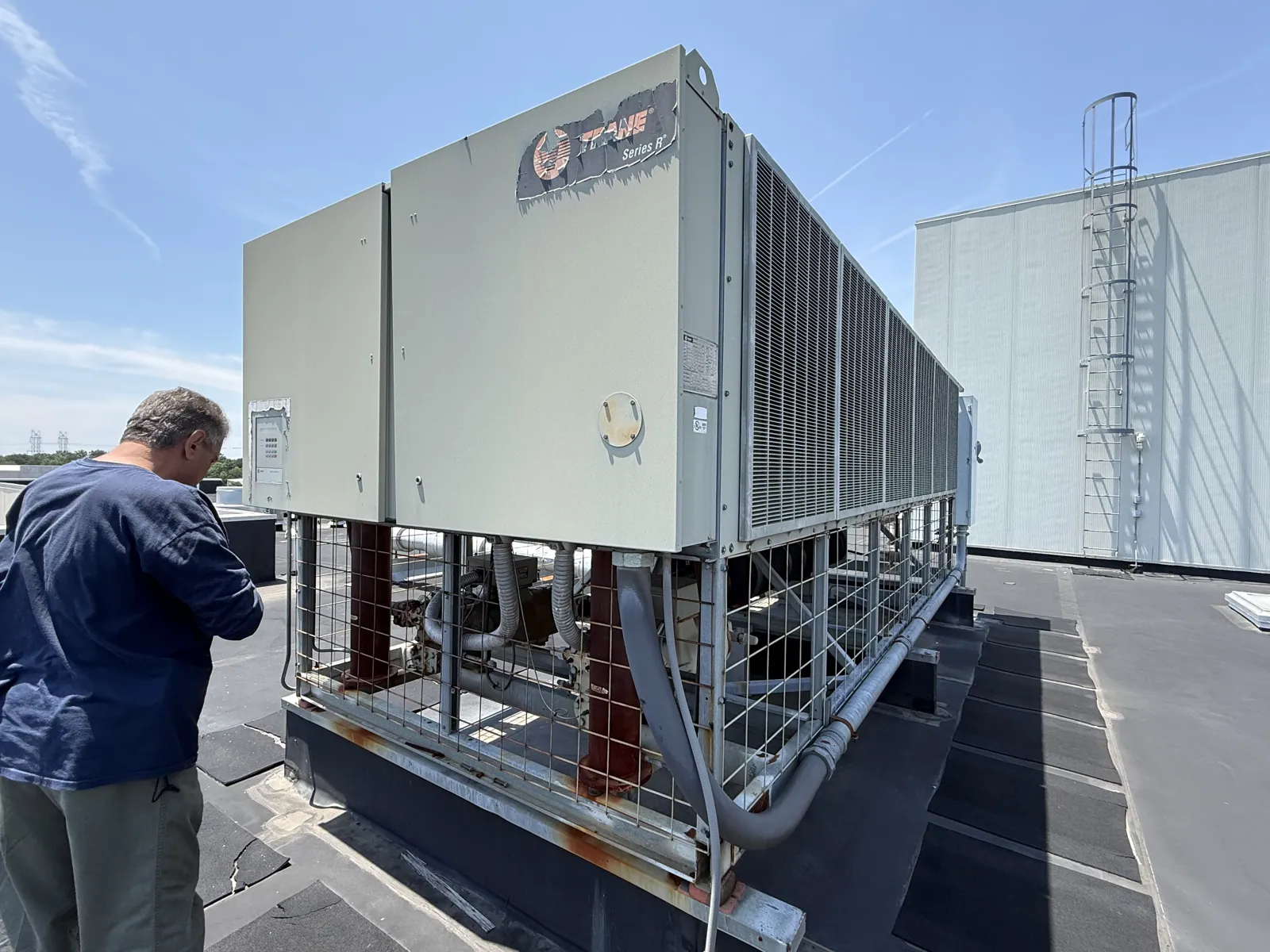
Sell a Surplus Water-Cooled Chiller in Union, SC
We buy used water-cooled chiller equipment in Union and handle the agreed disconnect, rigging, and freight.
We buy chillers. We don’t sell them.
Your chiller.
Our logistics.
Have a surplus or decommissioned chiller? We’re the buyer—here to make moving it straightforward.
From a single unit to equipment from a larger facility, tell us what you have. We buy industrial and commercial chillers across South Carolina and coordinate the work to get them moved.
See how it works
All types & sizes
Air-cooled or water-cooled, centrifugal, screw or scroll. Tell us what you have.
We handle the logistics
We coordinate rigging, refrigerant recovery, loading and freight for the equipment we buy.
Made for sellers
Send the details and nameplate photos to start a conversation about your chiller.
Three steps.
One less chiller.
- 01
Send the details
Share what you know, along with photos of the unit and nameplate.
- 02
Get a quote
We’ll review your equipment and discuss an offer with you.
- 03
Leave the logistics to us
We coordinate removal and freight for the chillers we purchase.
Sell a Surplus Water-Cooled Chiller in Union, SC
South Carolina Chiller Buyers purchases surplus water-cooled chillers in Union, South Carolina. We are a direct buyer, not a seller of replacement equipment. We consider all tonnages, including units under 20 tons; 20 to 2,000+ tons is a common range. All brands and refrigerants are considered, subject to the equipment and the proposed purchase and removal arrangement.
A useful first step is to establish what belongs to the chiller sale and who can authorize access to it. The equipment owner or authorized representative can provide operating and asset information, while a site access contact can explain entry procedures, working hours, and practical removal constraints. One person may handle both roles, but separating them helps avoid delays when ownership decisions and site coordination sit with different people.
Map the Two Water Circuits
A water-cooled chiller normally connects to a chilled-water loop and a condenser-water loop. When describing your water-cooled chiller in Union, identify both sets of connections and note which related equipment is included in the sale. The cooling tower, pumps, and associated controls may be part of the surplus package or may need to remain in service at the property.
That distinction matters because the chiller itself is not the same thing as the whole cooling system. For example, if a facility plans to retain its tower and pumps, the removal scope must account for shared piping and controls that serve equipment still in use. If the entire system is surplus, the owner can say so; the buyer can then assess that broader scope. These are possible arrangements, not assumptions about any particular Union property.
Share Information in a Clear Sequence
The owner or authorized site representative should first confirm authority to sell and identify the equipment being offered. Helpful details include the manufacturer, model, serial number if available, approximate capacity, general condition, and known refrigerant. A nameplate photo and wider views of the chiller can help identify the asset, but sellers do not need to test, start, repair, or prepare it to request an offer.
Next, the person who controls site access can provide practical information: where the machinery room is, how the unit can be reached, what equipment must stay, and whether there are access rules or scheduling constraints. If the owner and access contact are different people, sharing the same photos and written scope with both reduces the risk of an offer being based on one set of assumptions and a removal plan on another.
Use Photos to Clarify Removal Boundaries
For water-cooled chiller removal, the disconnection plan must distinguish the chiller from shared piping and cooling equipment that will remain in use. Photos of valves, insulation, pipe runs, nearby controls, and the machinery-room exit can help establish the likely scope. Include broad views as well as details, and identify which components are included or excluded rather than expecting the buyer to infer ownership from a photograph.
Do not open, drain, cut, dismantle, or otherwise alter the equipment to take pictures or obtain information. Photos should document what is visible from a safe, permitted location. If details are uncertain, say so; the offer and removal schedule depend on the equipment, access, and agreed scope.
Capacity Is Not a Moving Weight
Chiller tonnage describes cooling capacity, not the unit’s transport weight or the space needed to move it. A compact-capacity unit can still be difficult to remove because of its construction, access route, or surrounding piping. Conversely, a larger-rated machine may have a workable route if the building and removal conditions allow. Photos of doorways, turns, thresholds, and the exit path help assess logistics, but do not replace an on-site understanding where one is needed.
Water in the process or condenser circuits is also distinct from refrigerant inside the chiller. Do not drain or vent either system to prepare a sale. After an agreed purchase, South Carolina Chiller Buyers handles disconnection, necessary refrigerant recovery through appropriately qualified personnel, crane and rigging, loading, hauling, and freight. Freight is covered.
Coordinate Permission, Access, and Payment
The authorized owner or site representative must still provide permission for the work and coordinate access. That includes communicating any relevant entry requirements and confirming which nearby systems must remain operational. The buyer manages removal logistics after the purchase is agreed; the seller is not expected to hire a carrier or ship the chiller.
Payment is upfront. The amount and removal timing are determined by the equipment and the agreement, so neither a particular price nor a specific date should be assumed before the details are reviewed. Clear information from the owner, paired with reliable access guidance from the site contact, gives both parties a practical basis for discussing the purchase.
Information to Gather Before Requesting an Offer
- Chiller identification, approximate capacity, known condition, and refrigerant information, if available.
- Whether the chilled-water and condenser-water connections are shared, and which tower, pumps, or controls are included.
- Photos showing visible connections, valves, pipe runs, room access, and the route out of the building.
- The owner’s authorization and the access contact’s procedures or scheduling constraints.
With those details aligned, the buyer can evaluate your surplus water-cooled chiller in Union and discuss a purchase and removal scope suited to the equipment and site. If some information is unavailable, identify what is known and what remains uncertain rather than attempting work on the unit.
Ready to move
your chiller?
Tell us what you know. If you’re unsure of a detail, leave it blank. Nameplate photos are a great place to start.

Request a quote.
Fill out what you can and we’ll be in touch.