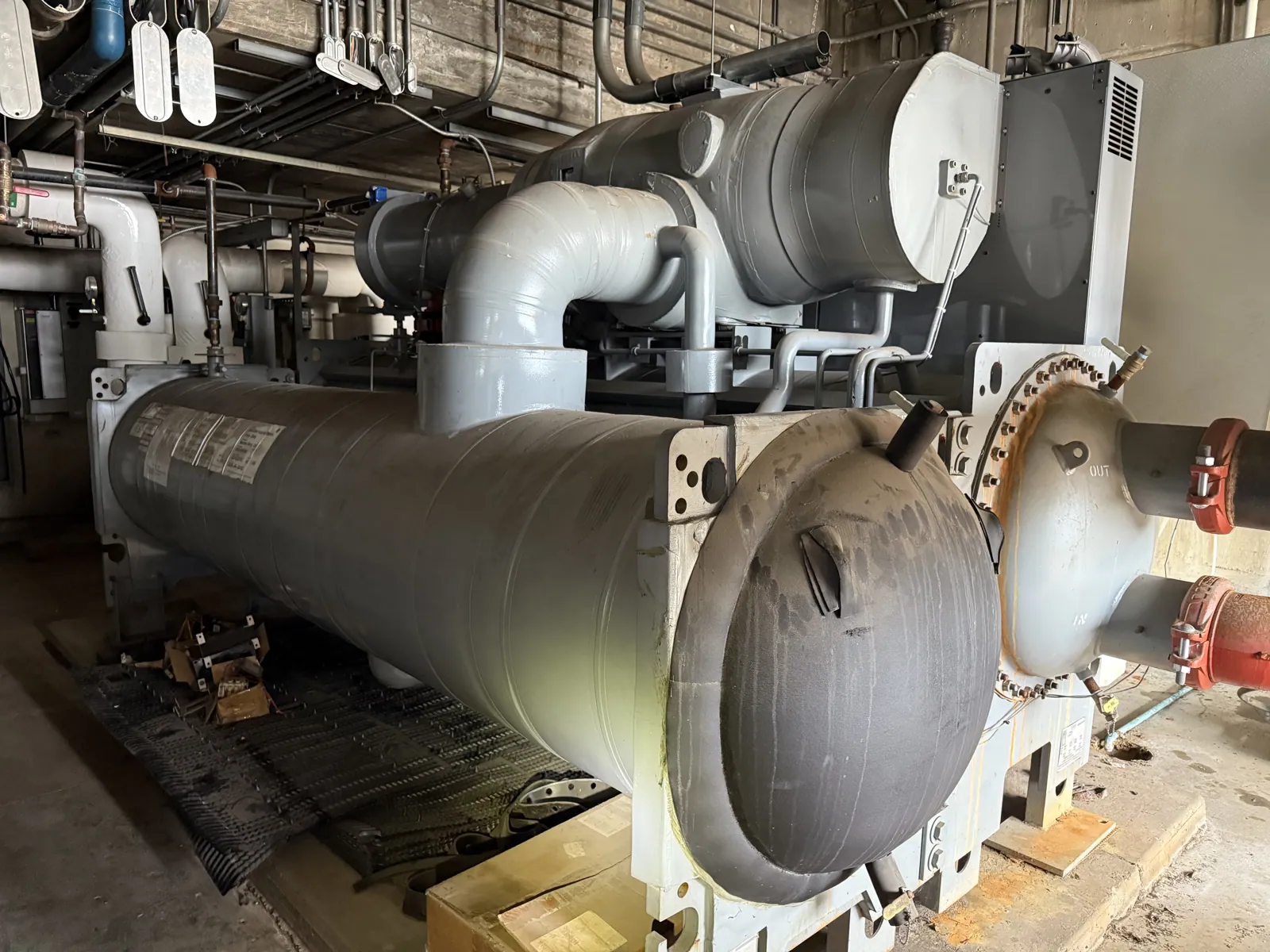
Sell a Surplus Air-Cooled Chiller in Clinton, SC
We buy used air-cooled chiller equipment in Clinton and handle the agreed disconnect, rigging, and freight.
We buy chillers. We don’t sell them.
Your chiller.
Our logistics.
Have a surplus or decommissioned chiller? We’re the buyer—here to make moving it straightforward.
From a single unit to equipment from a larger facility, tell us what you have. We buy industrial and commercial chillers across South Carolina and coordinate the work to get them moved.
See how it works
All types & sizes
Air-cooled or water-cooled, centrifugal, screw or scroll. Tell us what you have.
We handle the logistics
We coordinate rigging, refrigerant recovery, loading and freight for the equipment we buy.
Made for sellers
Send the details and nameplate photos to start a conversation about your chiller.
Three steps.
One less chiller.
- 01
Send the details
Share what you know, along with photos of the unit and nameplate.
- 02
Get a quote
We’ll review your equipment and discuss an offer with you.
- 03
Leave the logistics to us
We coordinate removal and freight for the chillers we purchase.
Sell a Surplus Air-Cooled Chiller in Clinton, SC
If a property closure in Clinton leaves an air-cooled chiller with no future role, South Carolina Chiller Buyers can consider purchasing it directly. We buy used chillers; we do not sell replacement equipment. The decision to request an offer does not require you to restart the unit or arrange repairs first. Start by confirming who can authorize a sale and what access will be available during removal.
Closures often involve competing priorities: clearing space, protecting remaining building systems, and coordinating contractors or a change of ownership. An early equipment review can help establish whether the chiller is a sale candidate before demolition or other work changes its condition or access. An offer and removal schedule depend on the equipment details, site conditions, and the agreement reached; neither a particular price nor a specific date can be assumed in advance.
First, confirm authority and the closure plan
Before requesting an offer, establish whether you are the equipment owner or an authorized site representative. A property manager, contractor, or successor operator may be able to coordinate access, but the authorized owner or representative must provide permission for the transaction and removal. If ownership is transferring, clarify who has authority to approve a sale and when that permission takes effect.
Then consider the closure sequence. If building services are being shut down, identify who is responsible for the chiller and what work may affect it. Do not ask anyone to energize, open, drain, vent, cut, or dismantle the equipment to prepare for an evaluation. If the unit has already been disconnected or is no longer operational, report that accurately; testing is not required to request an offer.
Describe the air-cooled unit without disturbing it
Air-cooled chillers reject heat through outdoor coils and fans instead of relying on a conventional cooling-tower loop. For an initial review, share the manufacturer and model if readable from existing records or safe, accessible labels, along with an approximate age, known capacity, and any history you already have. Do not climb to a roof or approach hazardous areas just to collect information.
Describe visible fan and coil condition, the compressor count where visible, and whether the chiller sits on a roof, a ground pad, or a raised frame. A photo of the whole unit and its surroundings can be more useful than a close-up alone. Note any known damage, missing components, or service issues, but distinguish documented information from a visual impression.
Capacity is not the same as removal weight
Chiller capacity, commonly expressed in tons, describes cooling output; it is not the machine’s transport weight. A high-capacity unit may have a different footprint, construction, and lifting arrangement from another unit with a similar rating. If you have a nameplate or equipment schedule, share its listed capacity and model details, but do not infer weight from tonnage.
South Carolina Chiller Buyers considers chillers of all tonnages, including units below 20 tons. Units from 20 to 2,000-plus tons are a common range, not a minimum or a limit. We consider all brands and refrigerants. A small unit is not automatically unsuitable, and an unfamiliar refrigerant does not by itself rule out a review. The refrigerant circuit is separate from any process fluid that may have circulated through the chiller; do not open or drain either system.
Map the route before equipment is removed
Installation position can shape the removal plan. A rooftop or elevated chiller may require a lift plan and a protected ground area for the work. At grade, the path from the unit to a truck still matters. Share photos showing surrounding clearance, gates, overhead obstructions, and any narrow turns or changes in level. Mention roof access constraints or other known restrictions rather than trying to solve them yourself.
For example, if a closure leaves a rooftop chiller above an active loading area, the buyer may need to coordinate lifting and protect the area below. If a pad-mounted unit is behind a gate or beneath overhead services, those details may affect access planning. These are conditional examples, not assumptions about a particular Clinton property. The actual approach depends on the site and the agreed scope.
What removal and payment cover
Once a purchase is agreed, the buyer handles the disconnects, necessary refrigerant recovery through appropriately qualified personnel, crane and rigging as needed, loading, hauling, and freight. Freight is covered. The seller does not need to test, start, repair, prepare, or ship the chiller to request an offer, and should not undertake removal work unless separately required by an authorized site plan.
Payment is upfront. Confirm the agreed purchase and removal arrangements with the buyer before work is scheduled, and make sure the authorized owner or representative has coordinated access. Site permission remains necessary even though the buyer manages the removal logistics.
A practical path for a closure
- Confirm who can approve the sale and grant site access.
- Gather existing records and safe, accessible photos of the unit, its condition, and its position.
- Describe the removal route, including gates, overhead obstructions, and roof or frame access.
- Request an offer, review the agreed terms and schedule, and coordinate access without testing or dismantling the chiller.
This sequence helps separate the equipment decision from the wider closure work. If the chiller in Clinton is surplus, a direct review can establish whether there is a purchase opportunity while keeping assessment and removal planning with the buyer.
Ready to move
your chiller?
Tell us what you know. If you’re unsure of a detail, leave it blank. Nameplate photos are a great place to start.

Request a quote.
Fill out what you can and we’ll be in touch.