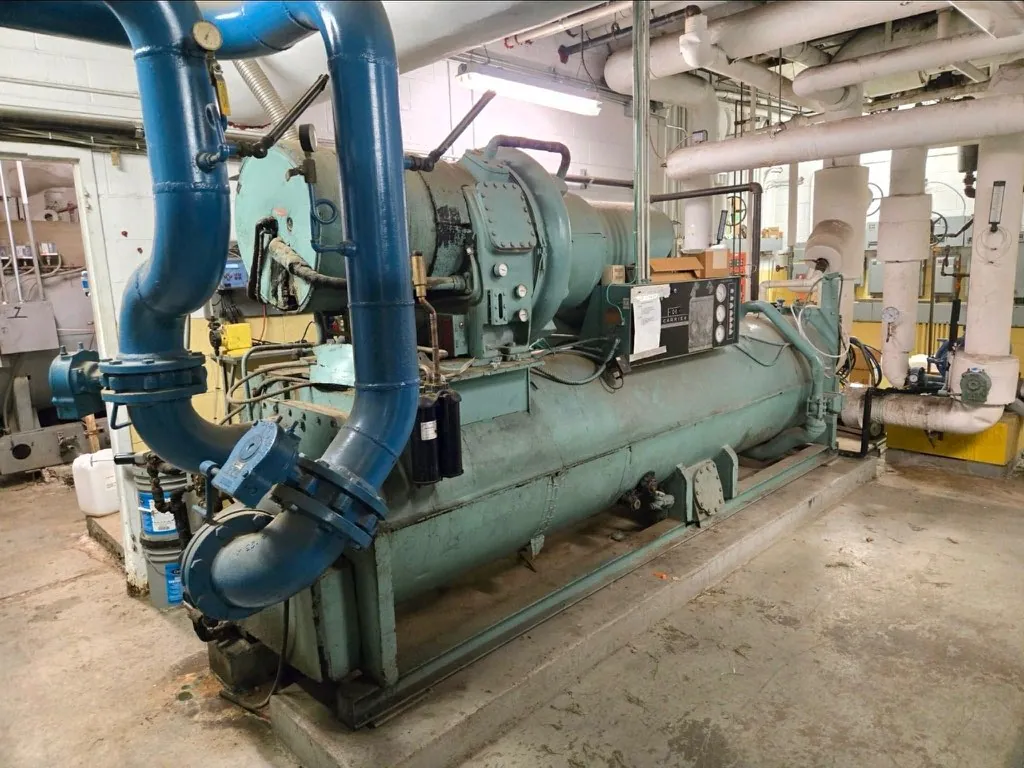
Sell a Surplus Water-Cooled Chiller in Simpsonville, SC
We buy used water-cooled chiller equipment in Simpsonville and handle the agreed disconnect, rigging, and freight.
We buy chillers. We don’t sell them.
Your chiller.
Our logistics.
Have a surplus or decommissioned chiller? We’re the buyer—here to make moving it straightforward.
From a single unit to equipment from a larger facility, tell us what you have. We buy industrial and commercial chillers across South Carolina and coordinate the work to get them moved.
See how it works
All types & sizes
Air-cooled or water-cooled, centrifugal, screw or scroll. Tell us what you have.
We handle the logistics
We coordinate rigging, refrigerant recovery, loading and freight for the equipment we buy.
Made for sellers
Send the details and nameplate photos to start a conversation about your chiller.
Three steps.
One less chiller.
- 01
Send the details
Share what you know, along with photos of the unit and nameplate.
- 02
Get a quote
We’ll review your equipment and discuss an offer with you.
- 03
Leave the logistics to us
We coordinate removal and freight for the chillers we purchase.
Sell a Surplus Water-Cooled Chiller in Simpsonville, SC
South Carolina Chiller Buyers purchases surplus water-cooled chillers in Simpsonville and across South Carolina. We are a direct buyer, not a seller of replacement equipment. If a system is being retired, a facility is changing its cooling arrangement, or a chiller is no longer needed, you can request an offer without first testing, starting, repairing, or preparing the unit.
We consider equipment of all tonnages, including chillers below 20 tons; 20 to 2,000+ tons is a common range. We consider all brands and refrigerants. An offer depends on the specific equipment and the agreed scope, so useful, accurate information is more valuable than a guess based on capacity alone.
Start with the owner’s equipment information
The equipment owner or authorized representative can begin by identifying the chiller and explaining why it is available. Share the manufacturer and model if known, approximate age, rated tonnage, refrigerant if documented, and whether the machine is operating, idle, incomplete, or of unknown condition. A nameplate photo can help, but do not access an unsafe area or remove a cover to obtain one.
For a water-cooled chiller, describe the two water connections in the system: the chilled-water loop serving the cooling load and the condenser-water loop associated with heat rejection. Clarify whether the cooling tower, pumps, controls, and related equipment are part of the sale or will remain at the property. These are separate scope questions; the chiller’s capacity does not tell us what equipment is included.
Give the site contact a separate role
The owner may know the machine and the intended sale, while a facilities manager, property representative, or other site contact knows how access works. Keep those responsibilities distinct. The owner can supply equipment details and confirm authority to sell. The site contact can explain entry procedures, working hours, loading access, room restrictions, and who must approve work in the area.
Before removal is arranged, the authorized owner or site representative must provide permission and coordinate access. If those roles belong to different people, share each other’s contact details and agree who will answer questions about the equipment, the sale, and access. This avoids treating an equipment description as permission to enter or remove machinery.
Clarify what connects to what
Water-cooled equipment can sit within a larger operating system. The removal plan needs to distinguish the chiller from shared piping and any cooling equipment that is staying in service. If the tower or pumps serve other equipment, say so early; do not assume every connected component is included just because it is near the chiller.
Helpful reference photos, when they can be taken safely without opening or altering equipment, may show valves, insulation, visible pipe runs, the machinery-room exit, and the route toward the loading area. The owner can gather these details and pass them to the site contact to verify access and retained equipment. No one should drain, cut, dismantle, or otherwise prepare the chiller to request an offer.
Capacity and removal logistics are different questions
Tonnage describes cooling capacity, not transport weight or the difficulty of moving a machine through a building. Removal planning also depends on the chiller’s dimensions, the route out, doorway or overhead constraints, lifting access, and what piping or adjacent equipment must remain undisturbed. A compact lower-tonnage unit can still present a difficult access route; a larger unit’s removal needs to be assessed from its actual setting and scope.
After a purchase is agreed, South Carolina Chiller Buyers handles the disconnects, necessary refrigerant recovery through appropriately qualified personnel, crane and rigging, loading, hauling, and freight. Freight is covered. The seller does not need to hire a contractor or ship the chiller. The removal schedule and exact scope depend on the equipment, access conditions, and agreement.
Information that helps move an offer forward
- Chiller make, model, approximate tonnage, and any safely available nameplate details
- Known condition, including whether it is operating, idle, or incomplete
- Whether the cooling tower, pumps, controls, and other connected equipment are included or retained
- Photos of visible connections, shared pipework, the exit route, and loading access, if safely available
- The owner’s authorized representative and the site contact who can coordinate access
Request an offer without commissioning the machine
You do not have to demonstrate operation or diagnose a fault before contacting us. If operating condition is uncertain, say so rather than arranging a start-up. The information supplied helps establish what is being offered and what removal may involve; it does not guarantee a particular price or date.
Payment is upfront after the purchase is agreed. For your water-cooled chiller in Simpsonville, the practical first step is to identify the equipment, define what is included, and connect the person authorized to sell it with the person responsible for site access.
Ready to move
your chiller?
Tell us what you know. If you’re unsure of a detail, leave it blank. Nameplate photos are a great place to start.

Request a quote.
Fill out what you can and we’ll be in touch.