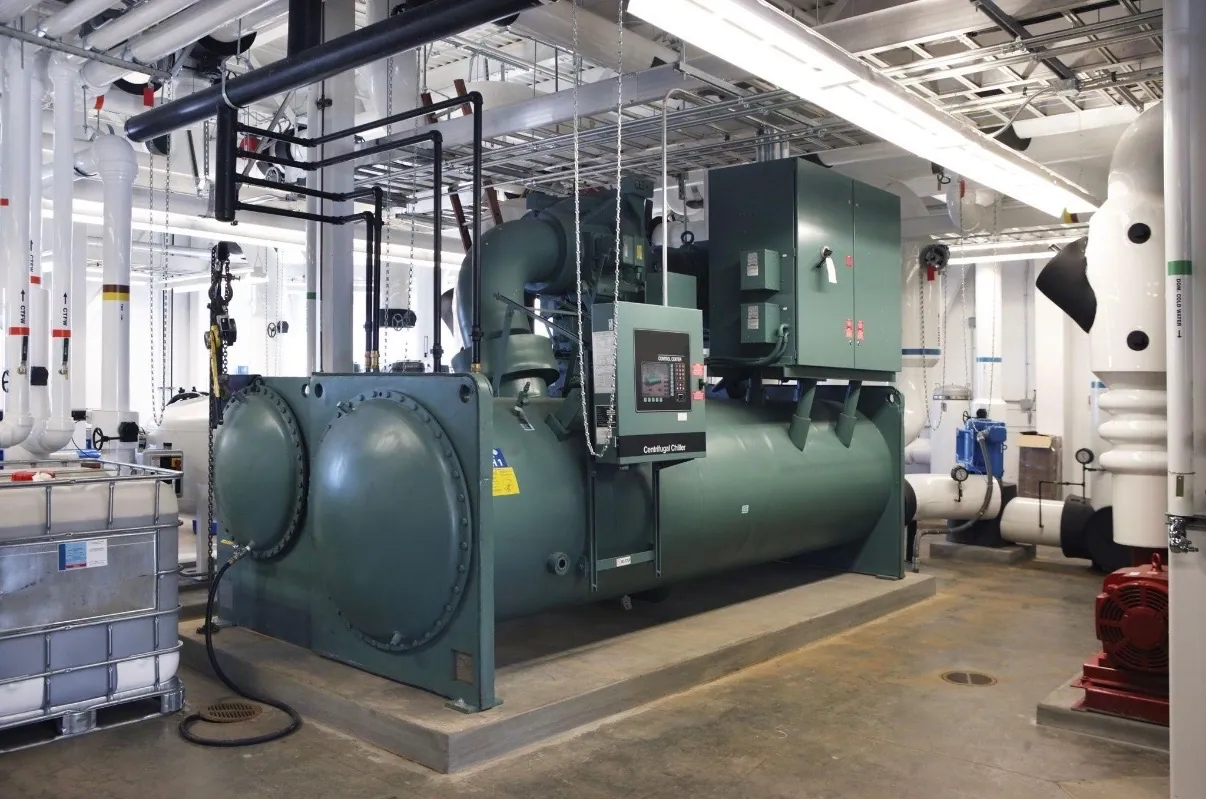
Sell a Surplus Centrifugal Chiller in North Augusta, SC
We buy used centrifugal chiller equipment in North Augusta and handle the agreed disconnect, rigging, and freight.
We buy chillers. We don’t sell them.
Your chiller.
Our logistics.
Have a surplus or decommissioned chiller? We’re the buyer—here to make moving it straightforward.
From a single unit to equipment from a larger facility, tell us what you have. We buy industrial and commercial chillers across South Carolina and coordinate the work to get them moved.
See how it works
All types & sizes
Air-cooled or water-cooled, centrifugal, screw or scroll. Tell us what you have.
We handle the logistics
We coordinate rigging, refrigerant recovery, loading and freight for the equipment we buy.
Made for sellers
Send the details and nameplate photos to start a conversation about your chiller.
Three steps.
One less chiller.
- 01
Send the details
Share what you know, along with photos of the unit and nameplate.
- 02
Get a quote
We’ll review your equipment and discuss an offer with you.
- 03
Leave the logistics to us
We coordinate removal and freight for the chillers we purchase.
Sell a Surplus Centrifugal Chiller in North Augusta, SC
South Carolina Chiller Buyers purchases surplus centrifugal chillers in North Augusta, South Carolina. We are a direct buyer, not a seller of replacement equipment. If a unit is no longer needed, its owner can share information about the machine and the site so we can evaluate a purchase and plan potential removal. Chillers of every tonnage are considered, including units below 20 tons; 20 to 2,000+ tons is a common range. We consider all brands and refrigerants.
Start with the equipment’s identity
A centrifugal chiller uses an impeller-driven compressor, but that description alone is not enough to assess a specific package. Record the full unit model and, when available, the compressor and motor arrangement. Machines that look alike from the outside may differ in controls, drive configuration, or internal condition, all of which can affect the offer and removal plan.
Useful details may include the manufacturer, model and serial number, stated capacity, approximate age, known operating or storage status, and any information already available about the starter or drive. You do not need to start, test, repair, or prepare the chiller to request an offer. Share what records you have; do not energize or open the machine to find missing information.
Send photographs that answer practical questions
Photographs can help connect the equipment description to the physical package. If it is safe to take pictures from an accessible area, include the shell ends, motor, starter or drive, nameplate, and visible lifting points. A broad view of the chiller and its surroundings can also help identify likely access constraints. Do not climb on, open, disconnect, or dismantle equipment for a photograph.
Capacity and transport weight are different planning measures. A large tonnage rating does not by itself establish the machine’s weight, dimensions, or the lifting method required. Available nameplate or shipping information, visible configuration, and site measurements can help inform removal planning; the final approach depends on the particular unit and agreement.
Keep ownership and site access information connected
The equipment owner or authorized representative provides the chiller details and confirms that they have authority to discuss its sale. A separate site access contact may know the building’s entry route, operating hours, loading area, security process, or who can approve contractor access. When those roles belong to different people, pass the same equipment description and proposed next steps between them so the offer discussion and removal planning stay aligned.
The owner or authorized site representative must provide permission and coordinate access. For example, if a facilities contact controls entry while an asset manager handles the sale, the asset manager can share the equipment information and the contact’s details, then coordinate any access discussion with that representative. This is a planning example, not an assumption about any particular North Augusta site.
Check the route before settling on a removal plan
Photographing visible lifting points and measuring clearances can help flag questions early. A large assembled package may need careful clearance review; do not assume it can leave through the same opening used by a technician. Doorways, corridors, turns, overhead obstructions, staging space, and the route to the loading area may all affect the plan. If measurements or access details are uncertain, identify that uncertainty rather than guessing.
Share relevant route information with the site contact and South Carolina Chiller Buyers before removal is scheduled. The owner does not need to hire a rigging company or arrange shipment. After an agreed purchase, the buyer handles disconnects, necessary refrigerant recovery through appropriately qualified personnel, crane and rigging, loading, hauling, and freight. Freight is covered.
What happens after an offer is discussed
We use the equipment details and site information to consider an offer and, if the parties agree to a purchase, coordinate removal. Payment is upfront. The offer and removal schedule depend on the specific chiller, the information available, site access, and the agreement; no particular price or date can be assumed in advance.
The seller does not have to test, start, repair, drain, or prepare the unit to request an offer. Refrigerant is not the same as process fluid: refrigerant belongs to the chiller’s cooling circuit, while process fluid may circulate through a connected system. Do not vent, drain, cut, or dismantle anything. Provide existing records and let the buyer coordinate necessary recovery and removal after an agreed purchase.
A concise information handoff
- Equipment owner: share the make, full model, serial number if available, capacity, compressor and motor arrangement, known condition, and photographs.
- Site access contact: confirm authorization, access procedures, route constraints, and the appropriate person for coordinating entry.
- Both parties: keep the equipment description and access discussion connected; the buyer will coordinate the removal work after an agreed purchase.
Ready to move
your chiller?
Tell us what you know. If you’re unsure of a detail, leave it blank. Nameplate photos are a great place to start.

Request a quote.
Fill out what you can and we’ll be in touch.