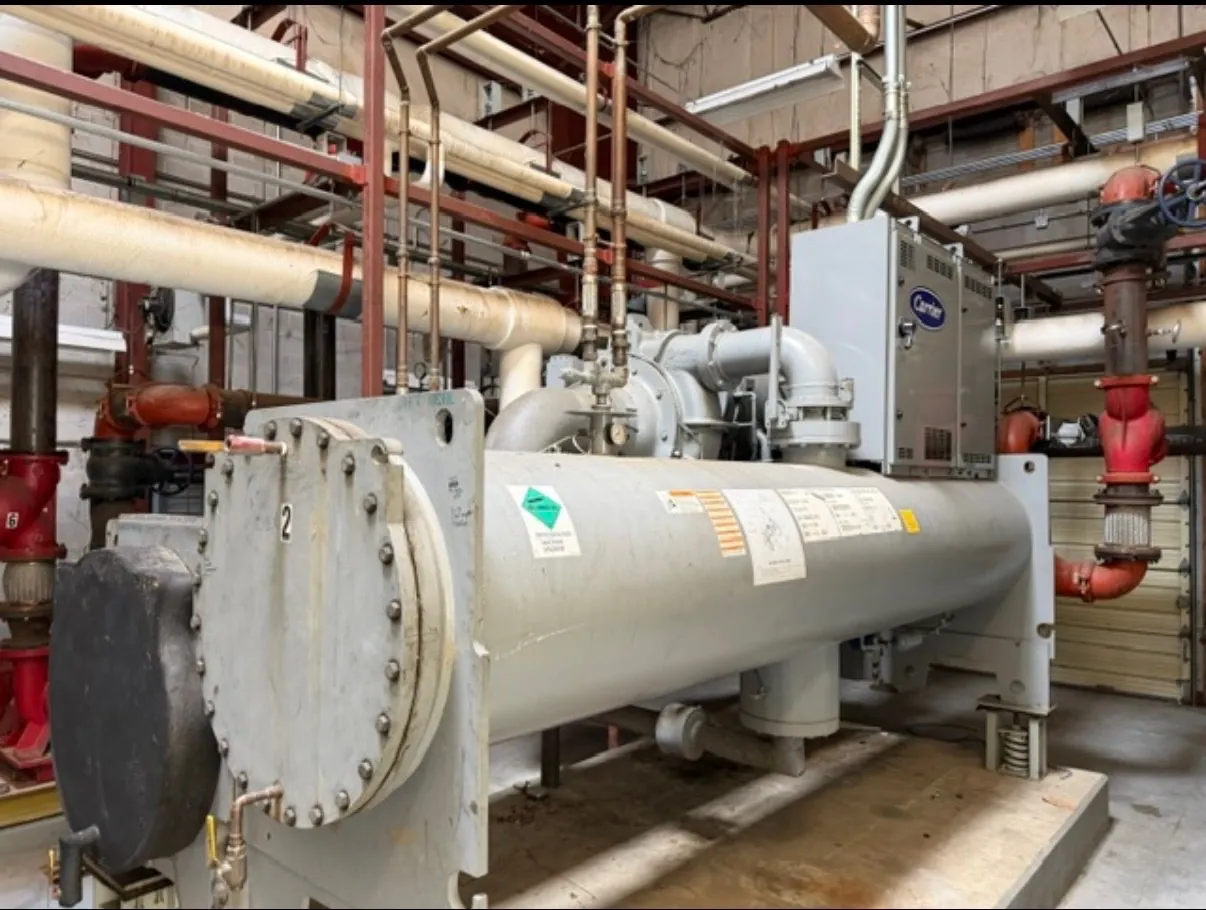
Sell a Used Chiller in Charleston County, SC
Sell industrial chiller equipment in Charleston County with upfront payment and buyer-managed logistics.
We buy chillers. We don’t sell them.
Your chiller.
Our logistics.
Have a surplus or decommissioned chiller? We’re the buyer—here to make moving it straightforward.
From a single unit to equipment from a larger facility, tell us what you have. We buy industrial and commercial chillers across South Carolina and coordinate the work to get them moved.
See how it works
All types & sizes
Air-cooled or water-cooled, centrifugal, screw or scroll. Tell us what you have.
We handle the logistics
We coordinate rigging, refrigerant recovery, loading and freight for the equipment we buy.
Made for sellers
Send the details and nameplate photos to start a conversation about your chiller.
Three steps.
One less chiller.
- 01
Send the details
Share what you know, along with photos of the unit and nameplate.
- 02
Get a quote
We’ll review your equipment and discuss an offer with you.
- 03
Leave the logistics to us
We coordinate removal and freight for the chillers we purchase.
Turn a partial inventory into a clear purchase discussion
If you are considering selling a used or surplus chiller in Charleston County, South Carolina, you do not need a complete equipment file before starting. South Carolina Chiller Buyers is a direct buyer of chillers, not a seller of replacement equipment. We consider purchases throughout the county, including equipment at plants, campuses, commercial buildings, data centers, and other sites.
Begin with what you can identify: the site municipality or location, how many chillers may be available, and whether the equipment is operating, idle, or awaiting retirement. If some details are unknown, say so. A straightforward account of what is known—and what still needs confirmation—helps turn an incomplete inventory into a practical purchase discussion.
Clarify what is included in the sale
At a site with more than one chiller, establish whether the proposal concerns one unit, a selected group, or an entire bank. Chillers can share piping, controls, electrical infrastructure, or process connections, so a general statement such as “the old plant” may not identify which assets are actually available. Note any nearby equipment or shared components that are expected to remain.
For example, if a facility plans to retire one chiller while keeping a second as backup, identify the proposed unit and describe the retained machine as out of scope. If the final boundary is not settled, explain that before an offer is discussed. The authorized owner or site representative must have permission to sell the equipment and coordinate access for any agreed removal.
Useful details when records are incomplete
An available nameplate, clear photos, and a brief condition description can help distinguish the proposed chiller from adjacent equipment. A nameplate may identify the manufacturer, model, serial number, and rated capacity. Photos can show the overall unit, its surroundings, and visible access constraints. Do not open panels or alter the equipment to collect information; use records and views that are already safely available.
Condition notes need not be a repair diagnosis. State whether the chiller is reported to be in service, shut down, incomplete, or of uncertain status. Mention known missing parts or visible damage if relevant, but do not energize, start, test, drain, vent, cut, or dismantle the machine to support an offer request. Sellers do not need to test, repair, or prepare a chiller before asking us to consider it.
Separate rated capacity from removal weight
Capacity in tons describes cooling output; it does not tell a buyer how much the unit weighs or how it can be moved. Transport planning depends on the actual equipment and site conditions, including configuration, dimensions, access routes, lifting clearances, and the removal path. A large-tonnage chiller is not automatically impossible to remove, and a smaller unit is not automatically simple to handle.
South Carolina Chiller Buyers considers chillers of all tonnages, including units below 20 tons. Equipment from 20 to 2,000+ tons is a common range, not a minimum or a limit. If capacity is unknown, share any available identification or records and leave the rating unconfirmed rather than estimating it.
Identify refrigerant without confusing it with process fluid
Refrigerant is the working fluid contained in the chiller’s refrigeration circuit. Process fluid—often water or another fluid circulating through the system—is separate. A site description that calls both “the chiller fluid” can leave uncertainty about the equipment and its condition. If records identify the refrigerant, include that information; if not, say it is unknown. We consider all brands and refrigerants.
Do not release, drain, or handle either fluid to prepare the equipment for a sale inquiry. Once a purchase is agreed, the buyer handles necessary refrigerant recovery through appropriately qualified personnel, along with disconnects and removal logistics.
What happens after the purchase is agreed
Payment is upfront. After an agreed purchase, South Carolina Chiller Buyers handles the disconnects, necessary refrigerant recovery, crane and rigging needs, loading, hauling, and freight; freight is covered. The seller does not need to hire a carrier or ship the chiller. The site representative still needs to authorize the work and coordinate access, including practical arrangements for reaching and removing the agreed equipment.
The offer and removal schedule depend on the specific chiller, the information available, site access, and the terms agreed by both parties. No particular price or removal date can be assumed before those details are reviewed.
A concise starting checklist
- Share the Charleston County municipality or site location, if available.
- Identify the proposed unit or units and any equipment that must remain.
- Provide an available nameplate, photos, and a factual condition note.
- Flag unknown capacity, refrigerant, access, or equipment boundaries rather than guessing.
That initial information is enough to begin a focused conversation about your chiller in Charleston County. Details can be clarified as the proposed assets and site arrangements are reviewed.
Ready to move
your chiller?
Tell us what you know. If you’re unsure of a detail, leave it blank. Nameplate photos are a great place to start.

Request a quote.
Fill out what you can and we’ll be in touch.