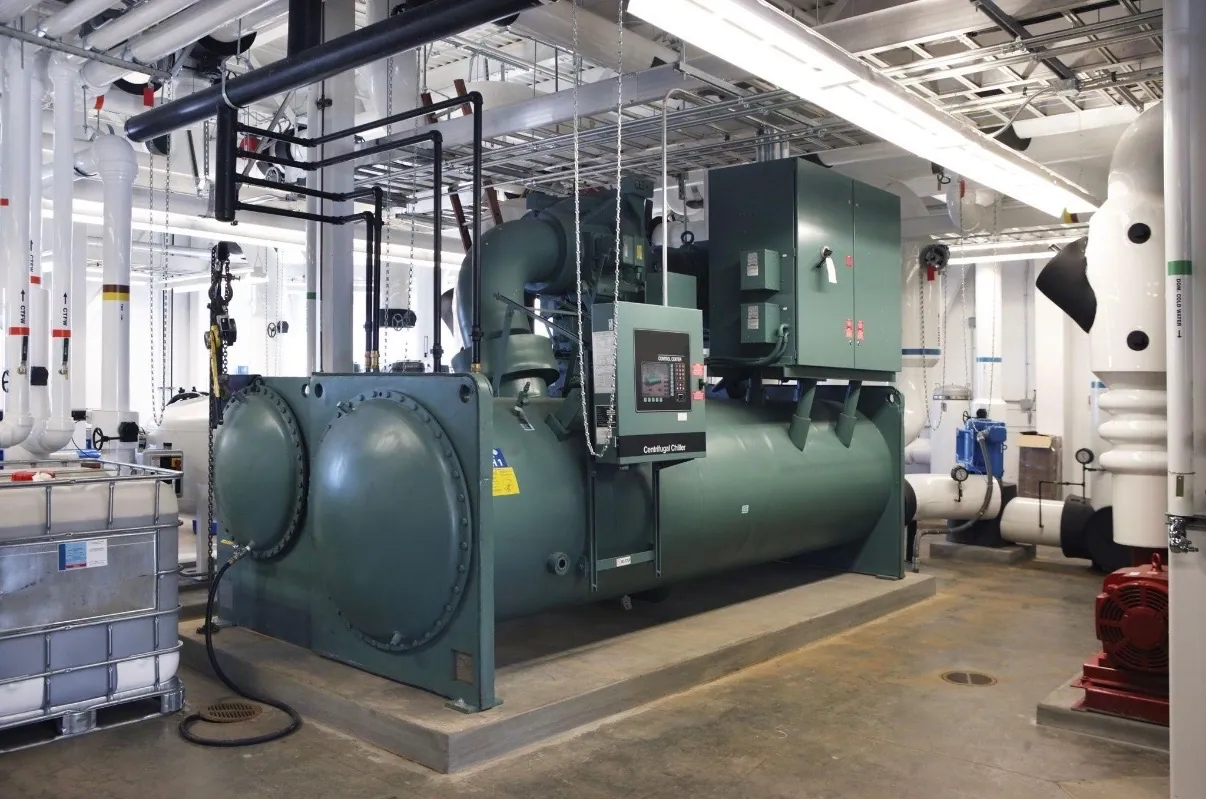
Sell a Used Chiller in Rock Hill, SC
We buy used and surplus industrial chillers in Rock Hill, with upfront payment and buyer-managed removal.
We buy chillers. We don’t sell them.
Your chiller.
Our logistics.
Have a surplus or decommissioned chiller? We’re the buyer—here to make moving it straightforward.
From a single unit to equipment from a larger facility, tell us what you have. We buy industrial and commercial chillers across South Carolina and coordinate the work to get them moved.
See how it works
All types & sizes
Air-cooled or water-cooled, centrifugal, screw or scroll. Tell us what you have.
We handle the logistics
We coordinate rigging, refrigerant recovery, loading and freight for the equipment we buy.
Made for sellers
Send the details and nameplate photos to start a conversation about your chiller.
Three steps.
One less chiller.
- 01
Send the details
Share what you know, along with photos of the unit and nameplate.
- 02
Get a quote
We’ll review your equipment and discuss an offer with you.
- 03
Leave the logistics to us
We coordinate removal and freight for the chillers we purchase.
Sell a Used Chiller in Rock Hill, SC
If you are searching for a “chiller buyer near me” and the equipment is in Rock Hill, South Carolina, South Carolina Chiller Buyers can consider a direct purchase. We buy used and surplus chillers; we do not sell replacement equipment. A closure may leave a single packaged unit or several machines in a central plant, and the right next step depends on ownership, access, equipment condition and the site’s plans.
Equipment in a closed factory, occupied commercial property, campus, power plant or data center can each present different access and scheduling needs. Tell us the actual setting and who is authorized to sell. If you are helping with a closure but do not own the chiller or have authority to act for its owner, establish that permission before proceeding.
Start with ownership and the closure plan
Before requesting an offer, confirm which chiller or chillers are available for sale. In a property closure, equipment may belong to the property owner, a tenant, a finance company or another party. Do not assume that control of the building automatically includes authority to sell its mechanical equipment. An authorized owner or site representative must approve the sale and coordinate access.
Also consider whether the chiller is needed for remaining operations, a transition period or another occupant. If a building is still in use, removal needs to fit the site’s operational and access requirements. You do not need to settle every removal detail before making an inquiry, but accurate information about the closure timeline and site contact helps establish whether a purchase can work.
Identify the equipment being offered
For a single machine, share what you know about its type, make, model, approximate capacity and location within the property. For multiple machines, identify each one separately when possible. Note whether a unit is air-cooled or water-cooled and whether accessories, such as pumps or control components, are included or should remain behind. All brands and all refrigerants are considered.
Capacity and transport weight are different measurements. Tonnage describes cooling capacity; it does not tell a buyer how much the machine weighs or how it can be moved. A compact unit with substantial capacity may still have access constraints, while a lower-capacity machine may be difficult to extract because of its position or route. If weight is not known, say so rather than estimating. Photos, existing equipment records or nameplate information can help describe the unit without requiring anyone to start or open it.
Condition does not have to be proven by running the chiller
You do not need to test, start, repair or prepare the equipment to request an offer. Share its known status honestly: for example, whether it was operating before the closure, has been out of service, or has an unknown history. Do not energize or open equipment to gather details, and do not drain, vent, cut or dismantle it. If a record is unavailable, that uncertainty can be stated plainly.
Chillers of every tonnage are considered, including units below 20 tons. A range from 20 to 2,000 tons and above is common, but capacity alone does not determine whether a particular unit is suitable for purchase. The equipment’s identity, condition, location, access and removal requirements all matter when evaluating an offer.
Keep refrigerant and process fluid distinct
Refrigerant circulates within the chiller’s refrigeration system. Process fluid, often water or a water-based mixture, may circulate through a separate building or industrial loop. These are not interchangeable, and information about one should not be presented as information about the other. If you know the refrigerant or the status of the process-fluid circuit, include it; if not, do not guess.
After an agreed purchase, the buyer handles necessary refrigerant recovery through appropriately qualified personnel. Sellers should not attempt to vent refrigerant or perform recovery themselves as a condition of requesting an offer. The buyer also handles disconnection, crane and rigging needs, loading, hauling and freight once the purchase and removal arrangements are agreed.
What to share when requesting an offer
- Which chiller or group of chillers is available, including known type, brand, model and capacity.
- Whether the equipment is air-cooled or water-cooled, and what accessories are included or excluded.
- The property setting, known condition, access considerations and expected closure or access timing.
- The name and role of the owner or authorized site representative who can approve the sale and coordinate access.
Agree on purchase and removal details
Payment is upfront under the agreed purchase arrangement. The offer and removal schedule depend on the specific equipment and the agreement; neither a particular price nor a fixed removal date can be promised in advance. Review the proposed scope so it is clear which machines and accessories are included and which items remain at the property.
Once a purchase is agreed, South Carolina Chiller Buyers coordinates the removal work and covers freight. The authorized owner or site representative still needs to grant permission and coordinate site access, including relevant restrictions or scheduling requirements. If a closure involves several machines, clarifying the order and access windows with the site contact can help avoid confusion. You do not need to hire a hauler or ship the chiller yourself.
A practical route for a Rock Hill property closure
If a property is closing and its chiller is no longer needed, first confirm ownership and authority, then identify the equipment and describe the site conditions. For example, if a facility has one known surplus unit but no reliable service history, it can still be presented for consideration without a test run. If a central plant has several chillers and only some are being sold, distinguish the offered machines from those that must stay in place.
That information gives both sides a sound basis to discuss a direct purchase and workable removal terms. Share what is known, flag what is uncertain, and leave equipment preparation and removal to the agreed process.
Ready to move
your chiller?
Tell us what you know. If you’re unsure of a detail, leave it blank. Nameplate photos are a great place to start.

Request a quote.
Fill out what you can and we’ll be in touch.