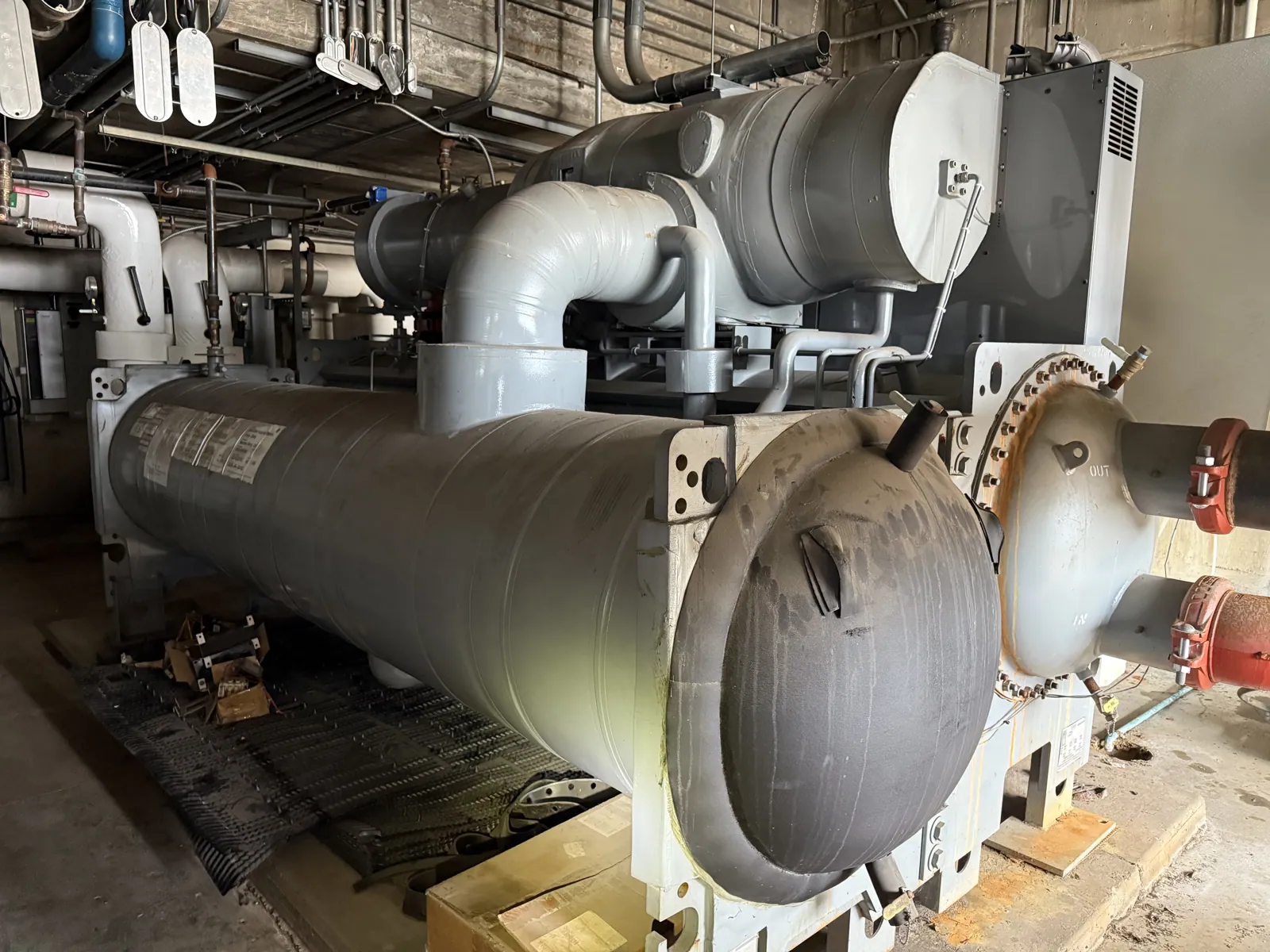
Sell a Used Chiller in Summerville, SC
We buy used and surplus industrial chillers in Summerville, with upfront payment and buyer-managed removal.
We buy chillers. We don’t sell them.
Your chiller.
Our logistics.
Have a surplus or decommissioned chiller? We’re the buyer—here to make moving it straightforward.
From a single unit to equipment from a larger facility, tell us what you have. We buy industrial and commercial chillers across South Carolina and coordinate the work to get them moved.
See how it works
All types & sizes
Air-cooled or water-cooled, centrifugal, screw or scroll. Tell us what you have.
We handle the logistics
We coordinate rigging, refrigerant recovery, loading and freight for the equipment we buy.
Made for sellers
Send the details and nameplate photos to start a conversation about your chiller.
Three steps.
One less chiller.
- 01
Send the details
Share what you know, along with photos of the unit and nameplate.
- 02
Get a quote
We’ll review your equipment and discuss an offer with you.
- 03
Leave the logistics to us
We coordinate removal and freight for the chillers we purchase.
Sell a Used Chiller in Summerville, SC
If you are searching for a “chiller buyer near me” and your equipment is in Summerville, South Carolina, South Carolina Chiller Buyers can discuss a direct purchase. We buy used and surplus chillers; we do not sell replacement equipment. The equipment could be in storage, a closed factory, an occupied commercial property, a campus, a power plant, or a data center. Describe its actual setting and confirm who has authority to sell it.
We consider chillers of every tonnage, including units below 20 tons. Capacity from 20 to 2,000-plus tons is also common in the equipment we evaluate. All brands and refrigerants are considered. An initial discussion does not require you to start, test, repair, or prepare the chiller.
Describe the Stored Unit and Its Controls
A chiller in storage may be separated from equipment that once operated with it. For example, the controller or starter might be stored in another room, remain installed elsewhere, or have been removed. Tell us what is present and where it is, rather than assuming an accessory is included because it belonged to the original system.
Useful details include the manufacturer and model, approximate tonnage if known, air-cooled or water-cooled design, and whether the equipment is a single packaged unit or part of a larger plant. Note the condition as you understand it and identify any known missing components. Do not open, energize, drain, cut, or dismantle the machine to gather information. Existing records or safely accessible identification information are enough to begin a conversation.
Make the Sale Boundary Clear
For a single chiller, specify which machine is being offered. For several central-plant chillers, identify the individual units and whether the offer should cover all of them or only a selected group. This avoids confusion when machines share a room, service area, or storage location.
List accessories separately and say whether each should be included or left behind. A separate starter, controller, pump, or other item should not be treated as part of the chiller automatically. If an item is included, describe its location and relationship to the unit. The buyer can evaluate the proposed package based on what is actually available and the agreed scope.
Capacity Is Not the Same as Moving Weight
Tonnage describes cooling capacity; it does not tell you how heavy a chiller is or whether it can pass through a particular route. A smaller-capacity machine may still present access or rigging challenges, while a large central-plant unit may require careful coordination around its position and surroundings. If available, share equipment dimensions, shipping or operating weight from records, and information about doors, corridors, overhead clearance, loading areas, or other access constraints.
Do not estimate a safe lifting method from capacity alone. The removal plan and schedule depend on the equipment, the site, access, and the purchase agreement. If the unit is in a storage area, explain whether it is accessible and whether included components are stored separately. The buyer can discuss removal after reviewing those circumstances.
Refrigerant and Process Fluid Are Different
Refrigerant is part of the chiller’s cooling circuit; process fluid or chilled water is a separate fluid that may serve the building or process. They should not be confused when describing what remains in or around the equipment. Share known information from records or an authorized site contact, but do not vent refrigerant, drain fluid, or open the equipment to inspect it.
After an agreed purchase, South Carolina Chiller Buyers handles necessary refrigerant recovery through appropriately qualified personnel, along with disconnects, crane and rigging, loading, hauling, and freight. Freight is covered. The seller does not need to arrange shipment or hire a separate removal crew.
Access and Authorization Still Matter
Even when the buyer handles removal, the authorized owner or site representative must give permission and coordinate access. This is especially important if the chiller is stored in a restricted area, is part of an occupied property, or sits among other equipment that is not included in the sale. Clarify who can approve the transaction and who can arrange entry, work windows, and site coordination.
For a conditional example, if a controller is stored in a separate locked room, the site representative can explain whether it is included and how authorized access can be coordinated. If a unit is in a closed facility, provide the relevant access contact rather than assuming the buyer can enter independently.
What to Expect After an Offer Discussion
Payment is upfront after the purchase terms are agreed. The offer and removal schedule depend on the chiller, included items, site conditions, access, and the agreement; no particular price or date can be promised before those details are considered. You do not need to make the unit operational to request an offer.
- Identify the chiller or group, its known capacity, brand, and air-cooled or water-cooled design.
- Describe its storage location, condition as known, access constraints, and any separate controller or starter.
- Confirm which accessories are included and who is authorized to approve the sale and coordinate access.
Clear details help distinguish the equipment being purchased from items that remain at the Summerville site. South Carolina Chiller Buyers can then discuss the equipment and potential next steps directly with the authorized seller.
Ready to move
your chiller?
Tell us what you know. If you’re unsure of a detail, leave it blank. Nameplate photos are a great place to start.

Request a quote.
Fill out what you can and we’ll be in touch.