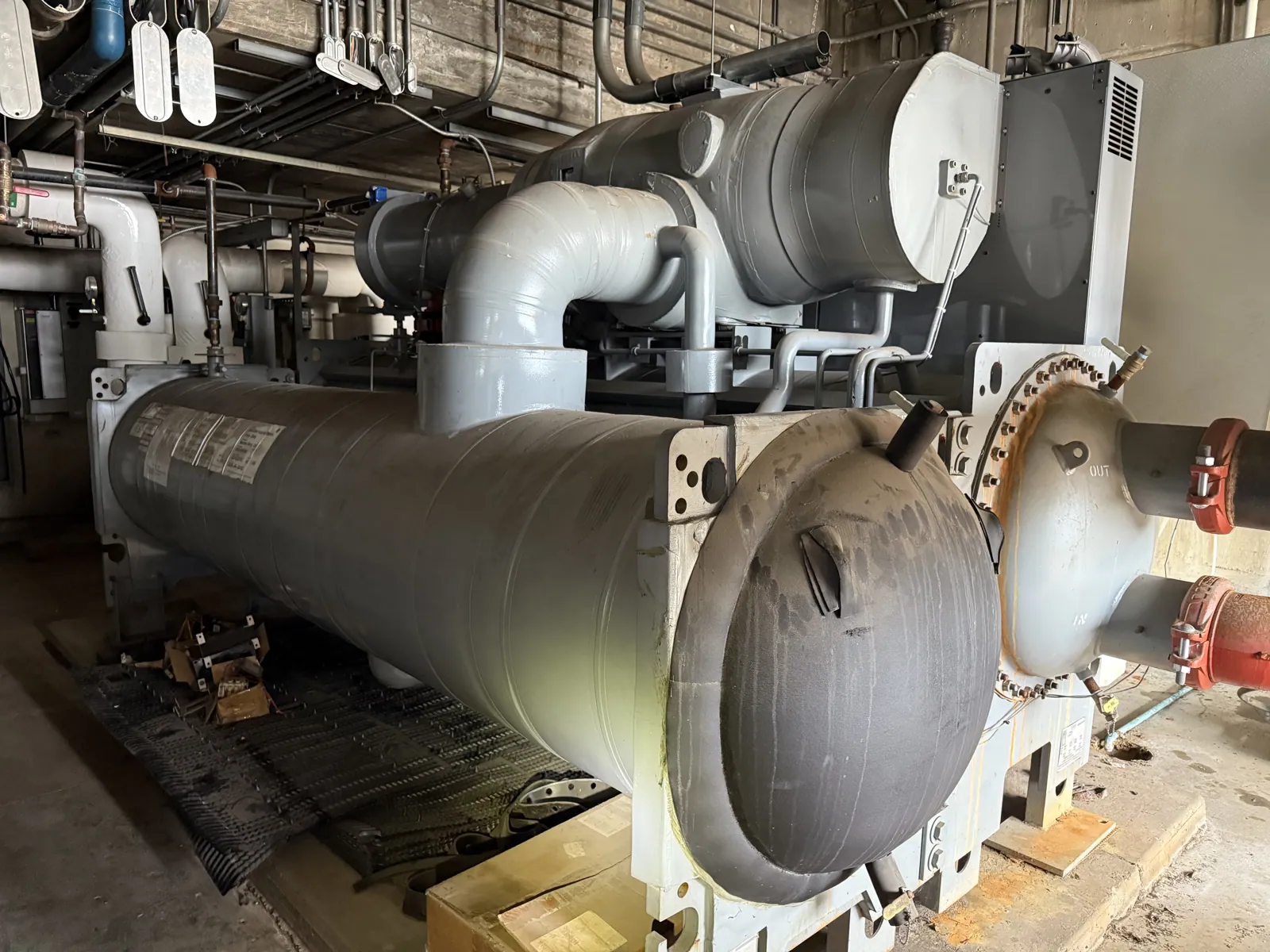
Sell a Surplus Water-Cooled Chiller in Lake City, SC
We buy used water-cooled chiller equipment in Lake City and handle the agreed disconnect, rigging, and freight.
We buy chillers. We don’t sell them.
Your chiller.
Our logistics.
Have a surplus or decommissioned chiller? We’re the buyer—here to make moving it straightforward.
From a single unit to equipment from a larger facility, tell us what you have. We buy industrial and commercial chillers across South Carolina and coordinate the work to get them moved.
See how it works
All types & sizes
Air-cooled or water-cooled, centrifugal, screw or scroll. Tell us what you have.
We handle the logistics
We coordinate rigging, refrigerant recovery, loading and freight for the equipment we buy.
Made for sellers
Send the details and nameplate photos to start a conversation about your chiller.
Three steps.
One less chiller.
- 01
Send the details
Share what you know, along with photos of the unit and nameplate.
- 02
Get a quote
We’ll review your equipment and discuss an offer with you.
- 03
Leave the logistics to us
We coordinate removal and freight for the chillers we purchase.
Sell a Surplus Water-Cooled Chiller in Lake City, SC
If you have a surplus water-cooled chiller in Lake City, South Carolina, South Carolina Chiller Buyers is a direct buyer—not a seller of replacement equipment. We consider water-cooled chillers across all tonnages, including units below 20 tons; 20 to 2,000+ tons is a common range. We also consider all brands and refrigerants. A unit that has been placed in storage may still be worth discussing, even if its controller or starter was removed and stored separately.
Start with what is included
Before requesting an offer, make a practical inventory of the chiller and any items that may be sold with it. Note whether the controller, starter, or other detached components are available, and whether they are mounted, boxed, or stored elsewhere. If a component is missing or its condition is unknown, say so rather than assuming it is included or functional.
A water-cooled chiller normally connects to both a chilled-water loop and a condenser-water loop. Identify both sets of connections and clarify whether the cooling tower, pumps, and associated controls are included or staying with the property. These surrounding systems can be valuable operating assets, but they are not automatically part of a chiller sale.
Describe condition without restarting the machine
You do not need to test, start, repair, or prepare the chiller to request an offer. Share what you already know: its approximate age if available, nameplate details, known operating history, storage conditions, and any documented faults or missing parts. Photos of accessible labels and the overall machine can help identify the equipment. Do not energize it or open, drain, vent, cut, or dismantle anything to gather information.
For example, if a unit was removed from service and stored with its starter on a separate shelf, describe both pieces and their current locations. If the starter cannot be matched confidently to the chiller, flag that uncertainty. The offer will depend on the equipment and the agreed scope, not simply on a claim that the machine is complete.
Separate capacity from moving weight
Chiller tonnage describes cooling capacity; it does not tell a hauler how heavy or difficult the machine will be to move. Transport planning depends on the actual equipment, its configuration, access, and the route out of the building. A compact unit can still present a difficult removal, while a higher-capacity machine may have a clear path and workable access. Do not estimate transport weight from tonnage alone.
For a stored chiller, mention whether it is on a skid, in a crate, or positioned in a machinery room, if known. Photos of the machine, doorway, turns, overhead restrictions, and exit route can help clarify the removal scope. Avoid moving the unit or changing its configuration for photographs.
Plan around shared water systems
Water-cooled chiller removal requires a plan that distinguishes the chiller from shared piping and cooling equipment that may remain in service. The buyer and authorized site representative can coordinate the agreed scope, including which components are included and which stay. Do not assume that every nearby pipe, valve, pump, or control belongs to the chiller being sold.
Photos of valves, insulation, pipe runs, and the machinery-room exit can help establish the scope. If piping serves other equipment, identify that concern to the site representative before a removal plan is finalized. The seller should not cut or disconnect shared lines to make the chiller easier to sell.
How purchase and removal are handled
After an agreed purchase, South Carolina Chiller Buyers handles disconnects, necessary refrigerant recovery through appropriately qualified personnel, crane and rigging, loading, hauling, and freight. Freight is covered. Payment is upfront under the agreed purchase. The seller does not need to hire a carrier, ship the chiller, or arrange the removal crew.
The authorized owner or site representative must still give permission and coordinate access, site requirements, and timing. A separate starter or controller may affect what is included and how removal is organized, so identify it during the discussion. The offer and removal schedule depend on the equipment and agreement; neither a particular price nor a specific date can be promised in advance.
Useful details for an offer request
When describing your water-cooled chiller in Lake City, include the information you can confirm and clearly label anything uncertain:
- Manufacturer, model, serial number, and nameplate capacity, if visible without disturbing the unit.
- Whether the controller and starter are present, stored separately, or unavailable.
- Which chilled-water and condenser-water connections belong to the chiller, as understood by the site representative.
- Whether the cooling tower, pumps, and associated controls are included or remain with the property.
- Known condition, storage status, access constraints, and photos of the unit and removal route.
Clear information helps define what is being purchased and what must stay in place. If details are missing, report that plainly; you can request an offer without preparing or dismantling the equipment.
Ready to move
your chiller?
Tell us what you know. If you’re unsure of a detail, leave it blank. Nameplate photos are a great place to start.

Request a quote.
Fill out what you can and we’ll be in touch.