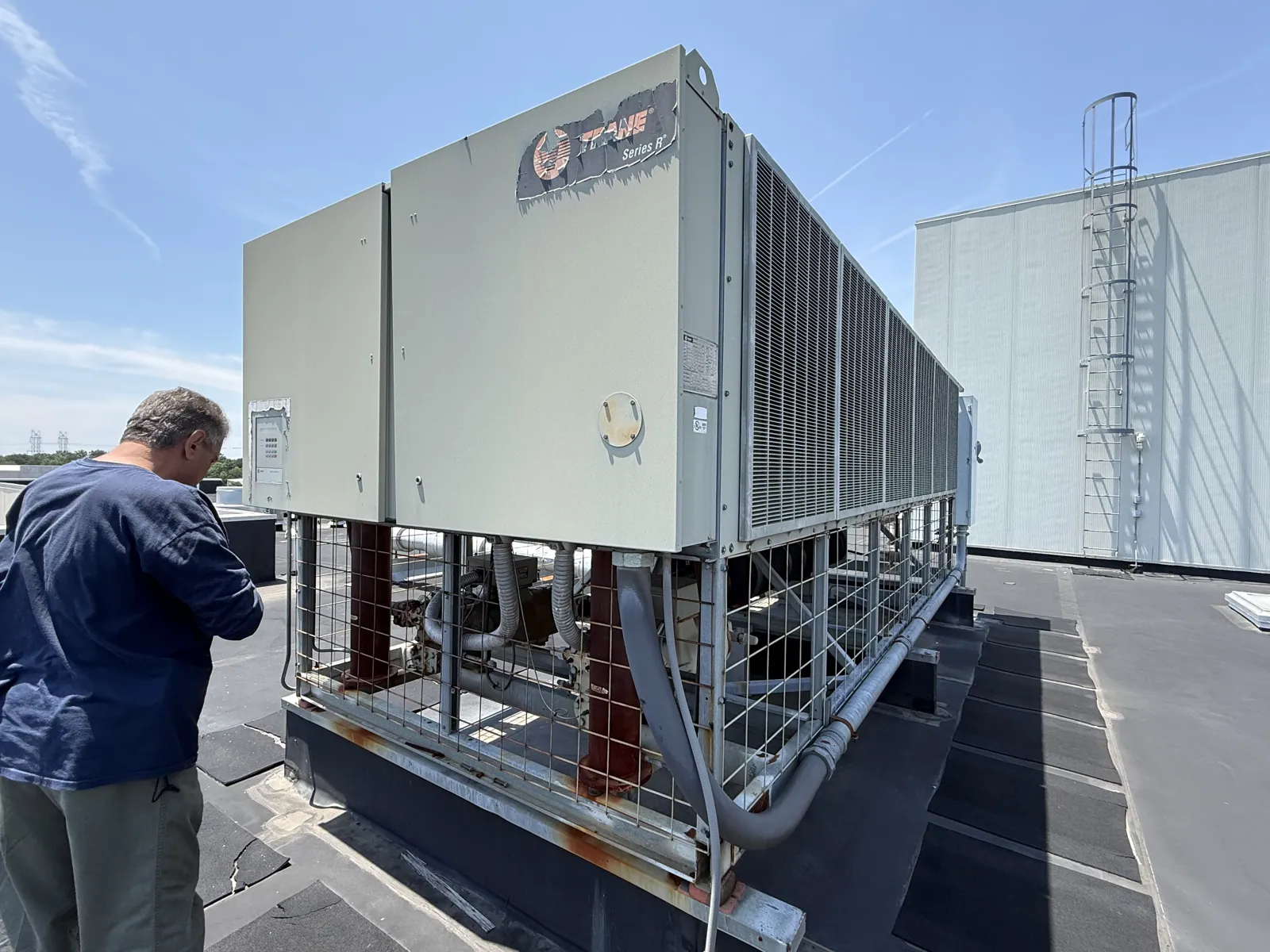
Sell a Used Chiller in Lake City, SC
We buy used and surplus industrial chillers in Lake City, with upfront payment and buyer-managed removal.
We buy chillers. We don’t sell them.
Your chiller.
Our logistics.
Have a surplus or decommissioned chiller? We’re the buyer—here to make moving it straightforward.
From a single unit to equipment from a larger facility, tell us what you have. We buy industrial and commercial chillers across South Carolina and coordinate the work to get them moved.
See how it works
All types & sizes
Air-cooled or water-cooled, centrifugal, screw or scroll. Tell us what you have.
We handle the logistics
We coordinate rigging, refrigerant recovery, loading and freight for the equipment we buy.
Made for sellers
Send the details and nameplate photos to start a conversation about your chiller.
Three steps.
One less chiller.
- 01
Send the details
Share what you know, along with photos of the unit and nameplate.
- 02
Get a quote
We’ll review your equipment and discuss an offer with you.
- 03
Leave the logistics to us
We coordinate removal and freight for the chillers we purchase.
Sell a Used Chiller in Lake City, SC
If you are searching for a “chiller buyer near me” and your equipment is in Lake City, South Carolina, South Carolina Chiller Buyers can discuss a direct purchase. We buy used and surplus chillers; we do not sell replacement equipment. Chillers of all tonnages are considered, including units below 20 tons, with 20 to 2,000+ tons being a common range. We consider all brands and refrigerants.
The first useful step is defining exactly what you intend to sell. In a central plant, that may mean one identified machine while other chillers, pumps, piping or controls remain in place. At another property, it could be a single packaged unit with specified accessories. A clear boundary helps prevent assumptions about what the purchase includes and what must stay.
Draw a Clear Line Around the Sale
List the chiller or chillers being offered by location, equipment tag, manufacturer or other identifying information available to you. Then note which items are included, if any, such as a dedicated control panel or accessory mounted to the machine. Separately identify equipment and building systems that are excluded. Do not assume that nearby equipment transfers with the chiller simply because it serves the same cooling system.
For example, if a site has two central-plant chillers but only one is surplus, the discussion should identify that specific unit and state that the other remains. If a packaged chiller is being offered without a separate pump or external piping, make that distinction explicit. These are illustrative situations; the actual sale depends on the equipment and the parties’ agreement.
Tell Us About the Site and Your Authority
Equipment in Lake City might be at a closed factory, an occupied commercial property, a campus, a power plant or a data center. Those are possible settings, not claims about any particular local property. Tell us the actual setting, where the chiller is situated, and who is authorized to sell it. The owner or authorized site representative must provide permission and coordinate access, even though the buyer arranges removal work after an agreed purchase.
Access conditions can affect planning. A machine inside an occupied building may require coordination around doors, operating areas and other equipment. An outdoor unit may have different access considerations. Describe known constraints rather than trying to move or prepare the chiller yourself.
Capacity Is Not Transport Weight
Chiller tonnage describes cooling capacity; it does not tell a rigger how heavy the equipment is or whether it can pass through a particular route. Removal planning may depend on the machine’s actual configuration, dimensions, location, access path and lifting conditions. If you have reliable nameplate details, drawings or existing records, they can help identify the unit. You do not need to energize, open, drain, cut or dismantle equipment to request an offer.
Also distinguish the chiller from the broader cooling system. A chiller is not automatically the cooling tower, pumps, piping, electrical gear or every control serving the plant. State which components belong in the proposed sale and which are to remain with the property.
Share Practical Information, Not a Repair Project
When describing your chiller, provide what is already known: approximate capacity, brand, model or serial information, air-cooled or water-cooled configuration, refrigerant, and whether the unit is surplus, idle or still in service. Mention known access limitations and any accessories you want considered. Do not open panels or operate the machine to collect details. Sellers do not need to test, start, repair or prepare a unit to request an offer.
- Identify the exact machine or group being offered.
- Separate included accessories from equipment that stays.
- Describe the site setting, access and authorized contact.
- Share available equipment records without disturbing the unit.
Understand the Removal Arrangement
After a purchase is agreed, the buyer handles disconnects, necessary refrigerant recovery through appropriately qualified personnel, crane and rigging, loading, hauling and freight. Freight is covered. The seller does not need to hire a carrier or ship the chiller. Site permission and coordination remain necessary so the agreed removal can be carried out with access to the equipment.
Refrigerant in a chiller is distinct from process fluid or water in a connected system. Do not vent refrigerant or attempt to drain, disconnect or otherwise prepare the equipment. Any necessary recovery is handled by appropriately qualified personnel as part of the agreed removal plan.
Offer and Timing Depend on the Agreement
Payment is upfront under the purchase arrangement. The offer and removal schedule depend on the equipment and the agreement, so neither a particular price nor a specific removal date can be assumed before the relevant details are reviewed. If several chillers are involved, clarify whether you are offering the entire group or only selected machines.
For a Lake City sale, a precise description of the chiller and the boundary of the transaction makes the discussion more useful. South Carolina Chiller Buyers can consider used or surplus equipment across capacities, brands and refrigerants, while the final scope, offer and removal plan are determined for the actual equipment and site.
Ready to move
your chiller?
Tell us what you know. If you’re unsure of a detail, leave it blank. Nameplate photos are a great place to start.

Request a quote.
Fill out what you can and we’ll be in touch.