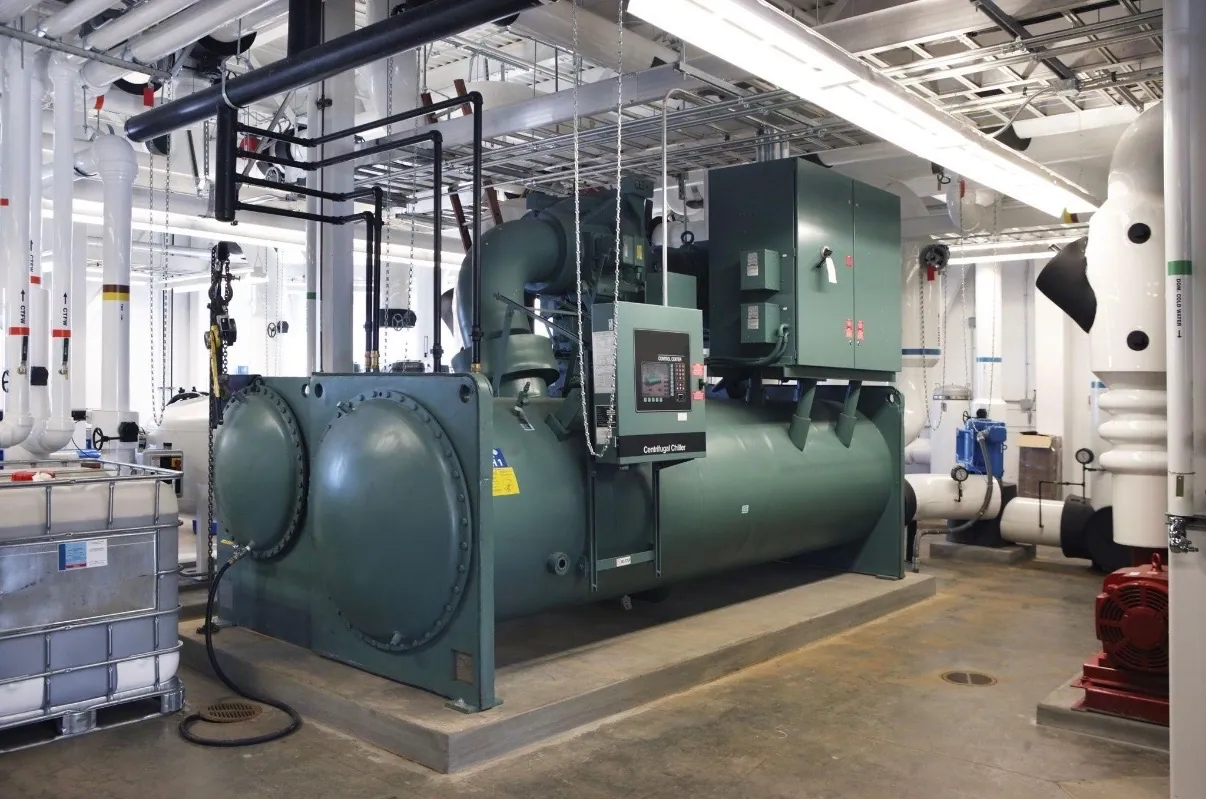
Sell a Surplus Water-Cooled Chiller in Fort Mill, SC
We buy used water-cooled chiller equipment in Fort Mill and handle the agreed disconnect, rigging, and freight.
We buy chillers. We don’t sell them.
Your chiller.
Our logistics.
Have a surplus or decommissioned chiller? We’re the buyer—here to make moving it straightforward.
From a single unit to equipment from a larger facility, tell us what you have. We buy industrial and commercial chillers across South Carolina and coordinate the work to get them moved.
See how it works
All types & sizes
Air-cooled or water-cooled, centrifugal, screw or scroll. Tell us what you have.
We handle the logistics
We coordinate rigging, refrigerant recovery, loading and freight for the equipment we buy.
Made for sellers
Send the details and nameplate photos to start a conversation about your chiller.
Three steps.
One less chiller.
- 01
Send the details
Share what you know, along with photos of the unit and nameplate.
- 02
Get a quote
We’ll review your equipment and discuss an offer with you.
- 03
Leave the logistics to us
We coordinate removal and freight for the chillers we purchase.
Sell a Surplus Water-Cooled Chiller in Fort Mill, SC
If a water-cooled chiller in Fort Mill has become surplus, South Carolina Chiller Buyers can consider purchasing it directly. We buy used chillers; we do not sell replacement equipment. A unit may be worth discussing even if another chiller or shared system at the site must remain in service. The key is to describe what is being sold and what must stay connected and operational.
Map the Two Water Circuits Before Requesting an Offer
A typical water-cooled chiller interfaces with a chilled-water loop and a separate condenser-water loop. When you describe your unit, identify both sets of connections and indicate which pipes, valves, pumps, controls, and other equipment belong to the chiller versus the wider system. The cooling tower, pumps, and associated controls may be included in a sale or remain with the property; clarify the intended boundary rather than assuming they travel with the chiller.
This distinction matters especially when another chiller shares piping or supports the same building load. For example, if one machine is being retired while a second is expected to keep serving the site, the removal plan may need to isolate the surplus equipment without disrupting shared services. Whether that arrangement is practical depends on the actual piping and site configuration, so photographs and a clear description are useful starting points.
Show What Must Stay Active
Photos can help establish removal scope before anyone schedules work. Useful views include the chiller’s connections, valves, insulated pipe runs, nearby pumps and controls, and the route from the machinery room to an accessible exit. Include enough context to show where shared piping continues and which equipment is intended to remain. Do not open, drain, cut, or dismantle anything to take pictures.
If the boundary between the chiller and shared equipment is unclear, say so when requesting an offer. The authorized owner or site representative can help identify what may be disconnected and coordinate access. Do not assume that a valve, pipe section, or control is dedicated to the surplus unit merely because it is nearby.
Capacity Is Not Removal Weight
Chiller capacity, usually expressed in tons, describes cooling output; it does not tell a rigger how heavy the machine is or whether it can pass through a particular doorway. South Carolina Chiller Buyers considers all tonnages, including units below 20 tons. Chillers from 20 to 2,000+ tons are a common range, but capacity alone does not determine whether a unit is suitable for purchase or how removal will be handled.
If available, provide the make, model, approximate capacity, and any readable identification-plate details, along with overall photos and information about the access route. These details help assess the equipment and plan the scope. They are not a request for you to start, test, repair, or prepare the chiller. All brands and refrigerants are considered.
Understand the Removal Boundary
After an agreed purchase, the buyer handles disconnection, necessary refrigerant recovery through appropriately qualified personnel, crane and rigging work, loading, hauling, and freight. Freight is covered. The seller does not need to arrange transport or ship the equipment, and does not need to test, energize, repair, or prepare it to request an offer.
For a site with a shared system, the disconnection plan must distinguish the purchased chiller from piping and cooling equipment that will remain in use. The buyer and authorized site representative need to coordinate access and confirm the agreed scope before work proceeds. The owner or representative still must provide permission; describing removal responsibilities does not replace that authorization.
Request an Offer With Practical Details
- Identify the chiller and share available make, model, capacity, and photographs.
- Describe both water circuits and note which pumps, tower equipment, controls, and piping are included or staying.
- Show the machinery-room exit and any access constraints, without moving or dismantling equipment.
- Explain whether another chiller or shared system must remain active during removal.
Offers and removal schedules depend on the equipment, access, scope, and final agreement. No price or date can be assumed in advance. A useful first request gives enough information to distinguish the surplus water-cooled chiller from the systems the Fort Mill property still needs.
Ready to move
your chiller?
Tell us what you know. If you’re unsure of a detail, leave it blank. Nameplate photos are a great place to start.

Request a quote.
Fill out what you can and we’ll be in touch.