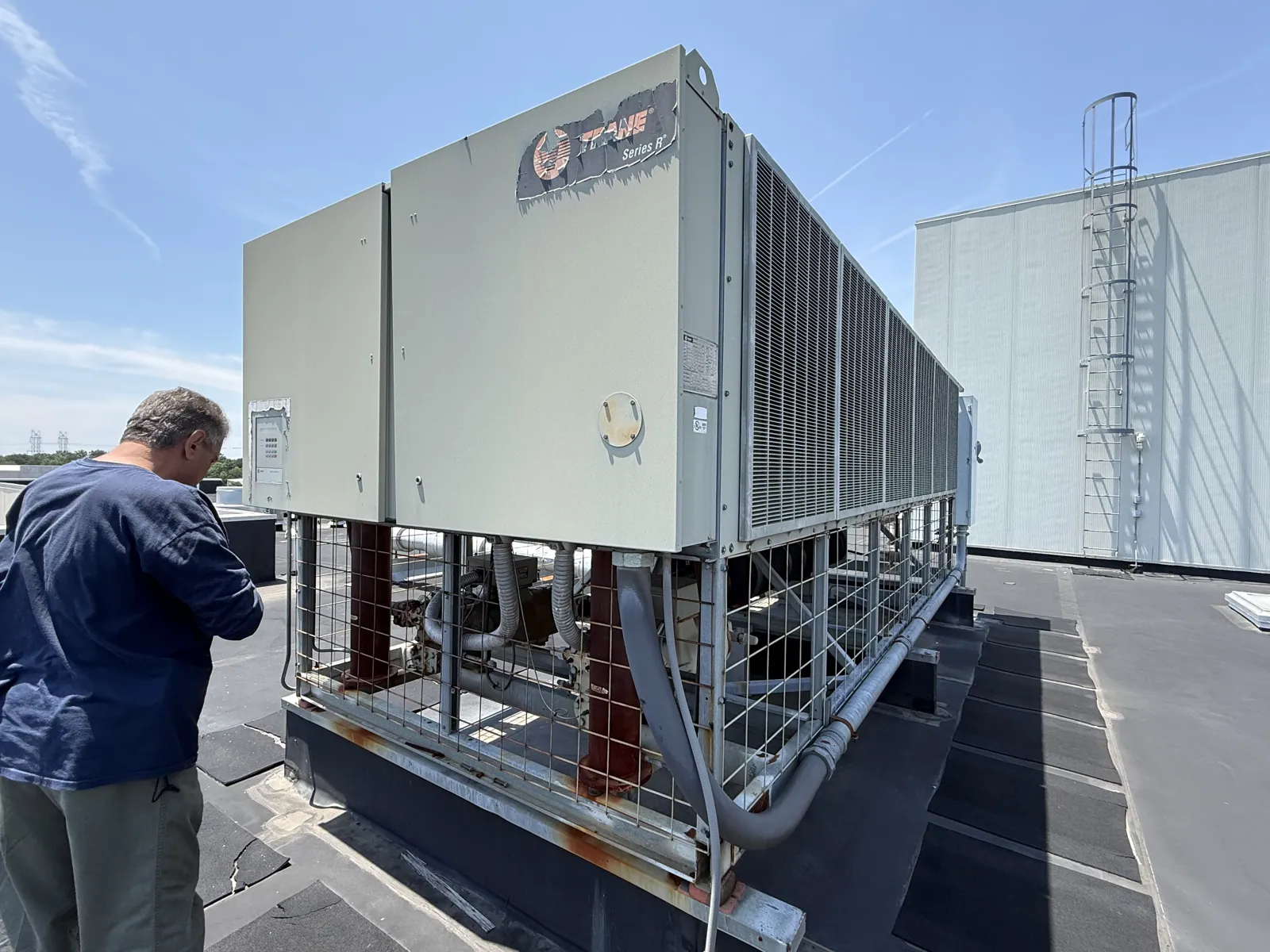
Sell a Surplus Air-Cooled Chiller in Westminster, SC
We buy used air-cooled chiller equipment in Westminster and handle the agreed disconnect, rigging, and freight.
We buy chillers. We don’t sell them.
Your chiller.
Our logistics.
Have a surplus or decommissioned chiller? We’re the buyer—here to make moving it straightforward.
From a single unit to equipment from a larger facility, tell us what you have. We buy industrial and commercial chillers across South Carolina and coordinate the work to get them moved.
See how it works
All types & sizes
Air-cooled or water-cooled, centrifugal, screw or scroll. Tell us what you have.
We handle the logistics
We coordinate rigging, refrigerant recovery, loading and freight for the equipment we buy.
Made for sellers
Send the details and nameplate photos to start a conversation about your chiller.
Three steps.
One less chiller.
- 01
Send the details
Share what you know, along with photos of the unit and nameplate.
- 02
Get a quote
We’ll review your equipment and discuss an offer with you.
- 03
Leave the logistics to us
We coordinate removal and freight for the chillers we purchase.
Sell a Surplus Air-Cooled Chiller in Westminster, SC
If your facility in Westminster has an air-cooled chiller that is no longer needed, South Carolina Chiller Buyers may consider it for purchase. We are a direct buyer, not a seller of replacement equipment. We review air-cooled chillers across brands, refrigerants and capacities, including units under 20 tons; 20 to 2,000+ tons is a common range. Age, condition, configuration and removal requirements all help determine whether a unit is suitable and what offer and schedule can be agreed.
Air-cooled chillers reject heat through outdoor coils and fans, rather than relying on a conventional cooling-tower loop. That distinction helps identify the equipment and plan removal, but it does not establish its value by itself. A clear description and available records are more useful than assumptions about the unit’s size, operating condition or refrigerant.
Start with the label, but treat it as evidence
Photograph the manufacturer and model labels if they are safely visible. Record the stated model, serial number, capacity and refrigerant information when legible, along with the number of compressors if that can be observed without opening or disturbing the equipment. Older labels may be faded, damaged or inconsistent with later changes. If a rating is unreadable, say so rather than filling in a likely value.
The label describes the equipment as marked; it may not tell the whole service history. A chiller could have been modified, had components replaced or received a refrigerant retrofit. Where that history is documented, share the relevant records and distinguish recorded work from recollection. Do not infer the current refrigerant from the unit’s age, a faded sticker or another chiller of the same model.
Retrofit records can prevent avoidable confusion
Useful documents may include service reports, retrofit notes, refrigerant charge records, equipment schedules or prior removal assessments. These can clarify whether the refrigerant or controls differ from the original configuration and identify changes that affect handling. If records are incomplete, that is still useful information: describe what is available and what remains unknown. South Carolina Chiller Buyers considers chillers using all refrigerants, but accurate identification supports a more informed review and safe removal planning.
Do not open panels, energize the unit, drain fluids or attempt to verify a refrigerant charge. The process fluid in a connected system is not the same thing as refrigerant in the chiller circuit. If you know whether the unit remains connected to piping, report that status without disconnecting or cutting anything.
Describe the installation and access route
Note whether your air-cooled chiller in Westminster sits on a roof, pad or raised frame. A rooftop or elevated installation may require a lift plan and a protected area on the ground. For a unit at grade, the route from the equipment to a truck still matters. Photos of surrounding clearance, gates and overhead obstructions help assess access; include the equipment and the approach rather than relying only on a close-up.
Capacity and transport weight are different measures. A tonnage rating describes cooling capacity, not how heavy the chiller is or what lifting equipment it requires. Weight may be documented on a nameplate or in equipment records, but do not guess if it is unavailable. Installation height, structural access and the path for rigging also affect planning, even when the unit’s capacity is known.
What to share when requesting an offer
A concise, accurate overview is enough to begin. You do not need to test, start, repair or prepare the chiller to request an offer. Helpful details include:
- Visible label information, brand and model, with uncertain or unreadable items identified as such.
- Known retrofit or service records, especially any notes about refrigerant or replaced components.
- Observable fan and coil condition, compressor count where visible, and the unit’s mounting location.
- Photos showing the installation, access route, gates, overhead clearance and possible lifting area.
For example, if a label names one refrigerant but a service record documents a later retrofit, provide both and let the buyer review the discrepancy. If there is no record and the label cannot be read, mark the refrigerant as unknown rather than choosing one based on the model. These conditional examples are guidance for describing equipment, not claims about any particular property in Westminster.
Purchase and removal responsibilities
Payment is upfront after the purchase terms are agreed. The buyer handles disconnects, necessary refrigerant recovery through appropriately qualified personnel, crane and rigging, loading, hauling and freight; freight is covered. Sellers do not need to hire a carrier or ship the chiller. The authorized owner or site representative must still approve the transaction, grant permission for work and coordinate site access.
Removal timing and the offer depend on the specific equipment, available information, access conditions and the agreement. A photo or nameplate alone does not guarantee a particular price or date. Share what is known, flag uncertainties plainly and allow the equipment and removal requirements to be reviewed before final terms are set.
Ready to move
your chiller?
Tell us what you know. If you’re unsure of a detail, leave it blank. Nameplate photos are a great place to start.

Request a quote.
Fill out what you can and we’ll be in touch.