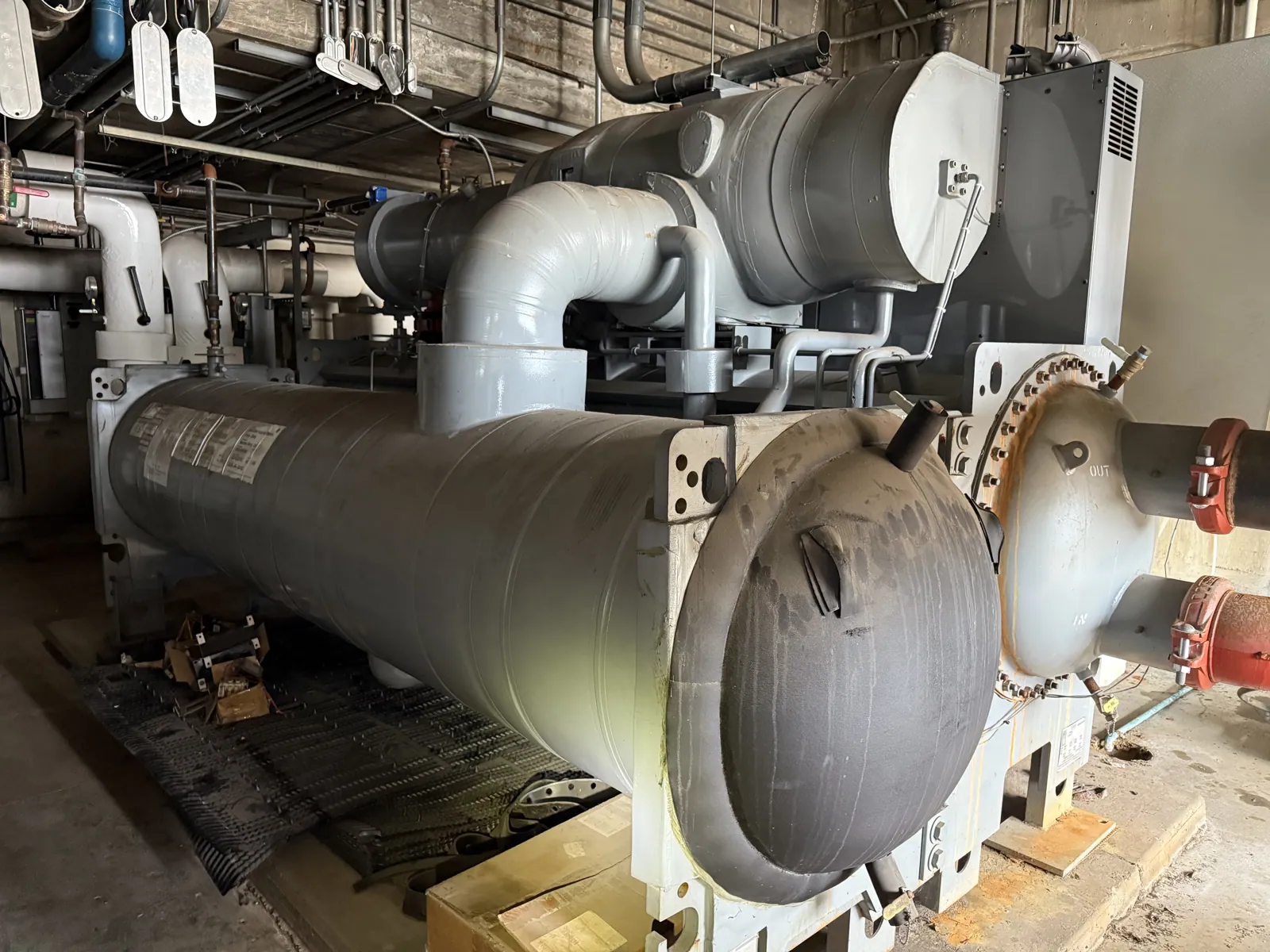
Sell a Surplus Water-Cooled Chiller in West Columbia, SC
We buy used water-cooled chiller equipment in West Columbia and handle the agreed disconnect, rigging, and freight.
We buy chillers. We don’t sell them.
Your chiller.
Our logistics.
Have a surplus or decommissioned chiller? We’re the buyer—here to make moving it straightforward.
From a single unit to equipment from a larger facility, tell us what you have. We buy industrial and commercial chillers across South Carolina and coordinate the work to get them moved.
See how it works
All types & sizes
Air-cooled or water-cooled, centrifugal, screw or scroll. Tell us what you have.
We handle the logistics
We coordinate rigging, refrigerant recovery, loading and freight for the equipment we buy.
Made for sellers
Send the details and nameplate photos to start a conversation about your chiller.
Three steps.
One less chiller.
- 01
Send the details
Share what you know, along with photos of the unit and nameplate.
- 02
Get a quote
We’ll review your equipment and discuss an offer with you.
- 03
Leave the logistics to us
We coordinate removal and freight for the chillers we purchase.
Sell a Surplus Water-Cooled Chiller in West Columbia, SC
South Carolina Chiller Buyers purchases surplus water-cooled chillers in West Columbia and throughout South Carolina. We are a direct buyer, not a seller of replacement equipment. We consider all tonnages, including units under 20 tons; 20 to 2,000+ tons is a common range. We also consider all brands and refrigerants. An older, idle, or not-currently-operating chiller may still be worth discussing: you do not need to test, start, repair, or prepare it to request an offer.
Useful information helps us evaluate the specific machine and plan its removal. Begin with what can be documented safely from labels, existing records, and accessible views. Do not energize, open, drain, vent, cut, or dismantle equipment to gather details.
Start with the nameplate and records
Share clear nameplate photographs when available, along with the manufacturer, model, serial number, and stated capacity. Include any existing documentation that identifies the refrigerant or describes the unit’s configuration. If a label is missing or unreadable, say so rather than guessing. A remembered tonnage or a building’s cooling requirement is not a substitute for the chiller’s own rating.
Capacity and transport weight answer different questions. Capacity describes cooling output; weight affects rigging, loading, and removal planning. If an existing equipment record lists shipping or operating weight, provide it, but there is no need to estimate weight from capacity. The machine’s dimensions, surrounding clearance, and removal route also matter.
Describe condition without running the machine
Tell us whether the chiller is operating, idle, disconnected, or of unknown status, based on information already available. Note known damage, missing components, prior service findings, or a history of being taken out of service. If the unit cannot be reached safely for inspection, explain that limitation. A report from an earlier service visit can be useful, but you are not expected to commission a new test or troubleshoot the equipment.
Condition and completeness can affect an offer, but an uncertain or non-running status does not automatically rule out consideration. For example, if a facility has replaced a process system and left the chiller unused, existing maintenance records and photographs may help establish what remains without restarting it.
Clarify what is part of the sale
A water-cooled chiller normally connects to both a chilled-water loop and a condenser-water loop. Identify both sets of connections and tell us whether the cooling tower, pumps, and associated controls are included or will remain with the property. Also note any other equipment or accessories that you intend to sell with the chiller. Do not assume that nearby equipment is included simply because it serves the same system.
Refrigerant and process fluid are distinct. Refrigerant is contained within the chiller’s refrigeration circuit; process or loop water moves through the building’s piping and heat exchangers. Existing records may identify the refrigerant, while the site representative can clarify what other system components are being retained. Do not drain or release either fluid to prepare for an inquiry.
Use photos to define the removal boundary
For water-cooled chiller removal, the disconnection plan must distinguish the chiller from shared piping and cooling equipment that will stay in service. Photos of valves, insulation, pipe runs, and the machinery-room exit can help establish the likely scope. Include broad views showing the chiller in context as well as closer images of visible connections, where they can be taken safely.
For instance, if a condenser-water line serves more than one piece of equipment, a photo or site sketch may help show where the chiller connects and what must remain. This is only a planning aid; the authorized site representative and removal team still need to agree on the actual boundary and access plan.
Share access and sale terms early
Useful access details include the room or area where the unit sits, door or corridor constraints, overhead clearance, and any known restrictions on moving equipment through the building. Mention whether a crane or other lifting arrangement may be needed, but do not arrange rigging or ship the chiller yourself. The offer and removal schedule depend on the equipment and the agreed scope; no particular price or date can be promised before those details are reviewed.
The owner or authorized site representative must give permission for the sale and coordinate site access. After an agreed purchase, South Carolina Chiller Buyers handles disconnects, necessary refrigerant recovery through appropriately qualified personnel, crane and rigging, loading, hauling, and freight. Freight is covered. Payment is upfront under the agreed transaction terms.
Send a useful first summary
A concise inquiry can cover the essentials without requiring work on the machine:
- Nameplate details and any existing records
- Known condition and visible completeness
- What is included, especially tower, pumps, and controls
- Photos of connections, shared piping, room access, and exit route
- Site contact authorized to approve the sale and coordinate access
With those details, we can assess your water-cooled chiller in West Columbia and discuss whether its condition, included components, and removal requirements fit a purchase. If some information is unavailable, identify what is unknown; do not delay an inquiry to operate or dismantle the equipment.
Ready to move
your chiller?
Tell us what you know. If you’re unsure of a detail, leave it blank. Nameplate photos are a great place to start.

Request a quote.
Fill out what you can and we’ll be in touch.