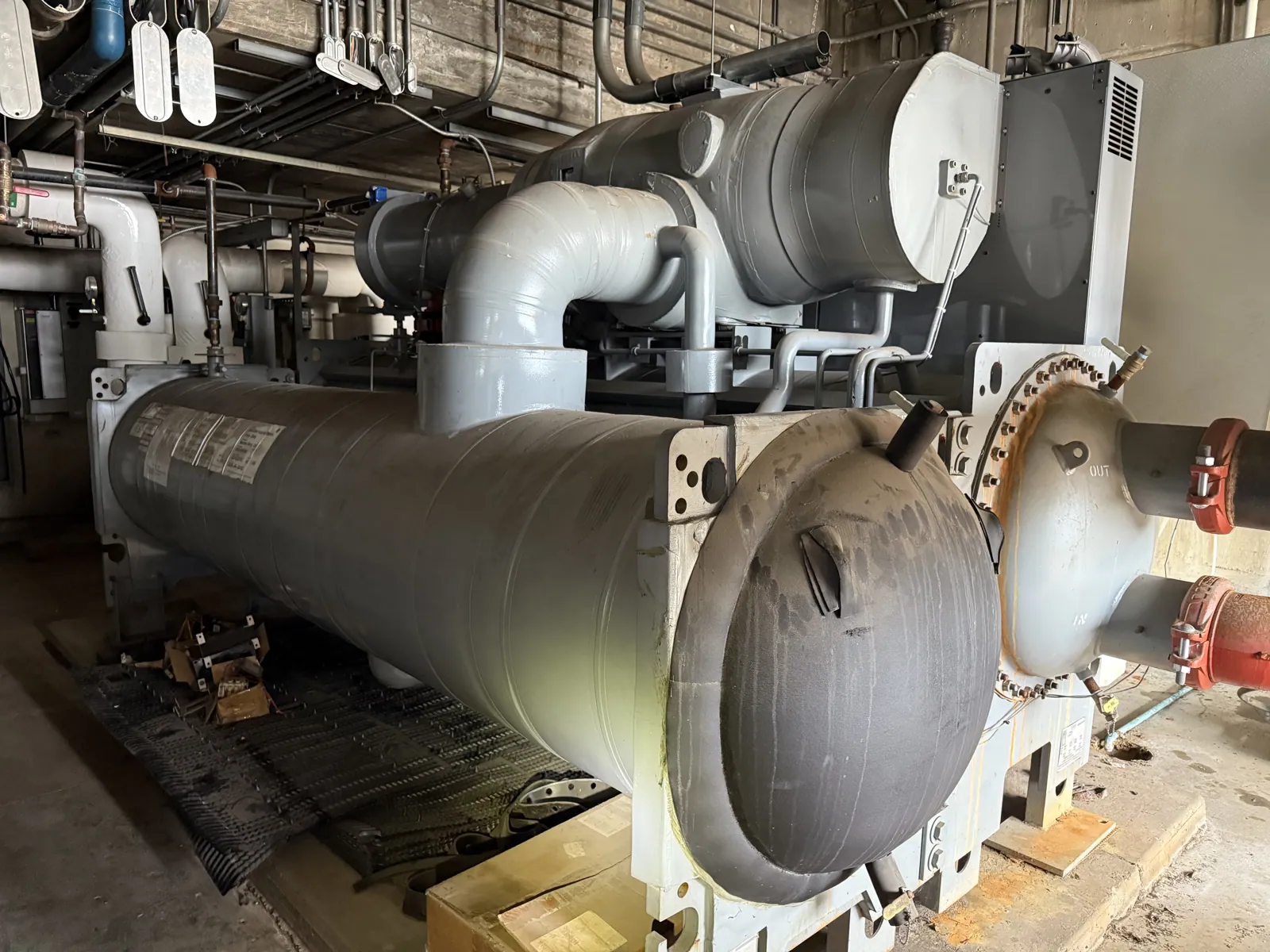
Sell a Surplus Air-Cooled Chiller in Walterboro, SC
We buy used air-cooled chiller equipment in Walterboro and handle the agreed disconnect, rigging, and freight.
We buy chillers. We don’t sell them.
Your chiller.
Our logistics.
Have a surplus or decommissioned chiller? We’re the buyer—here to make moving it straightforward.
From a single unit to equipment from a larger facility, tell us what you have. We buy industrial and commercial chillers across South Carolina and coordinate the work to get them moved.
See how it works
All types & sizes
Air-cooled or water-cooled, centrifugal, screw or scroll. Tell us what you have.
We handle the logistics
We coordinate rigging, refrigerant recovery, loading and freight for the equipment we buy.
Made for sellers
Send the details and nameplate photos to start a conversation about your chiller.
Three steps.
One less chiller.
- 01
Send the details
Share what you know, along with photos of the unit and nameplate.
- 02
Get a quote
We’ll review your equipment and discuss an offer with you.
- 03
Leave the logistics to us
We coordinate removal and freight for the chillers we purchase.
Sell a Surplus Air-Cooled Chiller in Walterboro, SC
If you have an inactive air-cooled chiller in Walterboro, South Carolina, uncertain service history does not automatically rule out a sale. South Carolina Chiller Buyers is a direct buyer of used chillers, not a seller of replacement equipment. We consider air-cooled units across tonnages, brands, and refrigerant types, including equipment below 20 tons; 20 to 2,000+ tons is a common range.
For an older machine, the useful first step is to describe what can be observed safely—not to make it run. You do not need to test, start, repair, or prepare the chiller to request an offer. If records are incomplete or the unit has been idle for a long time, say so plainly. The offer and removal schedule will depend on the equipment and the purchase agreement.
Describe the unit without restarting it
Air-cooled chillers reject heat through outdoor coils and fans rather than through a conventional cooling-tower loop. That distinction helps identify the equipment and plan removal. From a safe vantage point, note the visible condition of the fans and coil surfaces, the compressor count if it can be seen, and whether the chiller sits on a roof, pad, or raised frame. Do not open panels or approach unsafe areas to fill in missing details.
Share the manufacturer and model if they are available from existing records or readable exterior labels. Approximate age, known operating status before shutdown, and any paperwork already on hand can also help. If a detail is unknown, mark it as unknown rather than guessing. A clear account of uncertainty is more useful than an unsupported claim that the machine works.
Keep capacity separate from removal weight
Rated capacity, usually stated in tons, describes cooling output; it is not the chiller’s transport weight. A compact-looking unit may still be heavy, while capacity alone does not determine what lifting or hauling will require. If you have a nameplate or equipment record showing dimensions or weight, provide it, but do not climb onto or dismantle the machine to find information.
Air-cooled equipment also has refrigerant and may connect to a separate process-fluid circuit. These are different systems. Do not vent refrigerant, drain fluid, cut lines, or dismantle components to make the chiller easier to sell. After an agreed purchase, the buyer handles necessary refrigerant recovery through appropriately qualified personnel as part of removal planning.
Show the installation and access route
Location can shape the removal plan as much as the machine itself. A rooftop or elevated installation may require a lift plan and a protected ground area. At grade, the route from the chiller to a truck still matters. Photos of the unit’s surroundings can show clearance, gates, pavement or other ground conditions, and overhead obstructions. Take pictures only from places you can access safely; do not move barriers or enter restricted areas for a better angle.
For a unit on a roof, raised frame, or crowded pad, point out the installation level and any obvious limits on approach. Do not estimate crane capacity or promise that a route is clear if you are unsure. These details help the buyer assess the practical removal conditions before agreeing on a purchase.
Useful details for an initial review
- Brand, model, and visible capacity, if known from existing records or exterior labels.
- Observed fan and coil condition, plus the compressor count if visible without opening the unit.
- Whether the chiller is on a roof, pad, or raised frame, with safe photos of surrounding clearance.
- Known service history, shutdown status, and any uncertainty about operating condition.
- Access information, including gates, overhead obstructions, and the route toward a loading area.
Agree on responsibilities before removal
Payment is upfront after an agreed purchase. The buyer handles disconnects, necessary refrigerant recovery through appropriately qualified personnel, crane and rigging, loading, hauling, and freight; freight is covered. Sellers do not need to hire a carrier or ship the equipment themselves, and they should not disconnect or prepare the chiller before removal.
The authorized owner or site representative must still grant permission and coordinate access. Clarify who can approve the sale, how the removal team will enter the site, and any access arrangements the representative must make. The exact work and timing depend on the equipment, site conditions, and agreed terms, so do not treat an initial review as a guaranteed price or removal date.
A sensible route for an inactive chiller
If the unit’s history is uncertain, start with safe observations, existing records, and access photos. For example, if a chiller has been idle and nobody can confirm its last operating condition, it may still be worth requesting an offer without restarting it. If it is elevated or the route is restricted, describe that early so removal requirements can be assessed. This field-guide approach gives South Carolina Chiller Buyers practical information while avoiding unnecessary work or risk to the equipment and site.
Ready to move
your chiller?
Tell us what you know. If you’re unsure of a detail, leave it blank. Nameplate photos are a great place to start.

Request a quote.
Fill out what you can and we’ll be in touch.