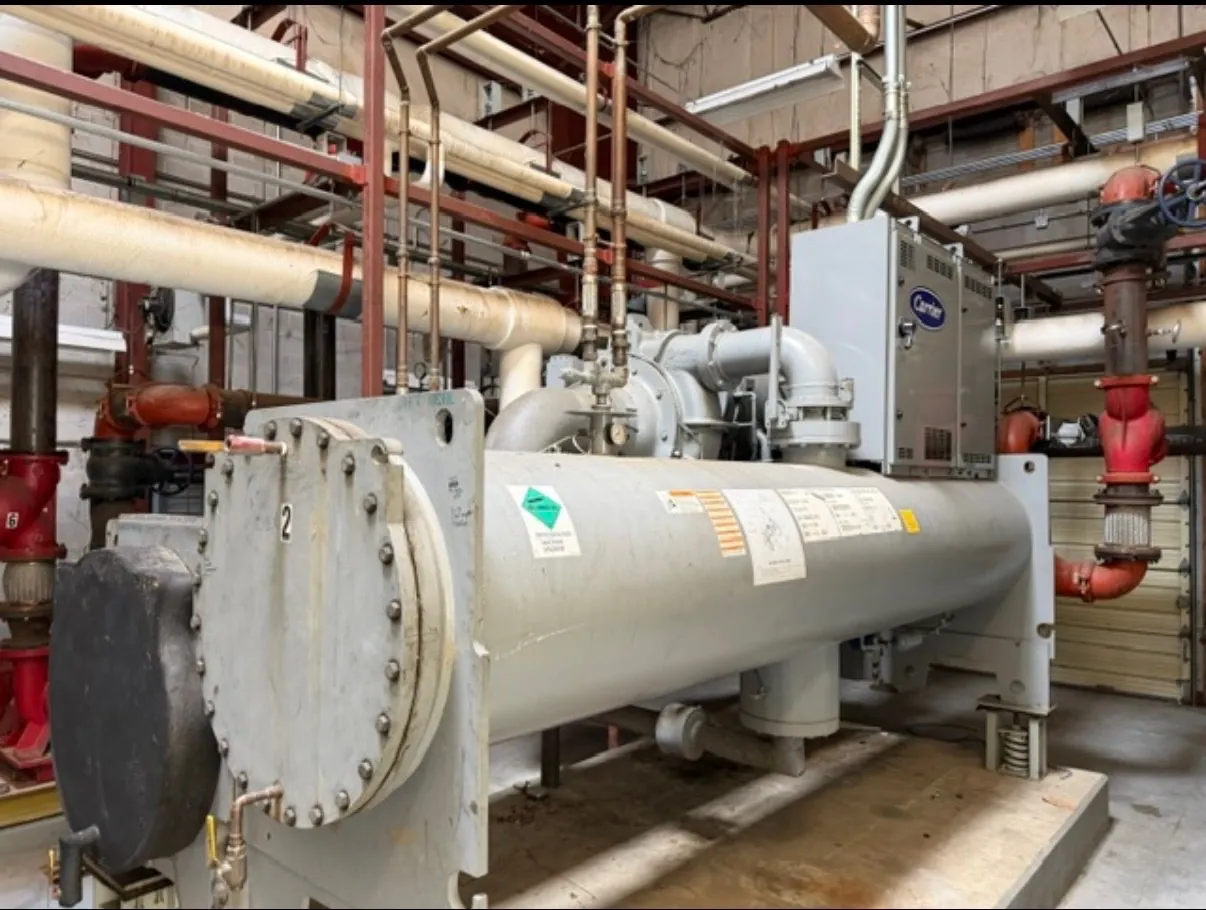
Sell a Surplus Air-Cooled Chiller in Port Royal, SC
We buy used air-cooled chiller equipment in Port Royal and handle the agreed disconnect, rigging, and freight.
We buy chillers. We don’t sell them.
Your chiller.
Our logistics.
Have a surplus or decommissioned chiller? We’re the buyer—here to make moving it straightforward.
From a single unit to equipment from a larger facility, tell us what you have. We buy industrial and commercial chillers across South Carolina and coordinate the work to get them moved.
See how it works
All types & sizes
Air-cooled or water-cooled, centrifugal, screw or scroll. Tell us what you have.
We handle the logistics
We coordinate rigging, refrigerant recovery, loading and freight for the equipment we buy.
Made for sellers
Send the details and nameplate photos to start a conversation about your chiller.
Three steps.
One less chiller.
- 01
Send the details
Share what you know, along with photos of the unit and nameplate.
- 02
Get a quote
We’ll review your equipment and discuss an offer with you.
- 03
Leave the logistics to us
We coordinate removal and freight for the chillers we purchase.
Sell a Surplus Air-Cooled Chiller in Port Royal, SC
If your site has a surplus air-cooled chiller in Port Royal, South Carolina, South Carolina Chiller Buyers may consider it for purchase. We are a direct buyer, not a seller of replacement equipment. We consider chillers across all tonnages, including units below 20 tons; 20 to 2,000+ tons is a common range. All brands and refrigerants are considered, subject to the equipment and purchase agreement.
An air-cooled chiller rejects heat through outdoor coils and fans rather than relying on a conventional cooling-tower loop. That distinction helps identify the equipment, but it does not by itself establish its condition, value, or ease of removal. A clear description and accurate site information are more useful than guesses about what the unit might be worth.
Start With the Unit’s Existing Records
Older chillers may have faded, damaged, or partly unreadable nameplates. Share photographs of any labels you can safely see from an accessible position, along with available service documents, purchase records, or retrofit notes. Do not infer a model, capacity, refrigerant, or operating status from appearance alone. If a label is illegible, say so; uncertainty is better than an incorrect specification.
Retrofit records can be especially helpful when a unit has been modified during its working life. A previous refrigerant conversion, compressor replacement, or controls change may mean that an old label does not describe the current configuration. Provide the records if available, but do not open panels, energize the chiller, or disturb components to verify them. The buyer can review the information and clarify what else is needed before an offer is considered.
Describe Condition Without Testing the Chiller
You do not need to start, test, repair, or prepare the unit to request an offer. If the chiller is already out of service, report that plainly and distinguish what you know from what is unknown. A visual description can include the apparent condition of the outdoor fans and coils, the number of compressors where visible, and any known damage or missing parts. Avoid describing it as operational unless that status is supported by existing records or direct knowledge.
Keep refrigerant separate from process fluid when describing the equipment. Refrigerant circulates within the chiller’s refrigeration circuit; process fluid, often water or a water-based solution, carries heat between the chiller and the served system. Neither should be drained or released to make an inquiry. After an agreed purchase, necessary refrigerant recovery is handled by appropriately qualified personnel as part of the buyer’s removal work.
Installation Position Affects Removal Planning
Tell us whether your air-cooled chiller in Port Royal is on a roof, at grade on a pad, or mounted on a raised frame. A rooftop or elevated installation may require a lift plan and a protected area below. At grade, the path from the unit to a truck can still determine what removal equipment is practical. Useful photographs show the unit in context, nearby clearance, access gates, and overhead obstructions—not only close-ups of the chiller.
Capacity and transport weight are different measurements. A tonnage rating describes cooling capacity, not the load a crane or truck must handle. The actual weight, lifting points, dimensions, installation height, and route all matter for planning. If you have a shipping or equipment document with weight information, share it; do not estimate weight from tonnage or attempt to move the unit yourself.
Information That Helps Us Review an Offer
To make an initial review more useful, provide the location, any readable identification details, known refrigerant or retrofit information, visible condition, and installation position. Include access photographs when they can be taken safely from an ordinary accessible area. These details help distinguish a compact unit from a larger installation and flag possible access constraints, but they do not guarantee a particular price or removal date.
- Photograph visible labels and the overall unit without opening covers.
- Note fan and coil condition, compressor count where visible, and known missing or damaged parts.
- Identify roof, pad, or frame mounting and show gates, clearances, and overhead obstacles.
- Share existing records, and mark any uncertain details as unknown rather than guessing.
Purchase, Payment, and Site Responsibilities
Payment is upfront after the purchase terms are agreed. The offer and removal schedule depend on the chiller, available information, site conditions, and the agreement; neither a specific price nor a specific date can be promised before review. If a purchase is agreed, the buyer handles disconnects, necessary refrigerant recovery through appropriately qualified personnel, crane and rigging, loading, hauling, and freight. Freight is covered.
The authorized owner or site representative must still approve the transaction, provide permission for removal, and coordinate access. That includes making sure the agreed work area and route can be reached at the scheduled time. Sellers do not need to hire a carrier, ship the chiller, dismantle it, or arrange the removal equipment. Keep the unit in place and do not cut, drain, vent, or dismantle it while an offer is being reviewed.
A Practical Next Step for Port Royal Sellers
If the chiller is surplus because of a system change, a facility update, or a decision to retire older equipment, describe that context only as far as you know it. A conditional example: if a rooftop unit has incomplete retrofit records, photos of its labels and installation may help identify what remains uncertain; if a ground-level unit sits behind a restricted gate, noting the access limitation can help assess removal planning. Neither example implies a particular local site or guarantees acceptance.
Send the information you have, including gaps or uncertainty, to South Carolina Chiller Buyers for review. We consider air-cooled chillers in Port Royal and elsewhere in South Carolina, across brands, refrigerants, and capacities. A straightforward account of the equipment and access conditions supports a more informed discussion without asking you to test or prepare the chiller.
Ready to move
your chiller?
Tell us what you know. If you’re unsure of a detail, leave it blank. Nameplate photos are a great place to start.

Request a quote.
Fill out what you can and we’ll be in touch.