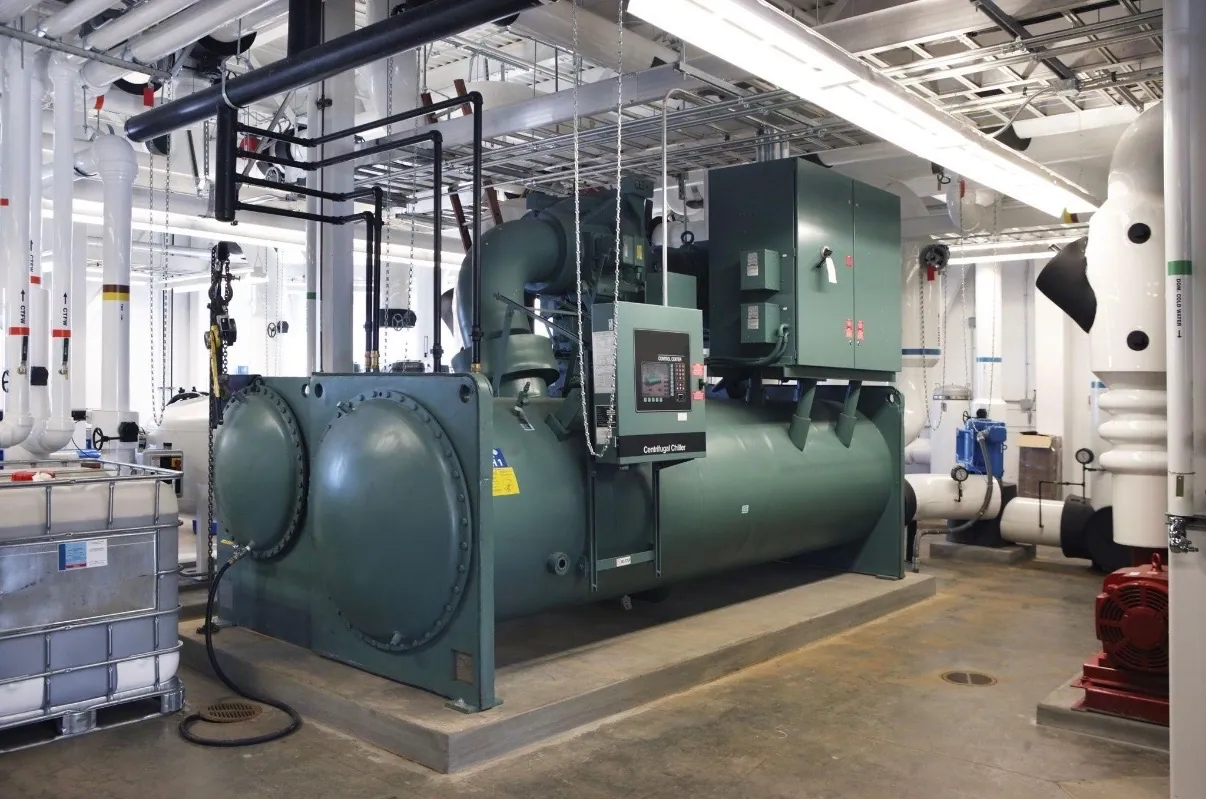
Sell a Surplus Air-Cooled Chiller in Lexington, SC
We buy used air-cooled chiller equipment in Lexington and handle the agreed disconnect, rigging, and freight.
We buy chillers. We don’t sell them.
Your chiller.
Our logistics.
Have a surplus or decommissioned chiller? We’re the buyer—here to make moving it straightforward.
From a single unit to equipment from a larger facility, tell us what you have. We buy industrial and commercial chillers across South Carolina and coordinate the work to get them moved.
See how it works
All types & sizes
Air-cooled or water-cooled, centrifugal, screw or scroll. Tell us what you have.
We handle the logistics
We coordinate rigging, refrigerant recovery, loading and freight for the equipment we buy.
Made for sellers
Send the details and nameplate photos to start a conversation about your chiller.
Three steps.
One less chiller.
- 01
Send the details
Share what you know, along with photos of the unit and nameplate.
- 02
Get a quote
We’ll review your equipment and discuss an offer with you.
- 03
Leave the logistics to us
We coordinate removal and freight for the chillers we purchase.
Sell a Surplus Air-Cooled Chiller in Lexington, SC
South Carolina Chiller Buyers purchases surplus air-cooled chillers in Lexington, South Carolina. We are a direct buyer, not a seller of replacement equipment. We consider all tonnages, including units below 20 tons; 20 to 2,000+ tons is a common range. All brands and refrigerants may be considered. An older unit, a chiller awaiting a project decision, or equipment no longer needed after a facility change can be worth discussing even if it is not operating.
You do not need to start, test, repair, or prepare your air-cooled chiller to request an offer. Begin with the information available from records and safe visual observations. If you do not know a detail, say so rather than guessing; the buyer can assess what additional information is useful.
Describe the Unit and Its Installation
Air-cooled chillers reject heat through outdoor coils and fans instead of relying on a conventional cooling-tower loop. When describing your unit, note the manufacturer, model or serial number if readable from an existing label, approximate capacity if documented, and the number of compressors where visible. A photo of the data plate can help identify the equipment, but do not open a panel or access an unsafe area to obtain one.
Record the visible condition of the fans and coils, along with whether the chiller sits on a roof, a pad, or a raised frame. These observations help distinguish what is known from what remains uncertain. Avoid treating a clean exterior as proof of operating condition, or visible wear as a complete diagnosis; neither is required to start an offer discussion.
Capacity Is Not the Same as Removal Weight
Chiller tonnage describes cooling capacity, not the weight a crane or truck must handle. Removal planning depends on the particular unit’s dimensions, construction, installation height, lifting access, and the route out of the site. A compact, lower-capacity model may still be difficult to move if it is elevated or surrounded by obstructions. Conversely, capacity alone does not establish whether a unit can be removed in one piece.
If weight or dimensions are available in equipment records, share them as documented figures. Do not estimate by comparing the unit with another machine. The buyer can use the available details to evaluate the equipment and discuss appropriate removal arrangements after the purchase terms are agreed.
Send the Equipment Details and Access Information to the Right People
Information about the chiller and authority to arrange site access may sit with different people. The owner or authorized representative can provide equipment records and confirm that the seller has permission to discuss a sale. A facilities contact, property manager, or other site access contact may know gate procedures, work-hour limits, roof access arrangements, security requirements, and where a truck or crane could be positioned. These are examples of roles, not assumptions about who manages a particular Lexington property.
To keep the information flow clear, identify who can approve the purchase and who can coordinate access. With the owner’s permission, share the site contact’s name and preferred contact method, and summarize any known access restrictions. The access contact can provide practical details, but that information does not replace the authorized owner’s approval. If one person handles both responsibilities, say so; if approval is still pending, make that clear before scheduling removal.
Show the Route, Not Just the Chiller
For a rooftop or elevated installation, describe the height and available approach, and provide photos that show the unit, nearby structures, and potential lift area when it is safe and permitted to do so. A lift plan and a protected ground area may be needed. At grade, the path from the chiller to a truck matters too: photos of surrounding clearance, gates, turns, and overhead obstructions can help reveal constraints that a close-up equipment photo misses.
Do not move barriers, disconnect equipment, or alter the site to make an initial inquiry. Instead, report known restrictions and let the parties discuss what removal would require. Any access plan must be coordinated with the authorized site representative.
What Happens After an Offer Is Accepted
Payment is upfront under the agreed purchase arrangement. After a purchase is agreed, South Carolina Chiller Buyers handles disconnects, necessary refrigerant recovery through appropriately qualified personnel, crane and rigging, loading, hauling, and freight. Freight is covered. Sellers do not need to hire a carrier or ship the chiller themselves.
The owner or authorized site representative still needs to provide permission and coordinate access. The offer and removal schedule depend on the equipment details, site conditions, access requirements, and the final agreement. No particular price or removal date can be promised before those factors are reviewed.
Useful Details for an Initial Inquiry
- Manufacturer, model, serial number, and documented capacity, if available.
- Visible fan and coil condition, compressor count where visible, and whether the unit is on a roof, pad, or raised frame.
- Photos showing the equipment and removal route, including gates, clearance, and overhead obstructions.
- The authorized owner or representative, the site access contact, and any known permission or access constraints.
These details help start a practical review of your air-cooled chiller in Lexington without requiring you to operate or prepare it. Share what you know, identify what needs confirmation, and allow the equipment and access information to guide the next conversation.
Ready to move
your chiller?
Tell us what you know. If you’re unsure of a detail, leave it blank. Nameplate photos are a great place to start.

Request a quote.
Fill out what you can and we’ll be in touch.