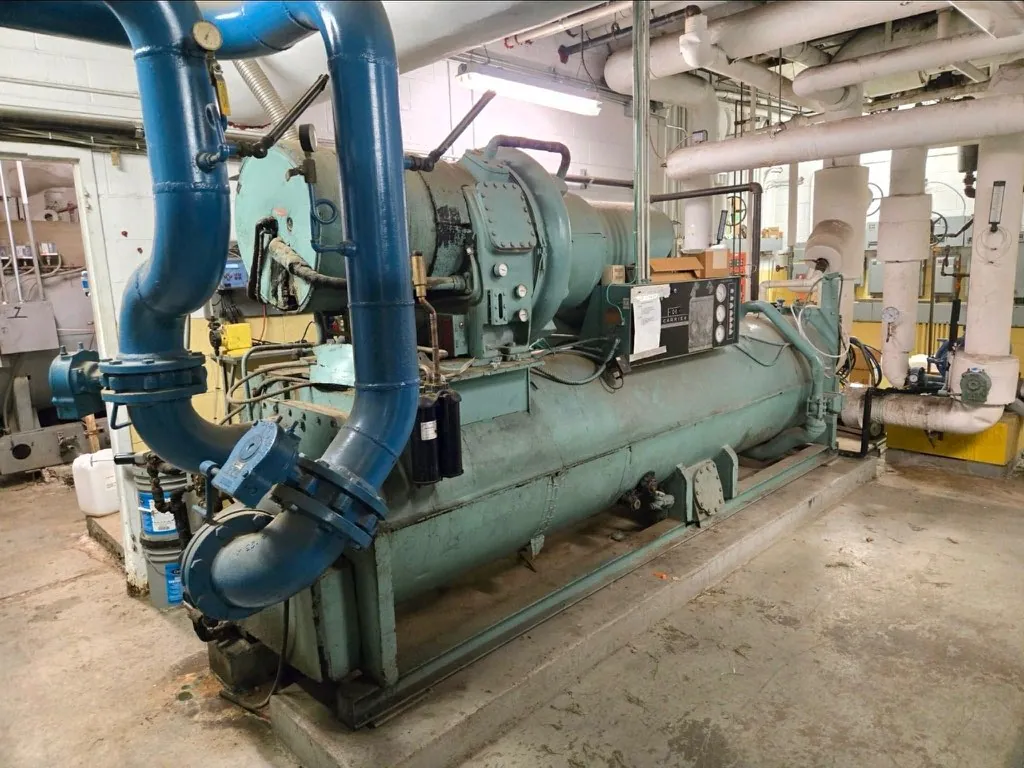
Sell a Surplus Centrifugal Chiller in Hartsville, SC
We buy used centrifugal chiller equipment in Hartsville and handle the agreed disconnect, rigging, and freight.
We buy chillers. We don’t sell them.
Your chiller.
Our logistics.
Have a surplus or decommissioned chiller? We’re the buyer—here to make moving it straightforward.
From a single unit to equipment from a larger facility, tell us what you have. We buy industrial and commercial chillers across South Carolina and coordinate the work to get them moved.
See how it works
All types & sizes
Air-cooled or water-cooled, centrifugal, screw or scroll. Tell us what you have.
We handle the logistics
We coordinate rigging, refrigerant recovery, loading and freight for the equipment we buy.
Made for sellers
Send the details and nameplate photos to start a conversation about your chiller.
Three steps.
One less chiller.
- 01
Send the details
Share what you know, along with photos of the unit and nameplate.
- 02
Get a quote
We’ll review your equipment and discuss an offer with you.
- 03
Leave the logistics to us
We coordinate removal and freight for the chillers we purchase.
Sell a Surplus Centrifugal Chiller in Hartsville, SC
If you are considering selling a surplus centrifugal chiller in Hartsville, South Carolina, start by gathering dependable information about the machine and its removal conditions. South Carolina Chiller Buyers purchases used chillers directly; we do not sell replacement equipment. We consider centrifugal units of all tonnages, including units below 20 tons, with 20 to 2,000+ tons being a common range. We also consider all brands and refrigerants.
A centrifugal machine uses an impeller-driven compressor, but that description alone is not enough to identify its value or removal needs. Packages that look alike can differ in compressor and motor arrangement, controls, drive, and internal condition. Clear records and photographs help us evaluate what is actually being offered, without requiring you to start or test the equipment.
Begin with the Nameplate and Configuration
Record the complete unit model and serial number from the nameplate, along with the manufacturer, stated capacity, and any other legible identifying information. If the compressor or motor has a separate plate, photograph that too. Do not remove covers or reach into the machine to find a label; use information that is safely visible or already documented.
Note the compressor and motor arrangement as accurately as available records allow. Include the starter or drive type if it is known, and distinguish confirmed details from estimates. For example, if a facility record identifies a drive but the equipment label is unreadable, say that the drive information comes from the record. A precise description is more useful than guessing from the exterior.
Describe Condition Without Starting the Chiller
You do not need to energize, operate, open, drain, repair, or prepare the chiller to request an offer. Instead, share its current status as you understand it: whether it is installed or already disconnected, whether it was taken out of service, and whether there are known faults or missing components. If operating history or service documentation exists, it can help explain the unit’s condition, but it is not a requirement to request consideration.
Be candid about uncertainty. A machine that has not run recently should not be described as operational unless that status is supported. Likewise, visible corrosion, damaged insulation, or an incomplete control panel can be noted from a safe viewing position. These observations do not replace an inspection, but they help make the initial discussion more realistic.
Identify What Is Included
List the items that would be part of the sale, such as the chiller package, starter or drive, controls, or associated components, and identify anything that is excluded. Photographs can clarify whether equipment beside the chiller belongs with it or is separate. Avoid assuming that nearby pumps, piping, electrical gear, or building systems are included simply because they serve the machine.
Keep refrigerant and process fluid distinct in your description. Refrigerant is the working fluid contained within the chiller’s refrigeration circuit; process or chilled water is a separate fluid that may be in connected piping or heat-exchanger passages. Do not vent, drain, or open any system to determine what remains. If the refrigerant type is known from records or labeling, provide that information; if not, say it is unknown.
Document Access and Removal Constraints
Photograph the shell ends, motor, starter or drive, and any visible lifting points. Also provide practical clearance measurements where they can be taken safely, including the route from the installed position to an exit and any relevant door, corridor, or overhead limitations. A large assembled package may need careful clearance planning; do not assume it can pass through the opening used by a technician.
Capacity and transport weight are different considerations. Tonnage describes cooling capacity, not the mass or dimensions of the equipment. If a reliable shipping weight or drawing is available, share it, but do not estimate a lift from capacity alone. The buyer can assess the removal plan after reviewing the equipment and site information.
Agree on Scope, Payment, and Removal
After both sides agree to a purchase, South Carolina Chiller Buyers handles disconnects, necessary refrigerant recovery through appropriately qualified personnel, crane and rigging, loading, hauling, and freight. Freight is covered. The authorized owner or site representative must still approve the transaction, provide permission for the work, and coordinate site access.
Payment is upfront. The offer and removal schedule depend on the specific equipment, its condition and included parts, access, and the terms agreed between buyer and seller. No particular price or date can be promised before those details are reviewed and an agreement is reached.
A Useful Information Checklist
- Complete unit and compressor identification, plus known motor, starter, or drive details
- Safe exterior photographs and an honest account of known condition
- A clear list of included and excluded components
- Known refrigerant information, distinguished from any process fluid
- Available dimensions, lifting-point photos, and route or clearance constraints
- Confirmation that the authorized representative can approve the sale and coordinate access
For a surplus centrifugal chiller in Hartsville, this evidence-based approach helps separate confirmed facts from assumptions. Share what is available, identify what remains unknown, and leave testing and removal work to the agreed process.
Ready to move
your chiller?
Tell us what you know. If you’re unsure of a detail, leave it blank. Nameplate photos are a great place to start.

Request a quote.
Fill out what you can and we’ll be in touch.